
Michigan is battling its largest Cyclospora outbreak in history, with nearly 1,000 cases of the foodborne parasite reported alongside surges in neighboring Ohio.
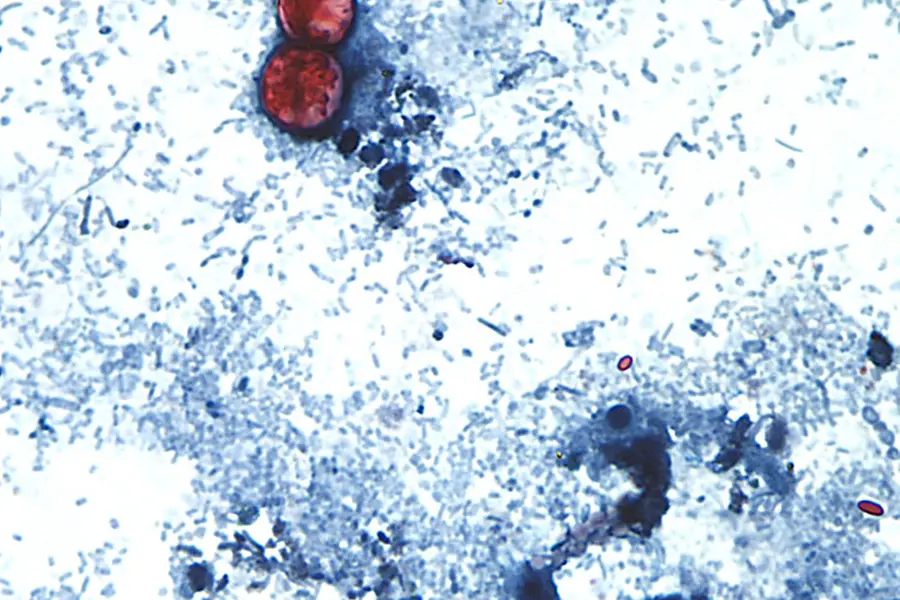
New York: A massive outbreak of a diarrhea-causing parasite in Michigan has now sickened nearly 1,000 people. The spike represents the largest cyclosporiasis outbreak in the state's history and ranks among the most severe the United States has seen in recent years.
While approximately 40 individuals have been hospitalized, no deaths have been reported. Health officials have yet to pinpoint the exact origin of the infections. The outbreak is not isolated to Michigan; investigations are currently underway across 28 other states. This includes neighboring Ohio, where border communities are experiencing a parallel surge. Northwest Ohio has recorded over 500 cases, with 306 concentrated in Lucas County alone.
When Michigan health authorities first publicized the situation last week, they had identified roughly 170 cases in the state's southeastern region, dating back to June 22. The sudden spike is highly unusual for Michigan, which typically sees only about 50 cases annually.
Tracking down the source of a cyclospora surge is notoriously difficult due to the complexities of food contamination timelines. However, Dr. Natasha Bagdasarian, Michigan’s chief medical executive, confirmed to The Associated Press on Wednesday that, “there is clearly a linked outbreak happening right now.”
What is Cyclospora?
Cyclospora is a microscopic, round parasite that targets the intestinal tract, spreading primarily through contact with infected feces. According to the U.S. Centers for Disease Control and Prevention (CDC), the resulting illness—cyclosporiasis—frequently triggers watery diarrhea “with frequent and sometimes explosive bowel movements”.
Though highly uncomfortable and capable of lasting for weeks, the condition is rarely life-threatening and typically responds well to antibiotics. Outbreaks are highly seasonal, usually peaking during the warmer late spring and summer months. Past outbreaks have generally been traced back to fresh produce irrigated with contaminated water.
While less prevalent than standard foodborne bacteria like *E. coli* or Salmonella, domestic cyclospora cases have been on the rise for the last decade, with notable surges in 2018 and 2019. Public health experts attribute this upward trend to a combination of climate change and enhanced medical testing capabilities.
How this outbreak compares regionally and nationally
Historically, very few US cyclospora outbreaks have breached the 1,000-case threshold. Notable exceptions include a 1997 outbreak linked to Guatemalan raspberries that affected more than 1,000 people across the US and Canada, and a massive 2019 outbreak tied to Mexican basil that sickened over 2,400 people.
Pinpointing the exact scope of these outbreaks is tough. Melanie Firestone, a foodborne illness researcher at the University of Minnesota, points out that standard food poisoning screenings often miss the parasite entirely, “so there is a lot of underreporting when it comes to this”.
Furthermore, public health labs cannot easily grow cyclospora in synthetic environments, making it difficult to extract definitive evidence from suspected food items. Investigators also struggle to identify common denominators among patients because the culprit is frequently a minor ingredient used across many different dishes, such as cilantro or basil. Because commercial distributors supply both restaurants and grocery stores simultaneously, mapping the supply chain can take months—and often yields inconclusive results.
While the current surge is heavily concentrated in southeastern Michigan, federal officials stress it is not a national emergency. Dianna Blau, the acting parasitic diseases branch chief at the CDC, noted that there is no indication the parasite has mutated to become more contagious.
Blau added that because thousands of cases are reported nationwide every year, it remains to be seen how historic this season will ultimately be. Even so, current CDC national data shows case counts are four times higher than they were at this exact point last year, though federal tracking heavily lags behind real-time state reporting.
Dr Bagdasarian also noted that Michigan’s numbers might look uniquely severe simply because of the state's proactive approach to testing, suggesting that aggressive monitoring is “part of the reason why this looks like a Michigan problem.”
How to protect yourself
Public health officials recommend that anyone experiencing watery diarrhea that persists for more than a few days consult a doctor and explicitly ask to be tested for cyclospora.
The most effective prevention strategy is avoiding potentially contaminated food and water. While washing fresh produce thoroughly is crucial, the parasite clings tightly to surfaces, meaning rinsing alone may not fully eliminate the risk.
While the investigation continues, Michigan health officials advise consumers to take the following precautions:
- Buy whole heads of lettuce instead of bagged salad mixes or prewashed greens.
- Discard the outer two to three leaves of lettuce before washing the remaining head under running water.
- Cook vegetables thoroughly whenever possible, as heat destroys the parasite.
AP
Published: 14 Jul 2026, 06:43 am IST
Related Topics
Disclaimer: Kindly avoid objectionable, derogatory, unlawful and lewd comments, while responding to reports. Such comments are punishable under cyber laws. Please keep away from personal attacks. The opinions expressed here are the personal opinions of readers and not that of Mathrubhumi.
