
Smuss was tasked with restoring Nazi helmets for reuse — a job that gave him access to a thinning substance, which he secretly stole and supplied to the resistance to make Molotov cocktails
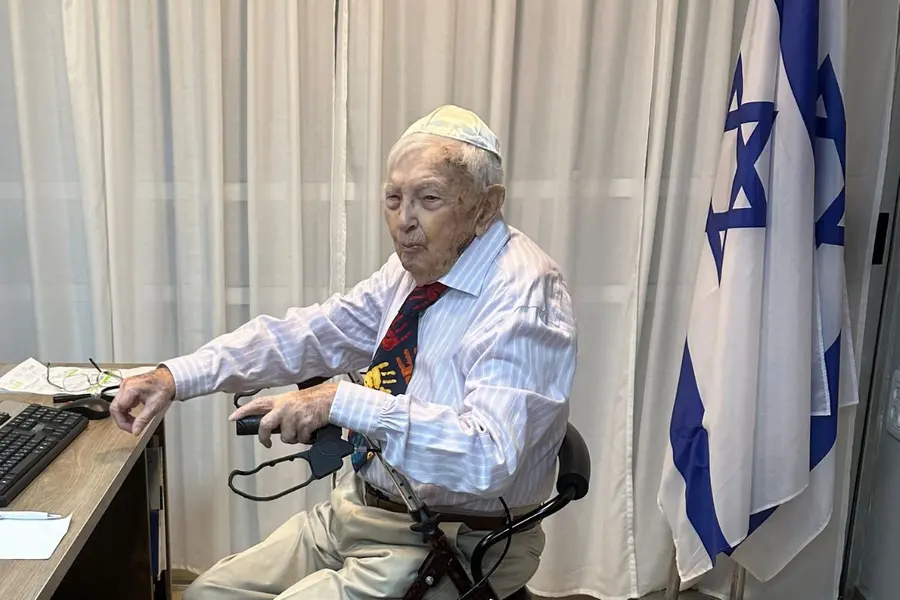
Poland: Michael Smuss, a Holocaust survivor who fought Nazi soldiers with Molotov cocktails during the Warsaw Ghetto Uprising and later turned to painting to process his wartime trauma, has died aged 99.
His wife in Israel confirmed his passing on Thursday, stating that Smuss died on 21 October. Yad Vashem, the World Holocaust Remembrance Center, announced that his funeral will be held on Friday.
Who was Michael Smuss?
Born in 1926 in what was then the Free City of Danzig — now Gdansk, Poland — Smuss later moved to Łódź and Warsaw. In 1940, he became one of hundreds of thousands of Jews imprisoned within the walls of the Warsaw Ghetto.
At its height, the ghetto held around half a million people in severely cramped conditions, where starvation and disease were rampant.
Smuss joined the Jewish resistance movement led by Mordechai Anielewicz. According to Frank Steffens, a family member in Germany, Smuss was tasked with restoring Nazi helmets for reuse — a job that gave him access to a thinning substance, which he secretly stole and supplied to the resistance to make Molotov cocktails.
“We filled up bottles which were then put up on the roofs of all the houses close to the entrance of the ghetto, with the expectation that, once they’re going to come, we’ll be throwing them down,” Smuss recalled in a 2022 video interview with the Sumter County Museum in South Carolina, which exhibited his artwork at the time.
When the Nazis entered the ghetto on 19 April 1943 to destroy it, hundreds of Jewish fighters, including Smuss, took up arms in a desperate final stand.
On that day, Smuss hurled Molotov cocktails at Nazi soldiers from the rooftops, according to family member Paul Diedrich, who had spent time with him in Israel earlier this year. He was among the few resistance fighters to survive the month-long battle.
Captured by Nazi forces, Smuss was initially sent towards Treblinka but was turned back when the Nazis required more labourers. He endured several concentration camps and survived a death march in spring 1945.
After the war, Smuss emigrated to the United States, where he started a family before later moving to Israel. It was there that he began confronting his trauma through art — a process that became central to his later life.
“From then on, Michael began to process his experiences artistically and went to German schools to show the descendants of his tormentors the unimaginable,” Diedrich said.
“Despite his experiences, he retained an unmistakable sense of humour,” he added. “He grinned and laughed with me even at the age of 99.”
Published: 23 Oct 2025, 11:47 pm IST
Related Topics
Disclaimer: Kindly avoid objectionable, derogatory, unlawful and lewd comments, while responding to reports. Such comments are punishable under cyber laws. Please keep away from personal attacks. The opinions expressed here are the personal opinions of readers and not that of Mathrubhumi.
