
The US Air Force currently operates 76 B-52s, all of which have undergone significant avionics and weapons upgrades. The aircraft is expected to remain in service into the 2050s
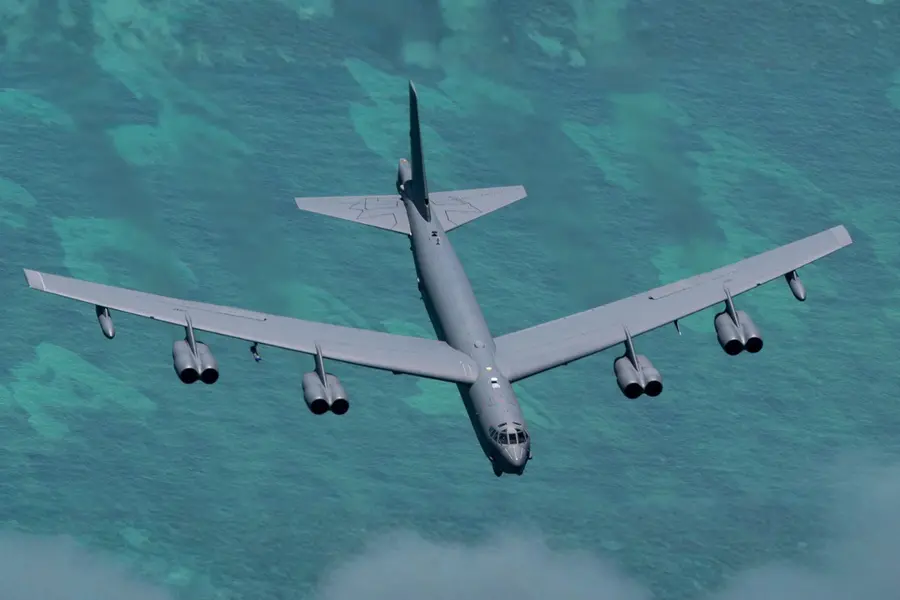
Nearly seven decades after it first entered service, the B-52 Stratofortress is once again at the centre of America’s war machine, this time in the escalating conflict with Iran under Operation Epic Fury.
Designed in the early years of the Cold War to deliver nuclear weapons against the Soviet Union, the eight-engine bomber has evolved into one of the most versatile and enduring platforms in modern aerial warfare. Now, as the United States intensifies strikes deep inside Iranian territory, the B-52 is proving why a 1950s aircraft still commands fear in 2026.
“We Will Not Stop”
Speaking on Tuesday (local time), Admiral Brad Cooper, Commander of US Central Command, revealed the bomber’s deployment in Iran.
“We’re less than 100 hours into this operation, and we’ve already struck nearly 2,000 targets with more than 2,000 munitions,” Cooper said. “Our B-2 and B-1 bombers have executed surgical strikes deep inside Iran. And just last night, a B-52 bomber force struck ballistic missile and command and control posts.”
The message was blunt: the campaign will continue, and Iran’s ability to retaliate is weakening.
According to Cooper, US forces have severely degraded Iran’s air defences and destroyed hundreds of ballistic missiles, launchers and drones. “We are seeing Iran’s ability to hit us and our partners declining, while our combat power is building,” he added.
Built for nuclear war, perfected for precision strikes
The B-52 was originally conceived in 1946, taking its maiden flight in 1952 before formally entering service with the US Air Force in 1955. Its mission was nuclear deterrence. But what has kept the aircraft relevant is its extraordinary adaptability.
Today’s B-52H variant can carry up to 70,000 pounds (32,000 kg) of weapons and fly approximately 8,800 miles without aerial refuelling. That reach allows it to launch long-range cruise missiles and precision-guided munitions without entering heavily defended airspace.
In its current role, the bomber is equipped to deploy air-launched cruise missiles and precision strike weapons capable of hitting hardened missile facilities and command centres, the very targets identified in the ongoing strikes on Iran.
While stealth aircraft like the B-2 Spirit grab headlines, the B-52 offers something equally valuable: payload, endurance and cost efficiency. It can loiter, launch stand-off weapons from safe distances and sustain high-tempo operations — qualities that are critical in a prolonged regional conflict.
Shock and scale
Unlike stealth bombers that rely on invisibility, the B-52 relies on overwhelming scale. A single aircraft can carry a mix of cruise missiles, precision bombs and maritime strike weapons, making it a flying arsenal.
In the current campaign, US officials say the objective is to eliminate Iran’s missile infrastructure and degrade its capacity to threaten American and allied assets across the Gulf. The B-52’s ability to strike multiple fixed targets in one sortie makes it ideal for dismantling command-and-control nodes and missile launch complexes.
Cooper also claimed that Iranian naval operations have effectively ceased. “There’s not a single Iranian ship underway in the Arabian Gulf, Strait of Hormuz or Gulf of Oman,” he said, adding that US forces were continuing dynamic targeting operations against remaining mobile launchers.
A bomber that refuses to retire
The US Air Force currently operates 76 B-52s, all of which have undergone significant avionics and weapons upgrades. The aircraft is expected to remain in service into the 2050s, with further modernisation planned.
Nicknamed the “BUFF”, Big Ugly Fat Fellow, the Stratofortress has flown in conflicts ranging from Vietnam to the Gulf War and Afghanistan. Now, it is once again at the forefront of a high-stakes confrontation in the Middle East.
As Operation Epic Fury enters its fourth day, the return of the B-52 to active combat underscores a central reality of modern warfare: sometimes, old warhorses remain the most reliable instruments of power projection.
Published: 04 Mar 2026, 09:28 am IST
Related Topics
Disclaimer: Kindly avoid objectionable, derogatory, unlawful and lewd comments, while responding to reports. Such comments are punishable under cyber laws. Please keep away from personal attacks. The opinions expressed here are the personal opinions of readers and not that of Mathrubhumi.
