
The region is witnessing one of its largest public uprisings in recent history, characterised by a fundamental clash of willpower between the state and a civil society alliance that has gained significant traction.
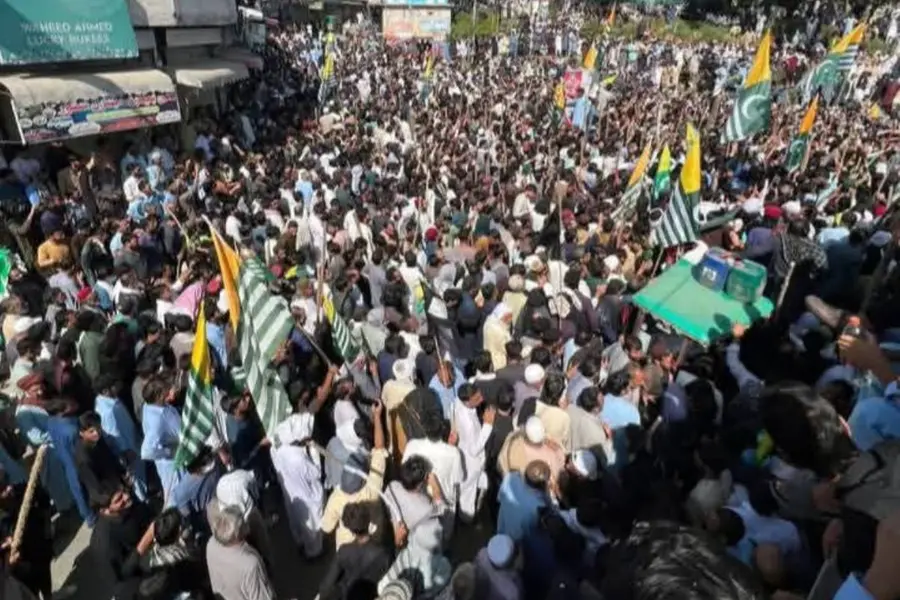
Pakistan-occupied Kashmir (PoK) has been plunged into a state of heightened tension as the Awami Action Committee (AAC) launched a sweeping, potentially indefinite 'shutter-down and vehicular traffic' strike across the region. In response to the mass mobilisation, the government in Islamabad deployed security forces en masse and imposed a communications blackout by cutting internet access from midnight to curb protest coordination.
The region is witnessing one of its largest public uprisings in recent history, characterised by a fundamental clash of willpower between the state and a civil society alliance that has gained significant traction.
Unconfirmed reports suggested multiple casualties and many more injured in clashes across PoK.
The 38-point charter of grievances
The AAC, citing decades of political marginalisation and economic neglect, has rallied thousands under a 38-point charter of demands focused on structural reform. Key issues driving the massive public discontent include:
Political Representation: The group demands the abolition of 12 legislative seats in the PoK assembly that are reserved for Kashmiri refugees living in Pakistan, arguing that these seats undermine genuine local representation.
Economic Equity: Calls for subsidised flour and the implementation of fairer power tariffs linked to the region's contribution to the Mangla hydropower project.
Long-Delayed Reforms: Implementation of structural and governance reforms repeatedly promised but never delivered by Islamabad.
"Our campaign is not against any institution but for the fundamental rights denied to our people for over 70 years," said Shaukat Nawaz Mir, a core AAC leader, addressing crowds in Muzaffarabad. "Enough is enough. Either deliver on rights or face the wrath of the people."
Government Muscle and Talk Failure
Authorities have met the strike with a significant show of force. In the lead-up to the shutdown, heavily armed convoys staged flag marches through major towns, while thousands of police personnel, including an additional 1,000 sent from Islamabad, were moved into the region to reinforce local security forces. Surveillance has been stepped up around sensitive installations, and officials are publicly insisting the crackdown is necessary to maintain order.
This heavy deployment follows a dramatic breakdown in marathon talks between AAC negotiators, the PoK administration, and federal ministers. The dialogue collapsed after 13 hours when the committee refused to compromise on eliminating specific elite privileges and the controversial refugee assembly seats. AAC leaders have vowed to press ahead with the shutdown, with Mir declaring the negotiations "incomplete and inconclusive."
Islamabad seeks De-escalation
In an attempt to defuse the situation, PoK's Prime Minister Chaudhry Anwarul Haq and Federal Minister Tariq Fazal Chaudhry invited the JAAC for fresh dialogue on Wednesday. Concurrently, the Ministry of Interior convened an important meeting in Islamabad on Thursday to devise a strategy for de-escalation.
Prime Minister Shehbaz Sharif, expressing deep concern over the "unfortunate incidents" during the protests, released a statement via the Prime Minister's Office (PMO) urging citizens to remain peaceful.
"He has urged that peaceful protest is the constitutional and democratic right of every citizen, but protesters should refrain from causing harm to public order," the statement read.
Critically, the Prime Minister directed law enforcement agencies to exercise utmost restraint and patience with the protesters, specifically instructing agencies to avoid any "unnecessary harshness."
To expedite a resolution, Shehbaz has significantly expanded the negotiation committee. The committee has been mandated to proceed to Muzaffarabad immediately to find an "immediate and lasting solution" to the crisis.
The Pakistan Prime Minister also appealed directly to the JAAC leadership to cooperate with the governmental delegation, noting that the committee will rapidly send its recommendations and proposed solutions back to the PMO for prompt implementation.
Published: 02 Oct 2025, 12:15 pm IST
Disclaimer: Kindly avoid objectionable, derogatory, unlawful and lewd comments, while responding to reports. Such comments are punishable under cyber laws. Please keep away from personal attacks. The opinions expressed here are the personal opinions of readers and not that of Mathrubhumi.
