
For the first time since Partition, Sanskrit has returned to Pakistani classrooms, with LUMS launching a credited course that also introduces students to the Bhagavad Gita and the Mahabharata. The move is being seen as a rare cultural reset in South Asian academia.
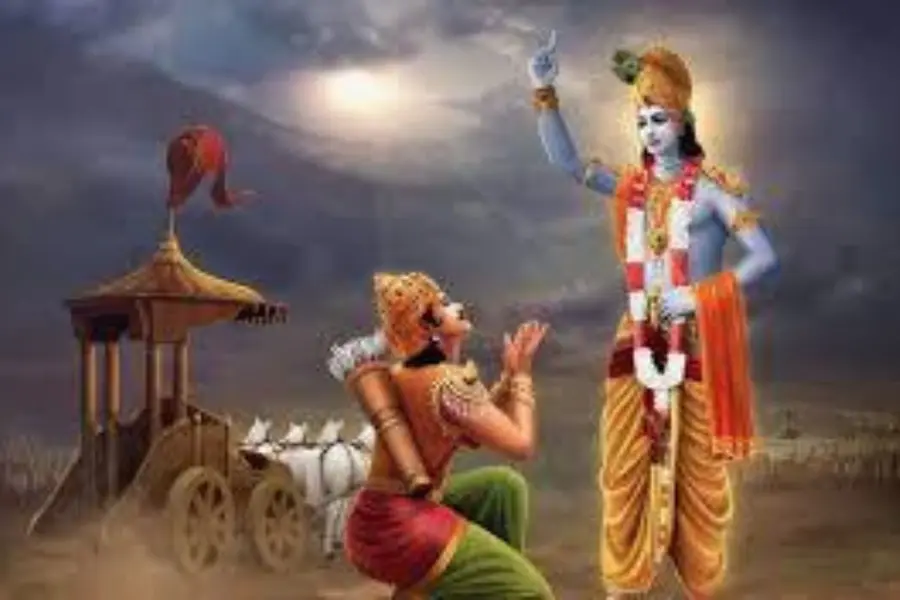
For the first time since the Partition of the subcontinent in 1947, Sanskrit has formally entered a Pakistani classroom. The Lahore University of Management Sciences (LUMS) has launched a four-credit course in the classical language, marking a significant academic and cultural moment in Pakistan’s higher education landscape.
The initiative grew out of a three-month weekend workshop that attracted strong interest from students and scholars, prompting the university to institutionalise Sanskrit studies.
As part of the course, students are also being introduced to the Urdu rendition of “Hai katha sangram ki”, the iconic theme song from the Mahabharat television series, offering a familiar cultural entry point into the ancient epic tradition.
Dr Ali Usman Qasmi, Director of the Gurmani Centre at LUMS, told The Tribune that Pakistan holds one of the region’s richest yet most neglected Sanskrit archives.
He pointed out that the Punjab University library houses a significant collection of Sanskrit palm-leaf manuscripts that were catalogued in the 1930s by renowned scholar JCR Woolner.
“Since 1947, no Pakistani academic has seriously engaged with this collection. Only foreign researchers use it. Training scholars locally will change that,” Dr Qasmi said.
LUMS now plans to build on this momentum by introducing specialised courses on the Mahabharata and the Bhagavad Gita. “In 10 to 15 years, we could see Pakistan-based scholars of the Gita and the Mahabharata,” Dr Qasmi added.
The revival of Sanskrit studies has been driven largely by the efforts of Dr Shahid Rasheed, Associate Professor of Sociology at Forman Christian College. Dr Rasheed said his engagement with Sanskrit stemmed from a broader interest in classical languages.
“Classical languages contain much wisdom for mankind. I started with Arabic and Persian, and then studied Sanskrit,” he said.
Dr Rasheed explained that he relied heavily on online learning, studying under Cambridge Sanskrit scholar Antonia Ruppel and Australian Indologist McComas Taylor. “It took almost a year to cover classical Sanskrit grammar. And I’m still studying it,” he noted.
Addressing scepticism around his choice, Dr Rasheed said Sanskrit belongs to the shared cultural heritage of South Asia. “People often ask why I am learning Sanskrit.
I tell them it is the binding language of the entire region. Panini’s village was in this region. Much writing was done here during the Indus Valley Civilisation. Sanskrit is like a mountain — a cultural monument. We need to own it. It is ours too; it is not tied to any one religion.”
He added that greater engagement with each other’s classical traditions could foster regional harmony. “If more Hindus and Sikhs in India learned Arabic, and more Muslims in Pakistan took up Sanskrit, it could be a fresh and hopeful start for South Asia — where languages become bridges instead of barriers.”
Published: 13 Dec 2025, 07:56 am IST
Related Topics
Disclaimer: Kindly avoid objectionable, derogatory, unlawful and lewd comments, while responding to reports. Such comments are punishable under cyber laws. Please keep away from personal attacks. The opinions expressed here are the personal opinions of readers and not that of Mathrubhumi.
