
Southwest Airlines introduces secondary cockpit barrier, boosting aviation safety amid rising unruly passenger incidents globally.
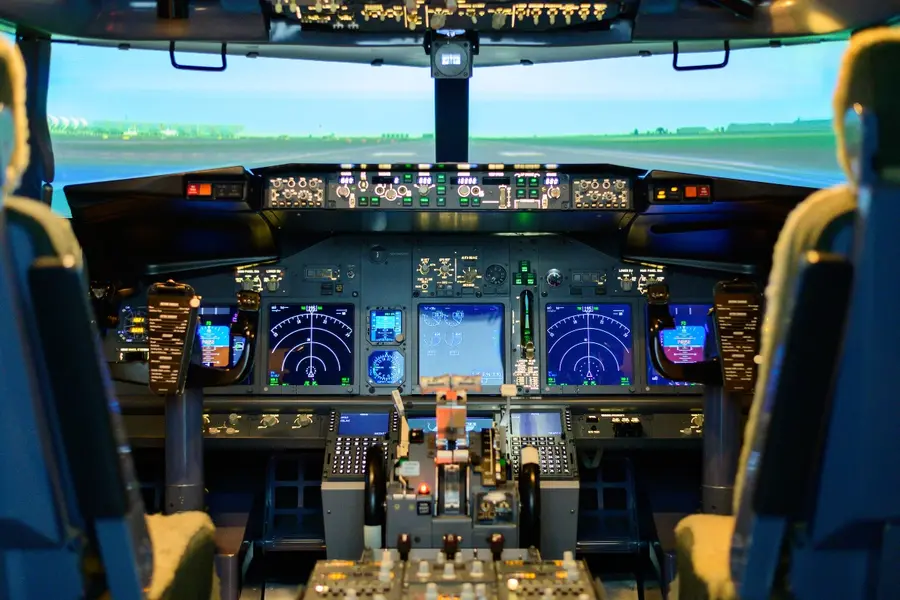
In a significant step towards enhancing aviation safety, Southwest Airlines has become the first US carrier to start flying aircraft fitted with a secondary cockpit barrier. The new safety feature was installed on a recently delivered Boeing 737 MAX 8, which operated its first flight from Phoenix to Denver on Friday.
The development comes under a new rule by the US Federal Aviation Administration (FAA), which requires aircraft manufacturers to install a second physical barrier on all new commercial passenger planes. The regulation, issued in 2023, officially took effect this week. While airlines have until July 2026 to comply, Southwest has chosen to implement it immediately. The airline expects to receive about 25 more Boeing jets this year, all equipped with the feature.
Justin Jones, Southwest’s Executive Vice President for Operations, explained the airline’s proactive approach: “We felt like we could get it done and put it in production as soon as the aircraft was ready.”
Why is this important?
After the September 11, 2001, terrorist attacks, when hijackers forced their way into cockpits, global aviation regulators mandated stronger, locked cockpit doors. While these doors remain secure during flight, they have to be opened occasionally, for example, when pilots step out for meals or restroom breaks. This brief window creates a security risk.
A secondary barrier acts as a gate outside the cockpit door. It stays locked whenever the cockpit is open, creating a second line of defence. This prevents any passenger from rushing the cockpit and ensures that pilots remain protected at all times.
The rise of unruly passengers
The move also comes at a time when airlines worldwide are reporting a surge in unruly passenger behaviour. From physical assaults to attempts at storming restricted areas, disruptive incidents have become more frequent, especially after the pandemic.
According to the International Air Transport Association (IATA), there has been a worrying increase in cases of passengers disobeying crew instructions, fighting, and even trying to enter the cockpit. The FAA in the US alone has recorded thousands of such incidents in the past few years. In extreme cases, these situations can escalate into safety risks for both crew and passengers.
India, one of the fastest-growing aviation markets in the world, is not immune to this trend. In recent years, there have been multiple reports of unruly passengers onboard Indian carriers, ranging from verbal abuse and physical altercations to attempts at tampering with aircraft equipment.
With domestic air travel booming and airlines adding hundreds of new aircraft in the coming decade, experts believe it is time for India’s aviation regulator, the DGCA (Directorate General of Civil Aviation), to take note of global best practices. Introducing secondary cockpit barriers on new aircraft deliveries could significantly strengthen cockpit security in Indian skies.
By choosing to implement the barrier immediately rather than waiting until 2026, Southwest Airlines has set an important precedent. As newer aircraft join fleets across the globe, these additional cockpit protections will gradually become a standard safety feature.
For both the US and India, the message is clear: in a world where aviation threats and unruly behaviour are rising, every extra layer of safety counts, not just for pilots, but for every passenger on board.
Published: 01 Sept 2025, 05:01 pm IST
Disclaimer: Kindly avoid objectionable, derogatory, unlawful and lewd comments, while responding to reports. Such comments are punishable under cyber laws. Please keep away from personal attacks. The opinions expressed here are the personal opinions of readers and not that of Mathrubhumi.
