
Trump, who has described the protests as a “full-blown assault” on peace and national order, has sent approximately 4,000 National Guard troops and 700 Marines to Los Angeles over the past few days
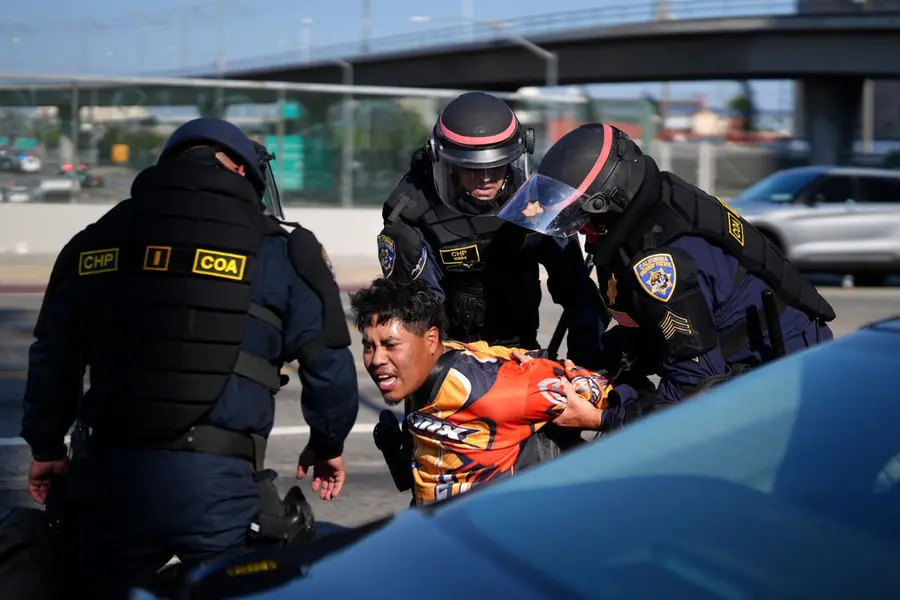
Los Angeles: Los Angeles Mayor Karen Bass has imposed an overnight curfew in parts of downtown Los Angeles following days of escalating protests sparked by federal immigration raids. The move comes as tensions continue to rise between local and federal authorities, with President Donald Trump significantly expanding military presence in the city.
Mayor Bass declared a local emergency on Tuesday and announced that the curfew would run from 8 pm to 6 am, covering a one-square-mile section of downtown where most demonstrations have taken place. “We reached a tipping point,” she said during a press conference, citing the looting of 23 businesses as a key reason for the new restrictions. “The aim is to stop the vandalism, to stop the looting.”
According to Los Angeles Police Chief Jim McDonnell, the curfew does not apply to local residents, the homeless, emergency personnel, or accredited journalists. He defended the measure as “a necessary step to protect lives and safeguard property,” after what he described as a steady increase in “unlawful and dangerous behaviour” since the weekend.
The unrest began Friday after Immigration and Customs Enforcement (ICE) agents arrested dozens of undocumented workers during raids across the city. Protesters responded by blocking major roads and setting vehicles alight. In the days since, more than 100 arrests have been made, most for failing to disperse, but some for more serious offences including assault with a deadly weapon and attempted murder.
As of Tuesday, National Guard troops began escorting ICE agents during operations – a shift from their previous role limited to guarding federal property. ICE said the troops were now providing direct security for immigration enforcement activities and assisting with transportation. Although they are authorised to temporarily detain individuals, actual arrests must still be made by law enforcement.
Trump, who has described the protests as a “full-blown assault” on peace and national order, has sent approximately 4,000 National Guard troops and 700 Marines to Los Angeles over the past few days, against the wishes of state and city officials.
The president has also floated the possibility of invoking the Insurrection Act – a rarely used law that permits the use of active-duty military forces on domestic soil. “If there’s an insurrection, I would certainly invoke it. We’ll see,” he said.
In a separate speech at Fort Bragg, Trump referred to protesters as “animals” and “a foreign enemy,” a characterisation condemned by California Governor Gavin Newsom and Mayor Bass, who argue the president is inflaming the situation with exaggerated claims and militarised responses.
California has taken legal action in an attempt to block the federal deployment. Governor Newsom has filed an emergency motion in federal court, arguing that the military presence will only fuel further unrest. The judge has scheduled a hearing for Thursday.
Meanwhile, Defence Secretary Pete Hegseth suggested that the increased domestic use of the National Guard could become a more permanent strategy under Trump’s homeland security agenda.
Despite claims from Trump that the deployment prevented the city from being “completely obliterated,” local officials insist the protests have largely remained peaceful since the weekend, with demonstrators gathering outside City Hall and federal buildings.
Still, sporadic violence and looting have continued. Homeland Security reported that officers had been attacked with rocks and Molotov cocktails, while graffiti and anti-Trump slogans were scrawled across buildings, including the Walt Disney Concert Hall.
The deployment of military personnel without the governor’s request marks a rare and significant escalation. The Pentagon estimates the cost of the current deployment at $134 million.
Demonstrations have since spread to other US cities, including New York, Chicago, San Francisco, and multiple cities across Texas.
Published: 11 Jun 2025, 07:39 am IST
Related Topics
Disclaimer: Kindly avoid objectionable, derogatory, unlawful and lewd comments, while responding to reports. Such comments are punishable under cyber laws. Please keep away from personal attacks. The opinions expressed here are the personal opinions of readers and not that of Mathrubhumi.
