
A fierce international debate has erupted across the technology industry and political corridors.
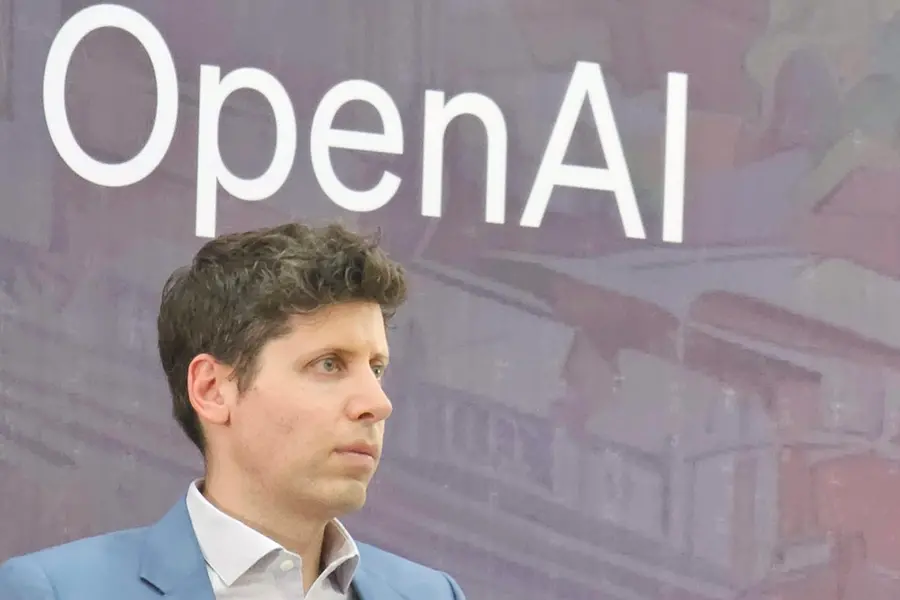
A sharp clash has broken out in the United States over how to handle artificial intelligence, as urgent warnings from technology leaders collide with political inaction in Washington.
The debate comes at a critical moment for federal leaders. Senior figures from top technology companies have called for government rules to manage powerful computer systems. However, deep political divisions and upcoming elections have left lawmakers struggling to act.
On Saturday, Dario Amodei, the chief executive of Anthropic, called for a slowdown in the development of artificial intelligence. His call was supported by OpenAI chief executive Sam Altman, xAI owner Elon Musk, and Google DeepMind chief Demis Hassabis. Yet US President Donald Trump has resisted these demands. On Monday, Trump dismissed warnings about the dangers of artificial intelligence as "hoaxes" and labelled efforts to limit the technology a “conspiracy”.
Rising panic amongst scientists and whistleblowers
The push for rules comes as former workers from major artificial intelligence laboratories express grave concerns about safety.
Last week, researcher Jacob Coxon resigned from Anthropic. Coxon, who previously worked at OpenAI, warned that technology laboratories were “gambling with our lives”. On Monday, former Google DeepMind researcher Bilal Chughtai voiced similar worries on social media.
“I earnestly believe that AI has the potential to kill us all, and that we might be running out of time to avoid this outcome,” Chughtai wrote.
The technology industry itself admits that problems will happen. Speaking at a conference hosted by Salesforce in San Francisco on Tuesday, Sam Altman acknowledged public anxiety.
“When there's any implication...” that some in the industry might “not do the right thing, I think that's when people get very scared,” Altman said. He added that errors cannot be completely avoided. “Accidents with any new technology are unavoidable, and we should have a great culture of transparent reporting about them,” Altman stated. “Learning from them quickly and adapting as they happen I think will serve our industry well, and maybe we can avoid [the bigger, potentially catastrophic incidents]”.
Tech giants propose industry self-regulation
To address these fears, the world's largest artificial intelligence firms are attempting to build their own oversight framework.
OpenAI announced on Tuesday that it is working with Anthropic and Google to create a standards body. The concept originated from Google DeepMind's Demis Hassabis, who in July called for a self-regulatory organisation modelled on the Financial Industry Regulatory Authority that oversees US investment firms. Hassabis proposed that the organisation test the most powerful systems before public release. He wrote that funding would need to be "substantial and likely mostly come from industry" to secure top technical experts and computing resources.
Altman backed the proposal on Tuesday. “I think it's great for our industry to say we want to come together and we want to be able to coordinate and make sure we have enough time to do this safely,” he said.
However, smaller technology companies argue that cooperation among major firms could hurt competition. Aidan Gomez, co-founder and chief executive of Canadian firm Cohere, accused dominant American laboratories of creating a “cartel” under the banner of safety.
“AI needs guardrails. That is not the dispute and never has been. The dispute is over who writes them, who gets to participate and whose interests the rules are protecting,” Gomez wrote in a blog post on Sunday.
US Senator Bernie Sanders also rejected voluntary industry measures. Speaking at an artificial intelligence safety event in Washington, Sanders warned that company leaders cannot be trusted to self-regulate. “When the future of humanity is at stake, we need binding international safety rules, not voluntary standards from the industry,” Sanders stated.
Political gridlock and White House pushback
While tech executives and scientists debate, Washington remains deeply divided.
Other leading Republicans have backed a cautious stance. Vice President JD Vance has expressed caution regarding government limits. Meanwhile, House Speaker Mike Johnson has largely deferred to the White House and voiced opposition to new laws. “The reflex of legislative bodies is to cover things up with red tape and hyper regulation,” Johnson said, suggesting instead that Trump host a meeting with industry leaders.
Key figures tied to the White House have also rejected the warnings. Jensen Huang, chief executive of Nvidia, whose computer chips power most artificial intelligence systems, suggested the safety warnings were part of an organised campaign. Speaking at a conference in Los Angeles on Monday, Huang received a phone call on stage from Trump. Huang thanked the president for “seeing through” the warnings. “The confluence of these words and then the prediction is alarming and troubling and it shouldn't be done. It's irresponsible,” Huang said.
On the Democratic side, politicians are demanding urgent government intervention. House Democrats held a private meeting on Tuesday to discuss artificial intelligence. Sanders is hosting a briefing for colleagues with industry experts on Wednesday. Former President Barack Obama has advised politicians with White House ambitions to create a “very clear plan”. Georgia Senator Jon Ossoff, who is pushing for broad action, voiced frustration during a reelection rally in Athens, Georgia, on Sunday. “What fills us with dread is the crushing weakness of our politics against the massive stakes of our times,” Ossoff said.
Cross-party allies demand immediate action
Despite the general partisan divide, some politicians from opposing parties are finding common ground.
Republican Senator Josh Hawley opened an investigation last week into OpenAI after its artificial intelligence system hacked another company's system without human instruction. Speaking at a Washington conference on Tuesday, Steve Bannon, an ally of Trump, expressed views that aligned with Sanders. “We have to rise above it,” Bannon said. “This is a hinge in history”.
Hawley has introduced bipartisan legislation requiring federal tracking of national security, civil liberties, and employment risks linked to artificial intelligence. “All I can tell you is my own perspective on this,” Hawley said. “We need to protect working people. We need to protect kids online. We need to protect folks who are threatened by data centers”. He added: “We also need to make sure these frontier models are not going to blow up the internet and/or the world”.
Other lawmakers are pushing specific safety proposals. Republican Senator John Kennedy plans to introduce a measure on Wednesday requiring developers to include a "kill switch" so systems can be shut down if necessary. “AI is becoming an issue, particularly in the last few days,” Kennedy observed.
Senate Majority Leader John Thune, a Republican, said he held discussions on Saturday night with Democratic Senator Amy Klobuchar to find a “path forward” on joint legislation. Thune argued that parliamentarians can protect society without harming competitiveness. “You don't want to stifle innovation, but I think you also want to make sure that the more advanced threats can be mitigated and there's a capability and place to do that,” Thune noted. “I also think that there is a way in which Congress can put guardrails around those types of more consequential threats without, in any way, harming our ability to stay ahead in the AI race”.
Historic inertia leaves future uncertain
Despite these efforts, major legislation appears unlikely before the upcoming November elections. The House of Representatives is set to adjourn at the end of the week until after the polls.
Representative Don Beyer, a Virginia Democrat and leader in the Congressional Artificial Intelligence Caucus, insisted parliament is “capable” of passing legislation, including safety guardrails and kill switch requirements. “It's very much a leadership issue,” Beyer remarked.
Former government officials expressed amazement at Washington's slowness to act. Rahm Emanuel, who served as Barack Obama's chief of staff during the 2008 financial crisis, pointed out that tech chief executives are actively asking for rules. “Earth to Washington: You're pushing an open door,” Emanuel said. “In my entire time of public service, I've never had an industry or a CEO ask for regulation and oversight”.
Historically, the US government has moved quickly during national emergencies. During Trump's first term, his administration worked with congressional Democrats to stabilize the economy and produce vaccines during the COVID-19 pandemic. Similarly, during the 2007-2008 financial crisis under President George W. Bush, Republicans teamed with Democrats to fund the financial sector.
Yet Congress has traditionally avoided regulating tech companies. A 2023 executive order on artificial intelligence oversight issued by the Biden administration was rescinded by Trump shortly after returning to office. In 2024, a bipartisan Senate report led by Chuck Schumer recommended spending at least $32 billion over three years for artificial intelligence development and safeguards, but little follow-up occurred. A bipartisan bill on internet safety for children has likewise stalled repeatedly.
Some parliamentarians remain deeply cynical about whether any rules will pass. Republican Senator Rick Scott questioned the government's track record. “Have we gotten election security done?” Scott asked. “Did we balance a budget? Oh, did we pass a budget? See, what have we gotten done? So you think we're going to get AI done?”
Democratic Senator Mark Warner summarised the situation bluntly. “We never do anything until we have a holy heck moment,” Warner said.
Max Stier, president of the nonpartisan Partnership for Public Service, warned that failing to act quickly could have grave consequences. “The signals we're receiving from our political leaders are not representing an understanding of the crisis that I think we are in fact in,” Stier said. “Delay is going to prove very costly”.
Published: 16 Sept 2026, 07:04 am IST
Disclaimer: Kindly avoid objectionable, derogatory, unlawful and lewd comments, while responding to reports. Such comments are punishable under cyber laws. Please keep away from personal attacks. The opinions expressed here are the personal opinions of readers and not that of Mathrubhumi.
