
Reverend Jesse Jackson, the US civil rights leader and two-time presidential candidate, has died at 84. His family says he passed peacefully surrounded by loved ones.
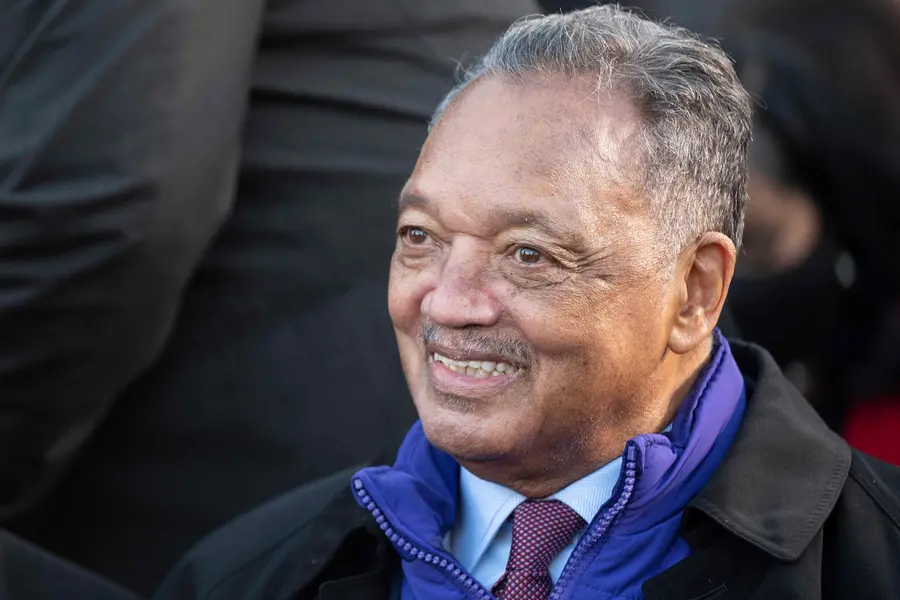
Jesse Jackson, the towering US civil rights figure, veteran activist and two-time Democratic presidential contender, has died at the age of 84, his family announced on Tuesday.
Jackson, a central voice in America’s long struggle for racial justice, died peacefully while surrounded by relatives. His family confirmed his passing but did not release an immediate cause of death. They described him as a lifelong “servant leader” who fought for the marginalised and forgotten across the world.
“His unwavering belief in justice, equality, and love uplifted millions, and we ask you honor his memory by continuing the fight for the values he lived by,” Jackson's family said.
Decades of activism and political influence
Jackson rose to national prominence in the 1960s and 70s as a young organiser in the civil rights movement. As a protégé and close associate of Martin Luther King Jr., he helped steer major campaigns through the Southern Christian Leadership Conference and was present in Memphis in 1968 when King was assassinated.
Across more than 60 years in public life, Jackson became known as a dynamic orator, a mediator in global conflicts, and a consistent advocate for disenfranchised communities. He launched two key social justice organisations – Operation PUSH in 1971 and the National Rainbow Coalition in the 1980s – which later merged and continued his push for economic and racial equality.
Presidential bids that expanded the political landscape
Jackson’s two presidential campaigns in the 1980s reshaped the Democratic Party’s conversation on race, inequality and social justice. His first campaign in 1984 promoted sweeping jobs programmes, reform of drug sentencing laws and expanded rights for women and minorities. He finished third in the Democratic primaries that year, behind former vice president Walter Mondale and Senator Gary Hart.
Four years later, he returned to the national stage, coming second to Michael Dukakis and delivering one of his most notable convention addresses, urging the party to find unity and “common ground.” His speeches – often echoing the rhythm of King – cemented his position as a defining political voice of his generation.
“My constituency is the desperate, the damned, the disinherited, the disrespected, and the despised," he told the 1984 Democratic National Convention.
Witness to historic moments
Jackson played a visible role during many turning points in America’s racial justice movement. He wept publicly in 2008 as Barack Obama celebrated his historic election victory and stood with the family of George Floyd in 2021 when a former police officer was convicted of Floyd’s murder.
International influence and controversies
Beyond domestic activism, Jackson became a prominent advocate against apartheid in South Africa and served as President Bill Clinton’s special envoy for Africa in the 1990s. He also undertook high-profile missions to negotiate the release of US prisoners in Iraq, Syria and Serbia.
His global work occasionally stirred criticism – among them his 2005 meeting with Venezuelan leader Hugo Chávez and his speech at Chávez’s funeral in 2013. Earlier in his career, he drew condemnation for referring to New York as “Hymietown” in 1984, a remark widely considered antisemitic.
Personal journey and later years
Born Jesse Louis Burns on 8 October 1941 in Greenville, South Carolina, Jackson grew up without privilege, later saying, “I was not born with a silver spoon in my mouth. I had a shovel programmed for my hands.” He excelled academically, earned a football scholarship to the University of Illinois, and later graduated from North Carolina A&T College with a sociology degree.
He joined his first sit-in in 1960 and took part in the Selma-to-Montgomery marches in 1965, where he first drew King’s attention.
In his later years, Jackson revealed in 2017 that he had been diagnosed with Parkinson’s disease, prompting him to scale back his public appearances. Still, he remained a symbolic presence, joining George Floyd’s family after the 2021 guilty verdict. The result brought “relief, but not a time for celebration,” he told Australia’s ABC network. “It's a long struggle for racial equality in this country."
(AFP)
Published: 17 Feb 2026, 03:39 pm IST
Related Topics
Disclaimer: Kindly avoid objectionable, derogatory, unlawful and lewd comments, while responding to reports. Such comments are punishable under cyber laws. Please keep away from personal attacks. The opinions expressed here are the personal opinions of readers and not that of Mathrubhumi.
