
Japan issues a megaquake advisory after a 7.5 magnitude earthquake
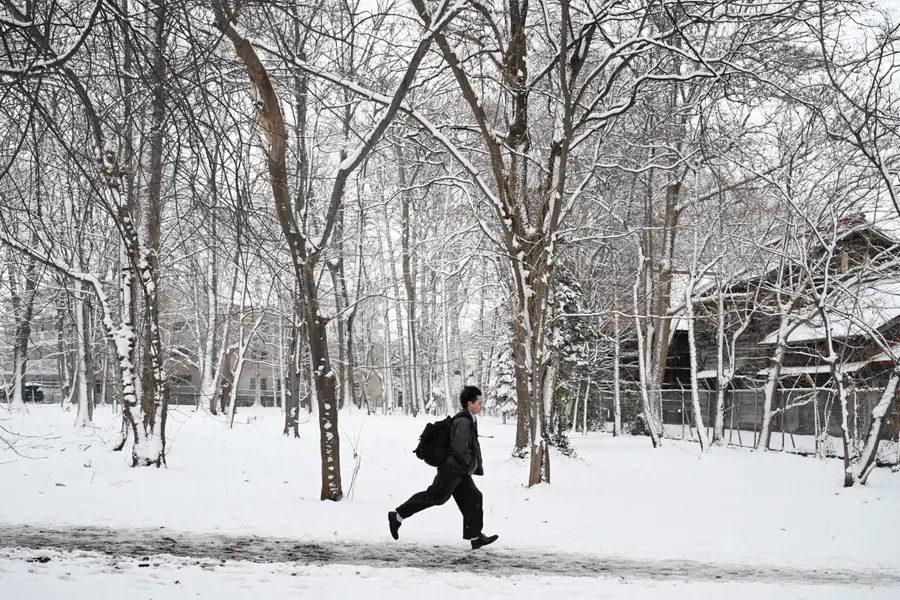
Japan has issued a megaquake advisory after a magnitude 7.5 earthquake struck off the eastern coast of Aomori on Monday, raising concerns over a potentially larger quake in the coming days.
Although the damage from this event was modest, authorities believe the tremor may have temporarily increased the risk of a much stronger quake in the region.
What triggered the advisory?
The magnitude 7.5 earthquake hit just off Aomori, Japan’s northernmost prefecture on Honshu, and south of Hokkaido. Officials recorded 34 mostly mild injuries and some damage to buildings and roads.
Authorities stressed the advisory is not a prediction, noting “the probability of a magnitude 8 or larger quake is only about 1 per cent”. However, they hope the alert will act as a wake-up call to prepare for a catastrophic event similar to the 2011 disaster that killed nearly 20,000 people and destroyed a nuclear plant.
Officials say there is now an increased risk of a subsequent magnitude-8 or larger quake within the next week. Residents, particularly in coastal areas, are being urged to keep emergency bags ready so they can leave immediately if the situation worsens.
Why is this advisory different from the one issued last year?
This alert is seen as more measured than the Nankai Trough advisory issued in the summer of 2024, which resulted in panic buying, event cancellations and temporary business closures due to unclear communication.
In contrast, the latest guidance aims to be clear and practical. The Japan Meteorological Agency (JMA) says Monday’s quake “temporarily increased potential risks in the regions of Hokkaido and the Sanriku coast”.
These regions sit above two major subduction zones — the Japan Trench and the Chishima Trench — both known for generating powerful offshore earthquakes.
What is the link to the 2011 earthquake?
Experts note a concerning historical pattern. The JMA explained that the devastating magnitude 9.0 quake on 11 March 2011 occurred “two days after a magnitude 7.3 temblor” at the Japan Trench off Iwate. That area was among the worst hit in 2011 and also felt Monday’s quake.
The 2011 disaster triggered a massive tsunami, with waves exceeding 15 metres in some areas. It destroyed towns across Iwate, Miyagi and Fukushima prefectures and slammed into the Fukushima Daiichi nuclear plant, fuelling long-lasting fears of radiation exposure.
What could happen if a megaquake strikes?
A government estimate suggests a major offshore quake in the Hokkaido–Sanriku region could trigger a tsunami up to 30 metres (98 feet) high. The projected human and economic toll is immense:
- Up to 199,000 deaths
- Destruction of 220,000 houses and buildings
- Economic losses of 31 trillion yen (USD 198 billion)
- Up to 42,000 people at risk of hypothermia during winter
The advisory currently covers 182 municipalities from Hokkaido down to Chiba Prefecture.
Japan has also issued a separate advisory for a potential Nankai Trough megaquake affecting the south. A 2013 estimate suggested a magnitude 9.1 quake in that zone could trigger tsunamis over 10 metres (33 feet), kill as many as 323,000 people, destroy more than 2 million buildings and cause economic damage exceeding 200 trillion yen (USD 1.28 trillion).
What are officials asking residents to do?
Officials emphasise they are not predicting a specific megaquake. Tsukasa Morikubo, a Cabinet official for disaster prevention, told a news conference the advisory contains “no prediction for any megaquake happening at any specific time or location”. He urged residents to be “cautious and prepared while continuing their daily activities and work”.
Authorities are advising people to:
- Keep an emergency bag with several days’ worth of essentials, shoes and helmets
- Discuss evacuation plans with family
- Sleep in day clothes rather than pyjamas for quick escape
- Secure furniture to floors or walls
Municipalities have begun checking relief supplies and equipment. Iwaki City in Fukushima has asked residents to register for emergency emails. In Oarai, Ibaraki Prefecture, officials inspected wireless communication devices.
How did previous advisories affect the public?
Japan’s first megaquake advisory in August last year involved dense scientific jargon, which “worried and baffled many” nationwide. Some towns closed beaches and cancelled annual festivals during the Buddhist holiday season.
Many people postponed travel and stocked up on rice, noodles, bottled water and portable toilets, leaving supermarket shelves empty even in regions outside the risk zone, including Tokyo.
(agency inputs)
Published: 09 Dec 2025, 06:31 pm IST
Related Topics
Disclaimer: Kindly avoid objectionable, derogatory, unlawful and lewd comments, while responding to reports. Such comments are punishable under cyber laws. Please keep away from personal attacks. The opinions expressed here are the personal opinions of readers and not that of Mathrubhumi.
