
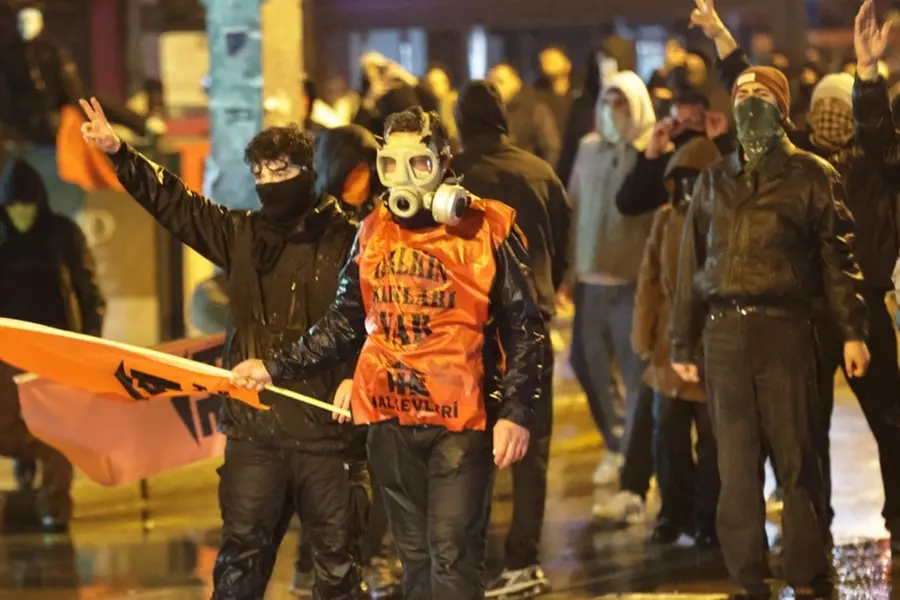
Istanbul: Tensions in Turkey continue to rise as a court prepares to rule on the detention of Istanbul Mayor Ekrem Imamoglu, whose arrest has sparked widespread protests in over 55 of Turkey’s 81 provinces.
Clashes between demonstrators and riot police have escalated, making this the country’s largest street unrest in over a decade. The Caglayan court is expected to decide whether to charge or release Imamoglu, who was taken into custody on March 20, just days before his anticipated nomination as the CHP’s 2028 presidential candidate.
The opposition mayor and key political rival of President Recep Tayyip Erdogan faces allegations of graft and aiding a terror organisation, charges he has dismissed as "immoral and baseless." His detention has led to violent clashes between demonstrators and riot police, with over 323 arrests reported overnight, according to Interior Minister Ali Yerlikaya.
Protests erupt across Turkey
Demonstrations in Istanbul, Ankara, Izmir, and other major cities have intensified despite a government-imposed protest ban. In Istanbul, more than 500,000 people gathered in solidarity, according to CHP leader Ozgur Ozel, with protesters chanting "Dictators are cowards!" and "AKP, you will not silence us!"
Riot police used rubber bullets, pepper spray, and percussion grenades to disperse crowds in Istanbul, pushing protesters into City Hall for refuge. In Ankara, authorities deployed water cannons, while in Izmir, police blocked student demonstrators marching toward the local AKP headquarters.
Despite the crackdown, the CHP pressed ahead with its primary vote, allowing the public to participate in an open ballot for Imamoglu’s 2028 presidential nomination, signaling defiance against Erdogan’s government.
Political and economic fallout
Imamoglu, in a statement released by City Hall, condemned his arrest as a blow to Turkey’s international reputation, warning that it has shaken public trust in justice and the economy. The Turkish lira tumbled, and the BIST 100 index closed nearly 8% lower on Friday, reflecting market instability amid the ongoing crisis.
Erdogan, who previously warned that authorities would not tolerate “street terror”, has faced growing dissent, with comparisons being drawn to the July 2016 coup protests. Many demonstrators see Imamoglu’s detention as an attempt to eliminate opposition before the next presidential election, intensifying the standoff between Erdogan’s ruling AKP and the secular opposition CHP.
As the court ruling looms, Turkey braces for a pivotal moment that could determine the future of its political landscape. Whether Imamoglu is freed or formally charged, the unrest shows no signs of fading, with protesters vowing to continue their fight for democracy.
Published: 23 Mar 2025, 11:55 am IST
Disclaimer: Kindly avoid objectionable, derogatory, unlawful and lewd comments, while responding to reports. Such comments are punishable under cyber laws. Please keep away from personal attacks. The opinions expressed here are the personal opinions of readers and not that of Mathrubhumi.
