
Israel launched fresh strikes on Iran as President Trump extends the deadline for reopening the Strait of Hormuz
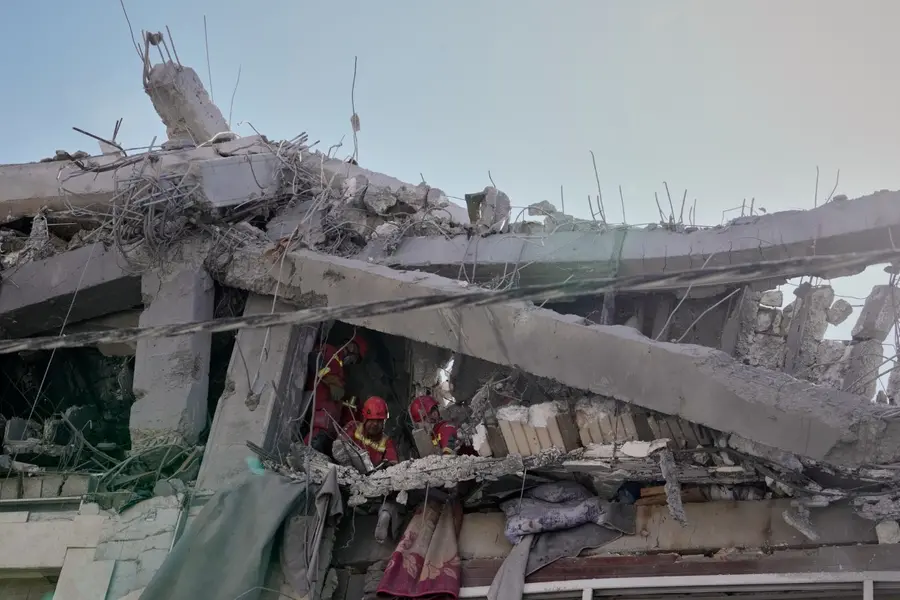
Dubai: Israel launched a fresh wave of strikes on Iran on Friday as US President Donald Trump indicated that talks aimed at ending the war were progressing and offered Tehran more time to reopen the Strait of Hormuz. Despite this, Iran has shown no sign of yielding.
The continued attacks come as global stock markets struggle and the economic consequences of the conflict extend far beyond the Middle East. Trump faces mounting pressure to resolve Iran’s control over the strategic waterway, through which roughly a fifth of the world’s oil shipments pass.
US offers ceasefire proposal
The United States has presented Iran with a 15-point ceasefire proposal, which includes relinquishing control of the Strait of Hormuz. Simultaneously, Washington has deployed additional troops to the region, suggesting a possible military effort to regain control of the waterway.
Trump had previously set a deadline for Iran to open the strait, warning that failure to comply could lead to the destruction of Iranian energy facilities. On Thursday, he extended the deadline to 6 April, stating that negotiations were going “very well.” Iran, however, maintains that it is not engaged in any formal discussions.
Israeli strikes target Tehran and western Iran
Israel’s military reported that its Friday attacks struck key locations in the heart of Tehran used for ballistic missile production and other military activities. Additional strikes hit missile launchers and storage sites in western Iran.
Smoke was visible over Beirut, though Israel did not confirm any attacks on the Lebanese capital. Air raid sirens sounded in Israel as the military sought to intercept Iranian missiles. Iran continued firing missiles and drones at Gulf Arab states, triggering warning sirens in Bahrain, Qatar, and the United Arab Emirates.
Kuwait reported that its Shuwaikh Port in Kuwait City suffered “material damage,” though no injuries were reported.
Global economic impact
Wall Street experienced its worst day since the conflict began, while Asian stock markets largely fell amid doubts over the prospects for de-escalation. Oil prices continued to rise, with Brent crude trading at $107 a barrel in morning sessions, an increase of over 45 per cent since the US and Israel began attacking Iran on 28 February.
Iran’s control over the Strait of Hormuz has raised fears of a global energy crisis. Gulf Arab nations reported that Iran is now charging fees to ships for safe passage through the waterway, seemingly as part of a strategy to pressure the United States by disrupting the global economy.
Diplomatic efforts continue
US envoy Steve Witkoff confirmed that Washington delivered the 15-point “action list” to Iran via Pakistan, outlining conditions for a potential ceasefire. The plan includes nuclear program restrictions and reopening the strait. Iran rejected the proposal and offered its own five-point plan, demanding reparations and recognition of its sovereignty over the waterway.
Diplomatic efforts have continued, with several countries attempting to arrange direct talks between US and Iranian envoys, potentially in Pakistan. Egypt’s Foreign Ministry reported that Foreign Minister Badr Abdelatty held discussions with his Turkish and Pakistani counterparts as part of these efforts. Abdelatty expressed hope that the talks would lead to “gradual de-escalation” and eventually end the war.
US and Israeli military deployment
While diplomatic efforts proceed, US forces continue to mobilise in the region. Approximately 2,500 Marines and at least 1,000 paratroopers from the 82nd Airborne, trained to secure key territory and airfields, have been sent to the area.
The United Nations Security Council has scheduled a closed consultation on Iran for Friday in New York. Russia requested the meeting to discuss US and Israeli attacks on civilian infrastructure, while the United States, holding the council presidency, arranged the session.
Humanitarian crisis in Iran
Jan Egeland, secretary general of the Norwegian Refugee Council, reported that countless homes, hospitals, and schools in Iran have been damaged or destroyed. Nearly every neighbourhood in Tehran has sustained some damage.
The International Organization for Migration stated that 82,000 civilian buildings, including hospitals and homes of 180,000 people, have been affected. Egeland warned that if the conflict continues, millions could be forced to flee, creating immense pressure on neighbouring countries and risking a wider humanitarian disaster.
Rising death toll
Since the war began, more than 1,900 people have died in Iran, according to the Health Ministry. In Israel, 18 civilians and at least three soldiers have been killed. At least 13 American troops have lost their lives, along with four people in the occupied West Bank and 20 in Gulf Arab states.
In Lebanon, more than 1,100 fatalities have been reported, while Iraq, where Iranian-supported militia groups are involved, has lost 80 members of its security forces.
With agency inputs
Published: 27 Mar 2026, 03:08 pm IST
Related Topics
Disclaimer: Kindly avoid objectionable, derogatory, unlawful and lewd comments, while responding to reports. Such comments are punishable under cyber laws. Please keep away from personal attacks. The opinions expressed here are the personal opinions of readers and not that of Mathrubhumi.
