
Pahlavi promised that a new Iran would have better relations with the leadership's sworn enemies, the United States and Israel, and integrate into the global economy.
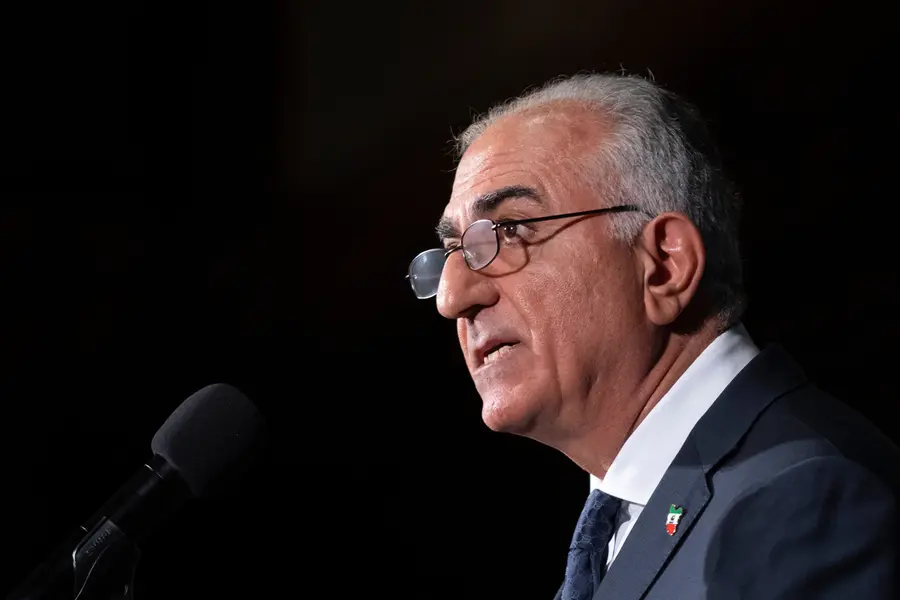
Washington: Reza Pahlavi, son of Iran’s late Shah, on Friday expressed confidence that mass protests would topple Iran’s clerical regime and called for international action, as US President Donald Trump continues to hold off on direct intervention in the unrest.
Speaking at a news conference in Washington, Pahlavi positioned himself as a leading opposition figure while accusing Iranian authorities of violently suppressing demonstrations that erupted in late December over severe economic conditions.
Also read: ‘Israel will be recognised, US relations restored’: Reza Pahlavi lays out vision for ‘free Iran’
“The Islamic Republic will fall — not if, but when,” Pahlavi said.
He renewed appeals for US support, after Trump previously warned Iran against killing protesters and told Iranians that “help is on the way.” However, two weeks after first raising the prospect of assistance, Washington has not taken military action.
Meanwhile, security forces have killed at least 3,428 protesters, according to Norway-based Iran Human Rights. Other estimates place the death toll above 5,000, possibly as high as 20,000.
Trump instead has highlighted what he said was an end to the killing of protesters, as the size of demonstrations diminished in recent days.
Trump wrote Friday on his Truth Social platform that Iran had called off executions of hundreds of protesters and said to the clerical state, "Thank you!"
Also read: Iran protesters shout ‘death to the dictator’ as Trump issues fresh warning to Tehran | WATCH
Pahlavi also took to social media on Friday, with posts on X and Instagram calling for Iranians across the country to "raise your voices in anger and protest with our national slogans" at 8:00 pm on Saturday and Sunday.
Pahlavi, seeking to touch a nerve with Trump, called on him not to be like Democratic predecessor Barack Obama who negotiated with Tehran.
"I believe that President Trump is a man of his word and ultimately he will stand with the Iranian people as he has said," Pahlavi said when asked if Trump had given false hope.
"Iranian people are taking decisive actions on the ground. It is now time for the international community to join them fully."
Gulf Arab monarchies, despite frequent friction with Iran, have urged Trump to show caution.
Pahlavi called for targeting the command structure of the elite Revolutionary Guards, as it is key to "instituting terror at home or terrorism abroad."
"I'm calling for a surgical strike," said Pahlavi, who controversially backed Israel's military campaign on Iran in June.
He also urged all countries to expel diplomats from Iran and to help restore internet access, which has been severely hampered.
Many protesters have chanted the name of Pahlavi, whose pro-Western father fled in 1979 during the Islamic Revolution.
While Iran's last Shah presented a glamorous image of the oil-rich nation to the world -- replete with caviar, glittering crown jewels and a jet-setter lifestyle -- domestically, repression and the brutality of his secret police force, as well as a lack of economic mobility, opened the door to political challenge.
Asked about repression under his father, Pahlavi told reporters, "I let historians write history. I'm here to make history."
Pahlavi, 65, said he wants to be a figurehead to lead a transition to a secular democracy, with a popular referendum to choose the next system of government.
He also has plenty of detractors who suspect a desire by his supporters to restore the monarchy and say changes should come from the opposition within Iran.
"I reaffirm my lifelong pledge to lead the movement that will take back our country from the anti-Iranian hostile force that occupies it and kills its children," Pahlavi said.
"I will return to Iran."
Pahlavi promised that a new Iran would have better relations with the leadership's sworn enemies -- the United States and Israel -- and integrate into the global economy.
He said Iran would quickly normalize relations with Israel in a "Cyrus Accord," a reference to Cyrus the Great, the celebrated Persian emperor who freed Jews from Babylonian captivity.
"Iran today should have been the next South Korea of the Middle East," he said. "Today we have become North Korea."
Published: 17 Jan 2026, 07:53 am IST
Related Topics
Disclaimer: Kindly avoid objectionable, derogatory, unlawful and lewd comments, while responding to reports. Such comments are punishable under cyber laws. Please keep away from personal attacks. The opinions expressed here are the personal opinions of readers and not that of Mathrubhumi.
