
A recent mosque bombing in Islamabad has brought the Islamic State Khorasan Province (ISKP) back into focus
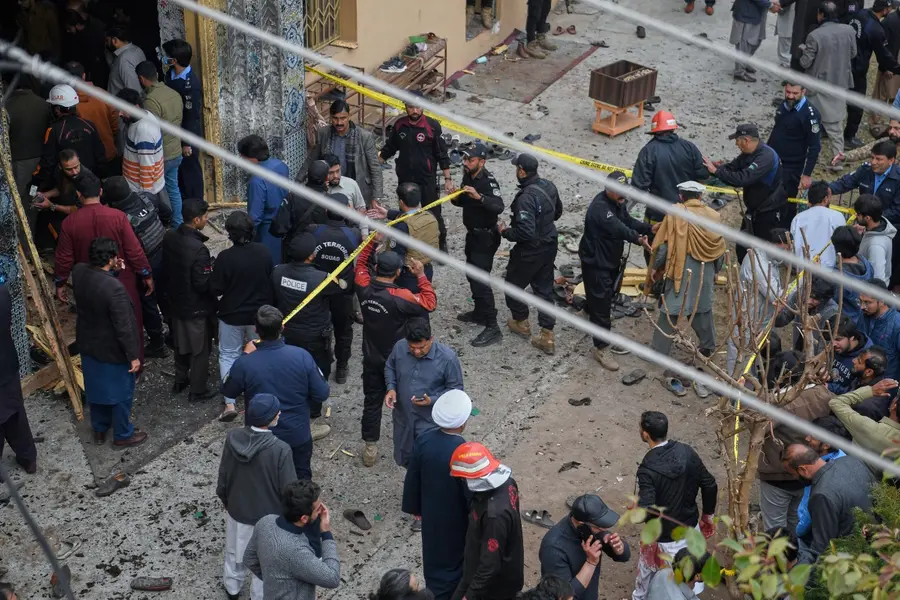
New Delhi: The recent bombing at a mosque in Islamabad has been claimed by the Islamic State Khorasan Province (ISKP), signalling the group’s renewed operational push inside Pakistan after nearly a year of relative silence.
The last major attack claimed by ISKP in Pakistan was on April 15, 2025, in Mastung, Balochistan, where a bus carrying Pakistani security personnel was targeted, resulting in three deaths.
Also Read

Security analysts note that ISKP has been active in Pakistan since 2015, although attacks remained sporadic until 2022. Since then, the frequency has increased significantly, with around 90 attacks of varying scale claimed by the group.
In 2021, ISKP began shifting major operational focus from Afghanistan into Pakistan, which it has publicly described as an “enemy nation” and an “un-Islamic state.” The group has stated its objective of establishing an Islamic state in Pakistan.
The Islamabad mosque blast occurred shortly after the Balochistan Liberation Army (BLA) launched ‘Operation Herof 2.0’ against Pakistani security forces. Officials suggest that the heightened focus on Balochistan may have created a security vacuum that ISKP exploited to carry out the attack in the capital.
Intelligence officials have also pointed to broader geopolitical signalling. Following US air strikes against Islamic State targets in Syria and Africa earlier this year, the Islamabad attack is being viewed as an attempt by ISKP to reassert its relevance and project strength.
There has also been a shift in the geographical pattern of attacks. Previously concentrated around Balochistan, recent incidents have targeted major urban centres such as Islamabad and Karachi, indicating expanded operational reach.
Officials attribute the resurgence to multiple internal pressures on Pakistan, including tensions with the Tehreek-e-Taliban Pakistan (TTP), the rise of Baloch insurgent activity, and strained ties with the Afghan Taliban.
According to officials, Pakistan’s intelligence agency had previously reached understandings with ISKP aimed at limiting its operations within Pakistan. However, recent events suggest that the group is no longer adhering to such arrangements.
Security experts say ISKP’s current strategy appears aimed at simultaneously weakening the Pakistani establishment and strengthening its position to challenge the Taliban in Afghanistan. The Islamabad blast is being viewed as a clear indication that the group intends to escalate its activities rather than scale them back.
Published: 11 Feb 2026, 03:45 pm IST
Related Topics
Disclaimer: Kindly avoid objectionable, derogatory, unlawful and lewd comments, while responding to reports. Such comments are punishable under cyber laws. Please keep away from personal attacks. The opinions expressed here are the personal opinions of readers and not that of Mathrubhumi.