
Beyond immediate legal questions, Trump’s rhetoric may also have longer-term consequences, potentially fuelling fear among ordinary Iranians and strengthening the resolve of the country’s leadership.
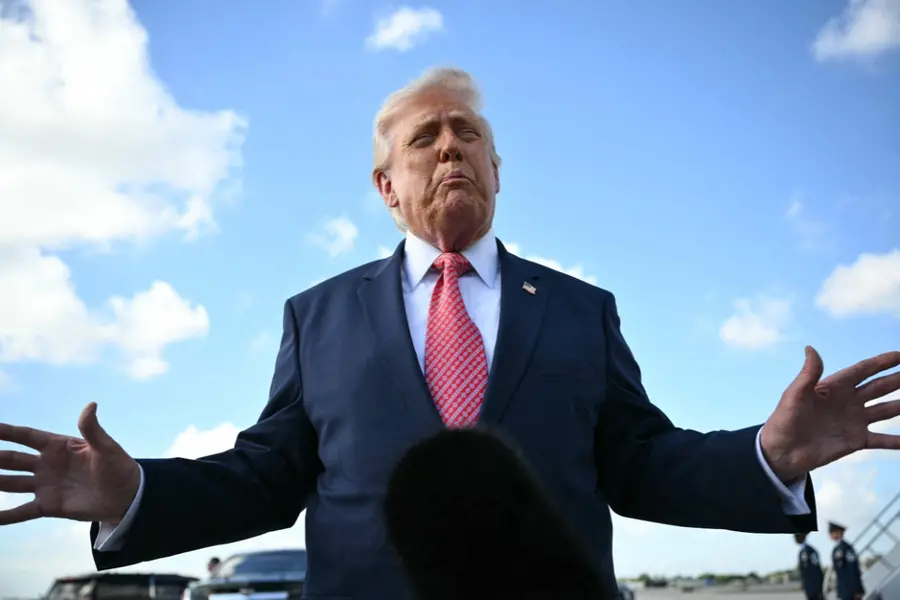
Washington: US President Donald Trump’s sweeping threat to destroy Iran’s bridges and power plants has triggered alarm among legal experts, lawmakers and the United Nations, with some warning that such action could amount to a war crime under international law.
At a news conference on Monday, Trump escalated rhetoric against Iran, warning of widespread strikes targeting critical infrastructure unless Tehran moved to reopen the Strait of Hormuz — a vital oil transit chokepoint now largely stalled amid rising tensions.
The president’s remarks were striking in their breadth. He spoke of wiping out “every bridge and power plant,” raising immediate concerns about civilian harm and compliance with the laws of armed conflict.
Under international humanitarian law, civilian infrastructure can only be targeted if it qualifies as a legitimate military objective, and even then, any attack must be proportionate and minimise harm to civilians.
A spokesperson for UN Secretary-General Antonio Guterres issued a stark warning.
“Even if specific civilian infrastructure were to qualify as a military objective,” said Stephane Dujarric, an attack would still be prohibited if it risks “excessive incidental civilian harm.”
Experts in military law echoed those concerns, noting the cascading humanitarian impact of targeting power infrastructure.
Rachel VanLandingham, a former US Air Force judge advocate, said civilians would inevitably suffer if electricity is cut off to essential services.
“What Trump is saying is, ‘We don’t care about precision, we don’t care about impact on civilians, we’re just going to take out all of Iran's power-generating capacity,’” the retired lieutenant colonel said.
Trump, however, dismissed concerns when pressed by reporters.
“I’m not at all concerned” about committing war crimes, he said, adding that Iran’s power plants would be “burning, exploding and never to be used again.”
“I hope I don’t have to do it,” he added.
The White House defended the president’s stance, framing it as pressure against Tehran’s leadership. Spokeswoman Anna Kelly said, “The Iranian people welcome the sound of bombs because it means their oppressors are losing.”
The rhetoric comes as the conflict enters its second month, with Trump previously threatening to target key assets, including Kharg Island — a hub of Iran’s oil exports — and even desalination plants that provide drinking water.
In a March 30 post on Truth Social, he warned that the US could obliterate “all of their Electric Generating Plants, Oil Wells and Kharg Island (and possibly all desalination plants!), which we have purposefully not yet ‘touched.’”
On Easter Sunday, his language intensified further. Iran would face “Power Plant Day, and Bridge Day, all wrapped up in one,” he wrote, adding that “you’ll be living in Hell” if the strait remained closed.
For some legal scholars, such statements cross a clear line.
“This strikes me as clearly a threat of unlawful action,” said Michael Schmitt, a former U.S. Naval War College professor.
Schmitt noted that while infrastructure can be a lawful target if it supports military operations, the principle of proportionality remains central.
“If you look at the operation and you’ve got a valid military objective, but it’s going to cause harm to civilians, and you go, ‘Whoa, that’s a lot,’ then you should stop,” he said. “If you hesitate to take the shot, don’t take the shot.”
Political reactions in Washington have been sharply divided.
Republican Senator Joni Ernst defended Trump, arguing the infrastructure in question also serves military purposes.
“He is absolutely not” threatening a war crime, she said, calling it part of “an ongoing operation” and a form of leverage.
Democratic Senator Chris Van Hollen disagreed, calling the remarks a “textbook war crime.”
“If you target civilian infrastructure for the purposes the president was talking about, it clearly is a war crime,” he said.
Even if such actions were legally justified, experts caution they could prove strategically counterproductive.
VanLandingham pointed to past U.S. conflicts to underline the risks.
“There's a lot of violence that can still be justified as lawful, but lawful can still be awful,” she said. “How far did that get us in Iraq? How far did that get us in Afghanistan? How far did that get us in Vietnam?”
Beyond immediate legal questions, Trump’s rhetoric may also have longer-term consequences, potentially fuelling fear among ordinary Iranians and strengthening the resolve of the country’s leadership.
As VanLandingham warned, such messaging could be used as propaganda, hardening opposition and prolonging an already volatile conflict.
Published: 07 Apr 2026, 07:25 am IST
Related Topics
Disclaimer: Kindly avoid objectionable, derogatory, unlawful and lewd comments, while responding to reports. Such comments are punishable under cyber laws. Please keep away from personal attacks. The opinions expressed here are the personal opinions of readers and not that of Mathrubhumi.
