
The warning comes amid heightened tensions following remarks by Donald Trump, who threatened strikes on Iran’s power facilities if navigation through the Strait of Hormuz is not restored within 48 hours.
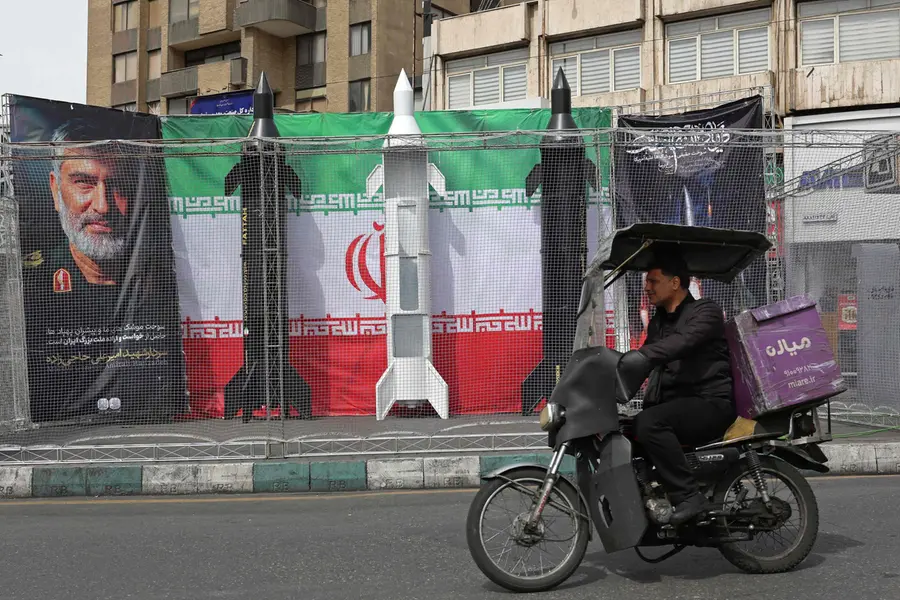
Tehran: Iran has issued a stark warning to the United States, with Parliament Speaker Mohammad Bagher Ghalibaf declaring that any attack on Iranian power plants would trigger sweeping retaliation across the region’s energy infrastructure.
“Critical infrastructure and energy and oil infrastructure throughout the region will be considered legitimate targets and irreversibly destroyed, and oil prices will rise for a long time,” Ghalibaf said on X.
The warning comes amid heightened tensions following remarks by Donald Trump, who threatened strikes on Iran’s power facilities if navigation through the Strait of Hormuz is not restored within 48 hours.
Trump said the US would act decisively if the vital shipping lane remains blocked, stating it would destroy “various POWER PLANTS, STARTING WITH THE BIGGEST ONE FIRST!”
Potential targets could include Iran’s largest nuclear facility at Bushehr Nuclear Power Plant, which was reportedly hit last week, or the Damavand Power Plant, a major gas-powered facility near the capital.
The Strait of Hormuz, a crucial link between the Persian Gulf and the Indian Ocean, handles a significant share of the world’s oil shipments. Recent attacks on commercial vessels and escalating threats have effectively halted tanker movement, forcing major producers to cut output due to disrupted export routes.
Strikes near Israeli nuclear hub
Meanwhile, tensions have further intensified with Iran’s missile strikes near key cities in Israel. The Israeli military said it was unable to intercept missiles that struck Dimona and Arad, both located close to the Negev Desert’s sensitive nuclear research centre.
“If the Israeli regime is unable to intercept missiles in the heavily protected Dimona area, it is, operationally, a sign of entering a new phase of the battle,” Ghalibaf said on X.
Emergency responders reported that at least 64 people were hospitalised following a direct strike in Arad. Dimona lies roughly 20 kilometres from the nuclear facility, while Arad is about 35 kilometres away.
Itamar Ben-Gvir visited the affected area on Sunday, describing the situation as a “historic battle” and asserting that Israel must “continue until victory”.
Israel is widely believed to be the only country in the Middle East possessing nuclear weapons, although it maintains a policy of ambiguity. The International Atomic Energy Agency said it has received no reports of damage to the nuclear facility or abnormal radiation levels.
The conflict’s ripple effects are being felt globally, with disruptions in oil supply chains pushing up fuel and food prices.
According to Iranian state media, the death toll in Iran has crossed 1,500. In Israel, at least 15 people have been killed in missile strikes, while four fatalities have been reported in the occupied West Bank. Additionally, at least 13 US military personnel and several civilians in Gulf countries have lost their lives in the escalating conflict.
Qatar chopper crash kills 6
Three Turkish nationals, including a serviceman, were killed after a helicopter crashed in Qatar's territorial waters, alongside three Qatari servicemen, the Gulf country's defence ministry said.
While Qatar has been targeted by several strikes since the start of the Middle East war, no connection has been made between this chopper and the conflict triggered by US-Israeli attacks on Iran.
Published: 22 Mar 2026, 04:58 pm IST
Related Topics
Disclaimer: Kindly avoid objectionable, derogatory, unlawful and lewd comments, while responding to reports. Such comments are punishable under cyber laws. Please keep away from personal attacks. The opinions expressed here are the personal opinions of readers and not that of Mathrubhumi.
