
As diplomatic fallout grows, experts warn that the conflict has reached the doorstep of the Indian Ocean.
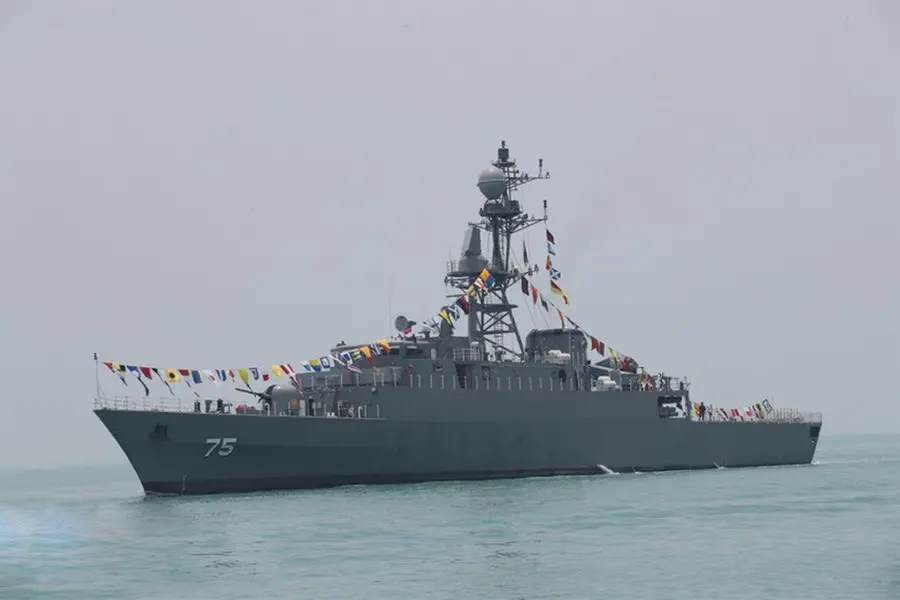
Tehran: An Iranian sailor killed when the frigate IRIS Dena was torpedoed by a US submarine had called his father minutes before the attack, saying American forces had already warned the crew twice to abandon the vessel, according to a report by Iran International published on March 7. The warship's commander reportedly refused to let the sailors evacuate despite the warnings, leading to arguments among the crew before the torpedo struck. The 32 sailors who survived were mostly those who escaped on lifeboats before the ship went down.
The March 4 attack, confirmed by US Defence Secretary Pete Hegseth at a Pentagon briefing, marked the first sinking of an enemy warship by a US submarine since World War II. Sri Lankan rescue teams recovered 87 bodies and saved 32 sailors from the waters roughly 40 nautical miles south of Galle, Sri Lanka.
ALSO READ: The sinking of IRIS Dena: How Mk-48 Torpedo delivers a ‘quiet death’
A Warship Returning From Peacetime Exercises
The IRIS Dena, a Moudge-class frigate commissioned in 2021, had been returning to Iran after participating in the International Fleet Review 2026 and Exercise Milan, a multinational naval gathering hosted by India at Visakhapatnam in late February. Photographs from the event showed the vessel entering the Indian port as sailors in white uniforms stood on deck.
Hegseth described the strike bluntly. "An American submarine sank an Iranian warship that thought it was safe in international waters," he said. "Instead, it was sunk by a torpedo. Quiet death." Pentagon footage showed a Mark-48 torpedo detonating under the ship's stern, lifting the vessel and breaking its keel. The frigate sank within minutes, leaving an oil slick and floating debris.
Iranian Foreign Minister Abbas Araghchi condemned the attack on social media, calling it "an atrocity at sea" and warning that "the US will come to bitterly regret the precedent it has set".
Retaliation and Widening Conflict
Iran responded with waves of drone and missile strikes against US military installations across the Gulf. Iran's navy said it launched drone attacks targeting US bases in the UAE's Al Minhad base and facilities in Kuwait, while the IRGC claimed strikes on a US-linked vessel at Jebel Ali anchorage near Dubai. Between March 1 and March 5, Kuwait reported 178 missiles and 384 drones targeting its territory, while the UAE reported over 1,000 drones and 200 missiles directed at its soil, according to tallies compiled by the Long War Journal.
The sinking has also created diplomatic complications. A US State Department cable dated March 6, seen by Reuters, urged Sri Lanka not to repatriate the 32 survivors or 208 sailors rescued from a second Iranian vessel, the IRIS Booshehr. Retired Vice Admiral Arun Kumar Singh told the BBC that the strike brought the war uncomfortably close: "The war has come to our doorsteps. That is not a good thing."
Published: 08 Mar 2026, 03:56 pm IST
Related Topics
Disclaimer: Kindly avoid objectionable, derogatory, unlawful and lewd comments, while responding to reports. Such comments are punishable under cyber laws. Please keep away from personal attacks. The opinions expressed here are the personal opinions of readers and not that of Mathrubhumi.
