
Iraq’s Dukan Dam reservoir has fallen to just 24% of its capacity, with the country’s water reserves hitting an 80-year low
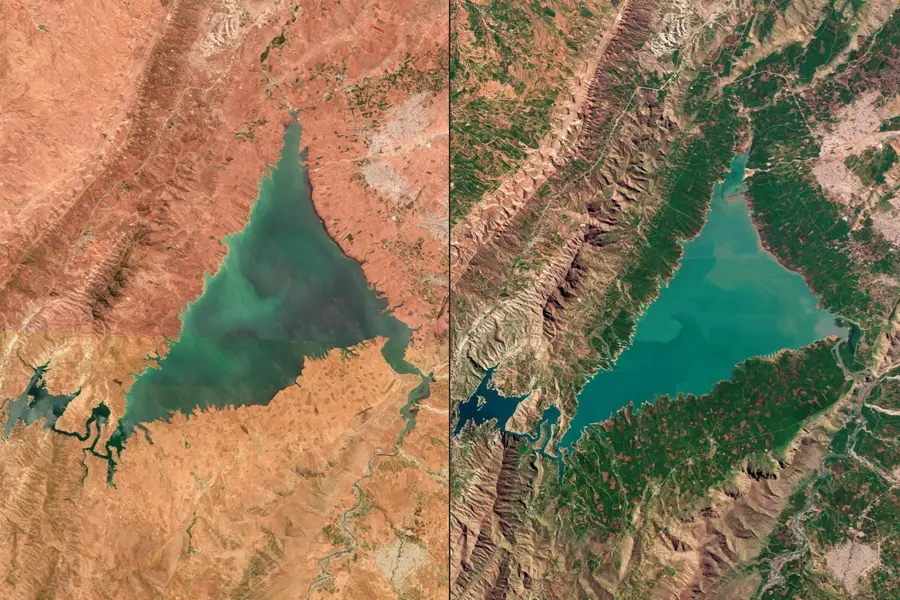
Dukan, Iraq: Water levels at Iraq's Dukan Dam have dropped to just 1.6 billion cubic metres, or 24 percent of its total 7 billion cubic metre capacity, marking the lowest level in about two decades, officials confirmed.
The massive artificial lake, situated in the Kurdistan region, is now three-quarters empty, exposing deep cracks along the retreating shoreline and further worsening conditions for millions already impacted by prolonged drought and water scarcity.
The dam, constructed in the 1950s, is a crucial water source for the Sulaimaniyah and Kirkuk governorates, home to around four million people. The latest crisis is driven by climate change, irregular rainfall, and upstream damming of the Little Zab River, which flows through Iran and feeds the reservoir.
Dukan Dam’s director, Kochar Jamal Tawfeeq, said only 220 millimetres of rain had fallen over the winter, compared to the average of 600 millimetres. Satellite imagery revealed the lake's surface area has shrunk by 56 percent since 2019.
Iran, also experiencing drought, has built dozens of dams on the river to bolster its own reserves, a move criticised by Iraq, which blames both Iran and Turkey for restricting transboundary river flows, including the Tigris and Euphrates.
At the nearby village of Sarsian, farmer Hussein Khader Sheikhah planted a small plot for summer crops like melons, chickpeas, and beans in hopes of recovering from a failed winter wheat harvest on 13 hectares due to lack of rain.
"The harvest failed because of the lack of rain... I can't make up for the loss of 13 hectares with just one hectare," Sheikhah said, estimating a loss of nearly $5,700.
In Kirkuk, where residents already face intermittent water supply, treatment plants are struggling to adjust to a 40% drop in incoming water, according to official Zaki Karim.
Authorities are now enforcing stricter water rationing, cracking down on illegal network connections, and urging the public to avoid water waste, aiming to prevent total service interruptions in the province of two million people.
"We will ensure there are no total interruptions, so everyone can receive their share," Karim said.
The situation comes as Iraq endures one of its worst water crises in 80 years, amid rising temperatures, year-on-year droughts, and rapid desertification, posing grave risks to agriculture, health, and regional stability.
(With AFP inputs)
Published: 21 Jun 2025, 12:33 pm IST
Related Topics
Disclaimer: Kindly avoid objectionable, derogatory, unlawful and lewd comments, while responding to reports. Such comments are punishable under cyber laws. Please keep away from personal attacks. The opinions expressed here are the personal opinions of readers and not that of Mathrubhumi.
