
Satellite imagery shows Iran rapidly fortifying key nuclear facilities, burying structures under concrete and earth at the Taleghan 2 site in Parchin as US military pressure rises and fragile nuclear talks continue.
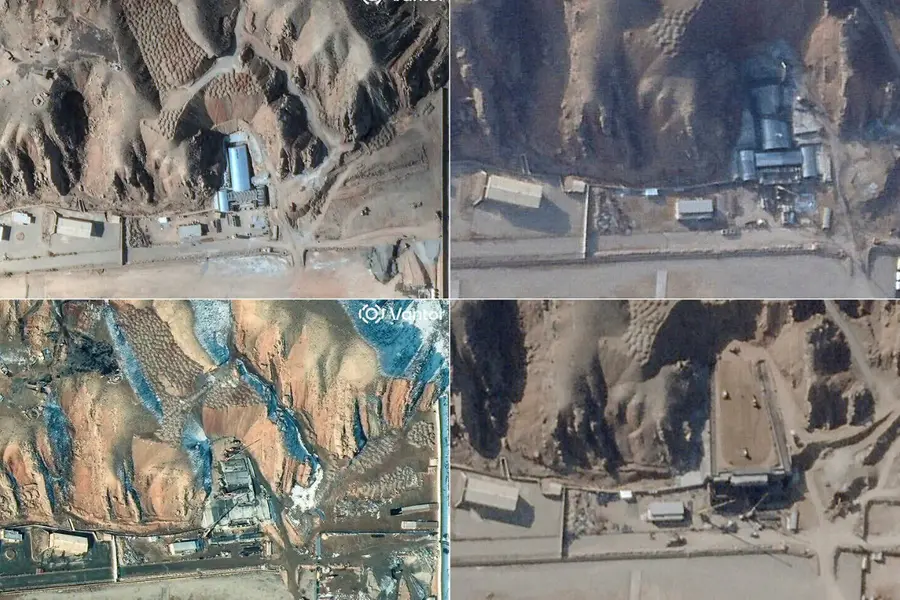
Satellite imagery has revealed that Iran is rapidly hardening key nuclear infrastructure, burying sensitive facilities under layers of concrete and earth as US military pressure mounts in the region, according to a new assessment by the Institute for Science and International Security.
The Washington-based watchdog said high-resolution images show accelerated fortification work at the new Taleghan 2 site inside the Parchin military complex, about 30 km southeast of Tehran. Imagery dated February 13 indicates that a concrete shell has been completed around the main structure and that soil is now being piled over it to conceal and protect the facility.
Also read | Can Iran sink a US aircraft carrier? Khamenei’s warning for USS Gerald R Ford signals more
Over the “last two to three weeks, Iran has been busy burying the new Taleghan 2 facility at the Parchin military complex with soil,” the institute said. It added that once the concrete sarcophagus hardened, “Iran did not hesitate to move soil over large parts of the new facility,” with earth mounds on nearby hills likely intended to further obscure the site, leaving only limited entrance portals visible.
Also read | Iran temporarily shuts down Strait of Hormuz in the midst of nuclear talks with US
The findings come as diplomatic efforts continue alongside rising military tensions. US Secretary of State Marco Rubio is expected to travel to Israel next week for talks with Prime Minister Benjamin Netanyahu on February 28 to brief him on the latest US-Iran nuclear negotiations, according to two US officials familiar with the plan.
The United States and Iran have held two rounds of indirect talks on Tehran’s nuclear programme, while Washington has simultaneously increased its military presence in the Middle East. Netanyahu, who visited the White House last week, has urged President Donald Trump to ensure any future deal addresses Iran’s ballistic missile programme and its support for regional proxy groups.
Also read | ‘Bottom of the sea’: Khamenei warns Trump of weapons capable of sinking US carriers
International Atomic Energy Agency chief Rafael Grossi said there had been limited progress in the Oman-mediated talks in Geneva but warned that time was running out. “We made progress, but there is still work to be done, and the problem is that we don't have much time,” he said, adding that “there is the possibility of a dialogue that is really beginning, for the first time, to take shape,” and that both sides showed “a willingness… to reach an agreement,” though “such an agreement is enormously complex.”
Tensions remain high after Tehran curtailed cooperation with the IAEA and blocked inspectors from visiting sites damaged during last year’s 12-day conflict with Israel and the United States, accusing the agency of bias. The White House has meanwhile warned that it would be “wise” for Iran to reach a deal, as Trump again hinted at possible military action.
The satellite evidence of bunker-style construction underscores Western concerns that Iran is seeking to make elements of its nuclear programme more resilient to potential airstrikes, even as negotiations continue under the shadow of escalating strategic pressure.
Published: 19 Feb 2026, 07:30 am IST
Related Topics
Disclaimer: Kindly avoid objectionable, derogatory, unlawful and lewd comments, while responding to reports. Such comments are punishable under cyber laws. Please keep away from personal attacks. The opinions expressed here are the personal opinions of readers and not that of Mathrubhumi.
