
Trump has repeatedly insisted that the ceasefire is holding, while also warning Iran of renewed military action if it rejects efforts to reopen the strait and scale back its nuclear activities.
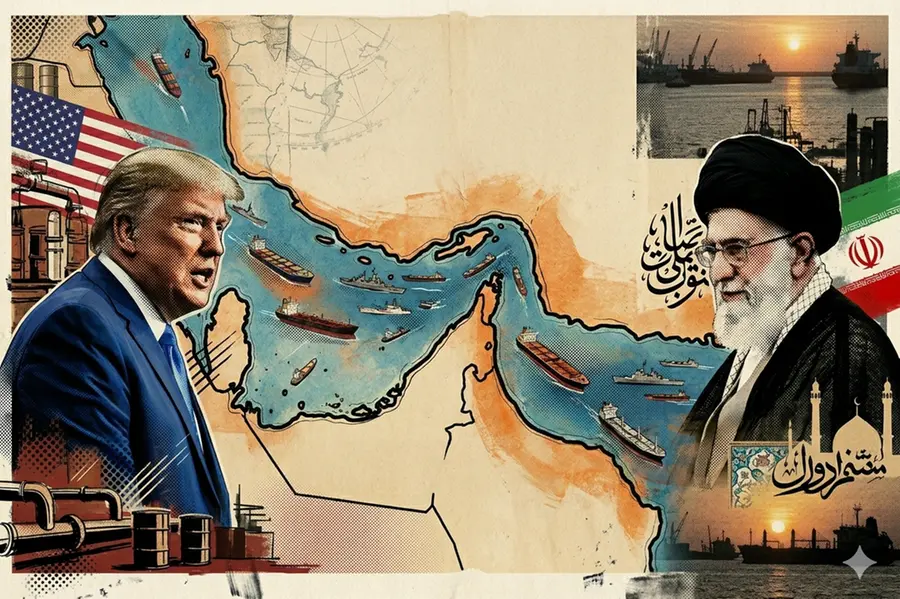
Dubai: A fragile ceasefire between Iran and the United States appeared to hold on Saturday despite fresh military tensions in the Gulf region, including American strikes on two Iranian oil tankers and Bahrain’s announcement that it had arrested dozens of suspects allegedly linked to Iran’s Revolutionary Guard.
The latest developments have raised fresh concerns over the stability of the month-old truce brokered amid the ongoing conflict in West Asia.
According to the US military, American forces on Friday disabled two Iranian tankers that were allegedly attempting to breach the US-imposed blockade on Iranian ports. Earlier in the day, the military claimed it had intercepted attacks targeting three US Navy ships and carried out strikes on Iranian military facilities near the Strait of Hormuz.
Also read | US cracks down on Iran UAV and missile supply chains with fresh sanctions
Despite the escalation, Washington has maintained that the ceasefire remains in effect and is awaiting Tehran’s response to a new proposal aimed at ending the conflict, reopening the Strait of Hormuz to global shipping and curbing Iran’s controversial nuclear programme.
Meanwhile, Bahrain, which hosts the US Navy’s Fifth Fleet headquarters, announced the arrest of 41 individuals accused of being associated with Iran’s Islamic Revolutionary Guard Corps (IRGC).
In a statement, Bahrain’s interior ministry said investigations were continuing but did not disclose further details regarding the alleged network.
Also read | Satellite images reveal massive oil spill near Iran's Kharg Island
The arrests come amid heightened tensions between Bahrain and Iran. Bahrain, ruled by a Sunni monarchy despite having a Shiite-majority population, has long accused Tehran of interference in its internal affairs. Human rights groups, however, have alleged that Bahraini authorities have used regional tensions as a pretext to suppress dissent.
Iran also issued a warning directed at Bahrain.
"Siding with the US-backed resolution will bring severe consequences. The Strait of Hormuz is a vital lifeline; do not risk closing it on yourselves FOREVER," Ebrahim Azizi, head of the national security commission of Iran's parliament, said on social media.
Iran has largely restricted traffic through the strategically crucial Strait of Hormuz since the outbreak of the war involving the US and Israel on February 28, triggering sharp increases in global fuel prices and creating uncertainty in international markets. In response, the US imposed a blockade on Iranian ports.
As tensions continued, Britain announced that it was deploying the warship HMS Dragon to the Middle East as part of preparations for a potential maritime security mission in the Strait of Hormuz once hostilities ease.
The British Defence Ministry said the vessel would “preposition” in the region and could join a joint UK-France initiative aimed at safeguarding commercial shipping routes. France has already moved its aircraft carrier strike group into the Red Sea in anticipation of possible operations.
British and French officials have been leading discussions involving dozens of countries on plans to restore freedom of navigation through the Strait of Hormuz, although they stressed that such a mission would only begin after a durable ceasefire is achieved.
US President Donald Trump has repeatedly insisted that the ceasefire is holding, while also warning Iran of renewed military action if it rejects efforts to reopen the strait and scale back its nuclear activities.
On Friday, Iranian foreign ministry spokesperson Esmail Baghaei dismissed concerns about external pressure, saying the country was not paying attention to "deadlines," according to state media.
Speculation also continued over the condition of Iran’s Supreme Leader Mojtaba Khamenei, who has not appeared publicly since the conflict began. Addressing a pro-government gathering, Mazaher Hosseini, linked to the office of Iran’s former Supreme Leader, said Khamenei was in “complete health”.
Hosseini claimed that Mojtaba Khamenei had suffered knee and back injuries during the early stages of the war but that the injuries had “largely healed”.
Diplomatic efforts to preserve the ceasefire and move towards a broader agreement also intensified.
Pakistan Prime Minister Shehbaz Sharif said Islamabad had been in contact with both Washington and Tehran “day and night” to help extend the ceasefire and support peace negotiations.
Russia’s foreign ministry, along with Saudi Arabia, also called for continued diplomatic engagement to secure a “sustainable, long-term agreement” to end the war.
Egypt and Qatar separately reiterated that diplomacy remained the only viable solution to the conflict following talks between the two countries’ foreign ministers on Saturday.
Published: 09 May 2026, 09:13 pm IST
Related Topics
Disclaimer: Kindly avoid objectionable, derogatory, unlawful and lewd comments, while responding to reports. Such comments are punishable under cyber laws. Please keep away from personal attacks. The opinions expressed here are the personal opinions of readers and not that of Mathrubhumi.
