
Iran strikes Kurdish armed groups in Iraq while launching a new wave of missile and drone attacks on Israel and US-linked targets as the regional war escalates.
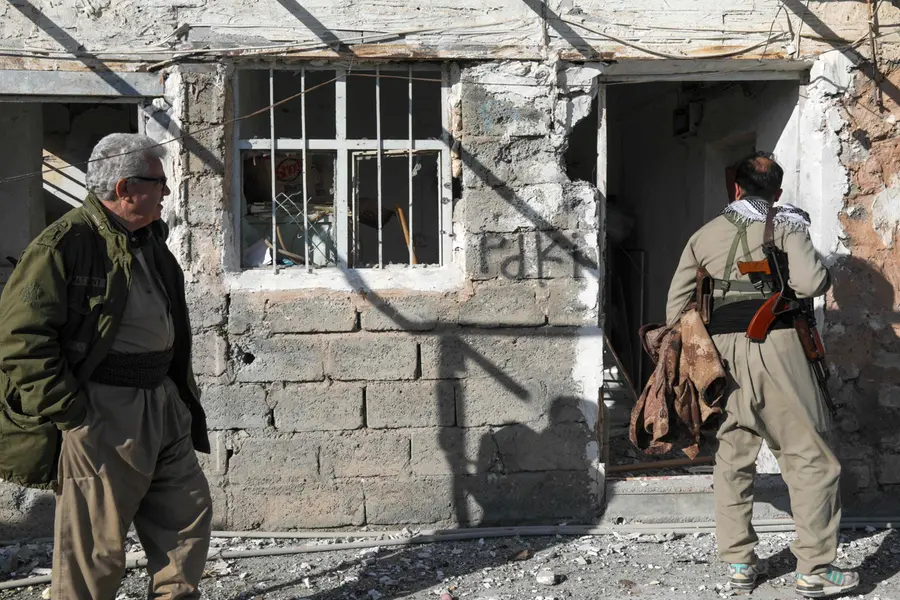
Iranian forces launched strikes against Kurdish armed groups in northern Iraq early Thursday while also initiating another round of missile and drone attacks targeting Israel and United States assets across the Middle East, according to Iranian state media.
The operations came on the sixth day of a widening regional conflict involving Iran, Israel and the United States, with fighting spreading across several countries and escalating fears of a broader war.
Strikes reported in Iraqi Kurdish region
Iranian state broadcaster Press TV reported that Iranian forces were targeting what it described as “anti-Iran separatist forces” operating in the semi-autonomous Kurdish region of neighbouring Iraq, though the exact location of the strikes was not immediately specified.
Iran’s Ministry of Intelligence of Iran later confirmed that its forces had attacked positions belonging to “separatist groups” that it said were planning to cross into Iran through its western borders.
The ministry said the groups had suffered heavy losses and added that Iranian forces were working with local Kurdish communities to counter what it described as a foreign-backed plan against the country. The statement said Iranian forces are cooperating with “noble Kurds” to thwart the “Israeli-American” plan to attack Iranian soil.
Explosions reported in Sulaimaniyah province
Local media in the region reported multiple explosions in Sulaimaniyah province in northern Iraq.
Witnesses said at least four blasts were heard near the towns of Arabat, Zarkuiz and Surdash.
Local sources indicated that the attacks targeted the headquarters of the Kurdistan Toilers Association, also known as Komala, an Iranian Kurdish armed opposition group based in Iraq.
Kurdish groups and US contacts
The strikes came amid reports that Iranian Kurdish armed factions had recently held discussions with United States officials about potential operations against Iranian security forces.
According to Reuters, Kurdish groups based along the Iran–Iraq border have been training for a possible offensive aimed at weakening Iran’s military capabilities, while seeking support from Washington.
However, the regional government of Iraqi Kurdistan denied any involvement in plans to arm Kurdish groups or send fighters into Iran.
Kurdish leadership rejects role in escalation
The president of the Kurdish region, Nechirvan Barzani, said the territory should not be drawn into the widening conflict.
It “must not become part of any conflict or military escalation that harms the lives and security of our fellow citizens”.
“Protecting the territorial integrity of the Kurdistan Region and our constitutional achievements can only be achieved through the unity, cohesion, and shared national responsibility of all political forces and components in Kurdistan,” he added.
A spokesperson for the Kurdish regional government also said it had no role in any efforts that could intensify the ongoing conflict or increase regional tensions.
New wave of attacks on Israel and US assets
At the same time, Iran’s Islamic Revolutionary Guard Corps announced it had launched what it described as the 19th wave of missile and drone attacks targeting Israel and US-linked positions in the region.
Israel’s air defence systems intercepted two drones over the Western Galilee, according to Israeli broadcaster Channel 12.
Authorities in Saudi Arabia said they had shot down at least three drones, while Qatar ordered evacuations of homes located near the United States Embassy in Doha as a precaution.
Explosions reported across Iran
Meanwhile, heavy airstrikes by the United States and Israel continued across Iran.
Explosions were reported in the capital Tehran as well as in Kurdish-majority cities including Sanandaj, Saqqez and Bukan.
The Israeli military said its air force had destroyed a ballistic missile launcher that was preparing to fire from the city of Qom.
The United States Central Command said the operation was part of efforts to “eliminate” Iran’s mobile missile launch capabilities.
Iranian air defence systems were activated in response to the attacks, according to the semiofficial Tasnim News Agency.
According to Tasnim News Agency, at least 1,045 people have been killed in Iran since the war began, though the figure has not been independently verified.
(With inputs from agencies)
Published: 05 Mar 2026, 06:18 pm IST
Disclaimer: Kindly avoid objectionable, derogatory, unlawful and lewd comments, while responding to reports. Such comments are punishable under cyber laws. Please keep away from personal attacks. The opinions expressed here are the personal opinions of readers and not that of Mathrubhumi.
