
As protests sweep Iran, two sharply different narratives have emerged: the regime calls the unrest a foreign plot, while opposition groups frame it as a popular uprising.
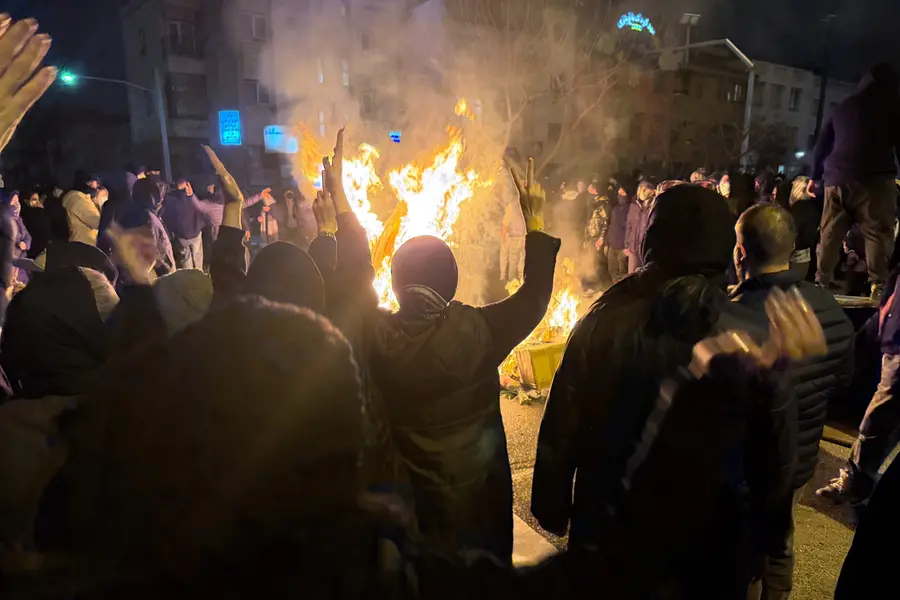
As the latest wave of anti-government protests sweeps across Iran, two sharply divergent narratives have emerged–each attempting to define the meaning, cause and legitimacy of the unrest. For Iran’s ruling establishment, the demonstrations are the product of a foreign conspiracy. For opposition groups, they represent a nationwide revolt fuelled by deep-rooted grievances. In a conflict where perception is as critical as force, the battle over narrative has become central.
Narrative warfare in the digital age
In modern conflict, the struggle to shape public perception is no longer limited to traditional propaganda. Digital platforms have transformed psychological warfare into what scholars Ihsan Yilmaz and Shahram Akbarzadeh describe as Strategic Digital Information Operations (SDIOs).
These operations aim to influence emotions, identities and beliefs by:
- inducing fear, doubt and helplessness
- undermining political opponents
- creating a sense of inevitability around a preferred outcome
Social media has become the primary battleground. Hashtags, memes, edited videos and coordinated comment campaigns–often amplified by bots–are used to steer public opinion. In this environment, users do more than consume information; they enforce their preferred narrative within digital echo chambers, deepening polarisation and shutting out counterarguments.
Control of the narrative can influence whether a movement grows or collapses, whether violence escalates, and whether domestic or foreign intervention is later justified.
The regime’s narrative
Iran’s leadership has consistently framed the protests as the result of external meddling. Officials claim the unrest is orchestrated by the United States, Israel and allied intelligence services–an extension, they say, of recent regional confrontations.
Two weeks into the demonstrations, state-organised rallies were held, followed by a pointed declaration from supreme leader Ayatollah Ali Khamenei that pro-regime crowds had “thwarted the plan of foreign enemies that was meant to be carried out by domestic mercenaries.”
This framing casts dissent as treason, delegitimising protesters by labelling them as agents of external powers rather than citizens with grievances.
By portraying opponents as foreign-backed, the state seeks to:
- discourage potential supporters
- justify harsh crackdowns
- project a narrative of broad popular backing
Pro-regime social media accounts have bolstered this message, circulating claims that the unrest aligns with a “regime change playbook,” while highlighting selected Israeli statements or commentary that fits the narrative. Content is timed and amplified strategically, with algorithmic manipulation pushing state-friendly messaging.
Alongside these tactics, the government continues to use traditional information control–restricting internet access and suppressing independent reporting. The goal is not just to silence dissent but to shape how Iranians interpret events in real time.
The opposition’s narrative
The Iranian opposition is far from unified, yet two groups–monarchists and the Mojahedin-e-Khalq (MEK)--have become especially active in shaping competing narratives online. Though their ideologies differ, both promote a storyline that casts the unrest as a humanitarian emergency demanding international action, particularly from the United States and Israel.
Central to this narrative is the push for a more confrontational approach. Calls for armed resistance and direct clashes with security forces reflect a departure from earlier civil movements. The rising number of casualties among state forces–reportedly more than 114 by 11 January–is cited by supporters as evidence of momentum.
Some opposition voices argue violence is necessary to “keep the movement alive” and produce conditions that would force foreign governments to act. External conflict-monitoring groups have confirmed significant casualties among both protesters and security personnel.
Opposition platforms have also been accused of inflating civilian death tolls, presenting the situation as catastrophic enough to justify outside intervention. Such exaggerations are used to galvanise international opinion and pressure foreign governments.
Intimidation has also appeared in the narrative. In several media appearances, opposition figures have issued warnings to pro-regime commentators, vowing retribution once the political landscape shifts. This rhetoric, while projecting confidence, risks reinforcing the state’s claims that the uprising will lead to chaos.
Ultimately, these strategies mirror the regime’s approach: both sides employ narrative warfare to mobilise supporters, silence dissent and frame the stakes of the conflict.
The silent centre
Despite the intensity of the messaging war, both narratives risk overshadowing the people driving the protests. The movement on the ground remains diverse–made up of citizens expressing frustration over political repression, economic hardship and social constraints.
As each side weaponises storytelling to strengthen its political position, the lived experiences of the protesters risk being reduced to tools in a broader struggle: the state’s attempt to justify repression, and the opposition’s effort to secure international backing.
In a conflict where perception may shape the future as much as force, the battle to define what the uprising represents remains as fierce as the demonstrations themselves.
(The Conversation)
Published: 17 Jan 2026, 01:46 pm IST
Related Topics
Disclaimer: Kindly avoid objectionable, derogatory, unlawful and lewd comments, while responding to reports. Such comments are punishable under cyber laws. Please keep away from personal attacks. The opinions expressed here are the personal opinions of readers and not that of Mathrubhumi.
