
With Tehran rejecting US overtures, the conflict has widened, drawing in Lebanon and the UAE.
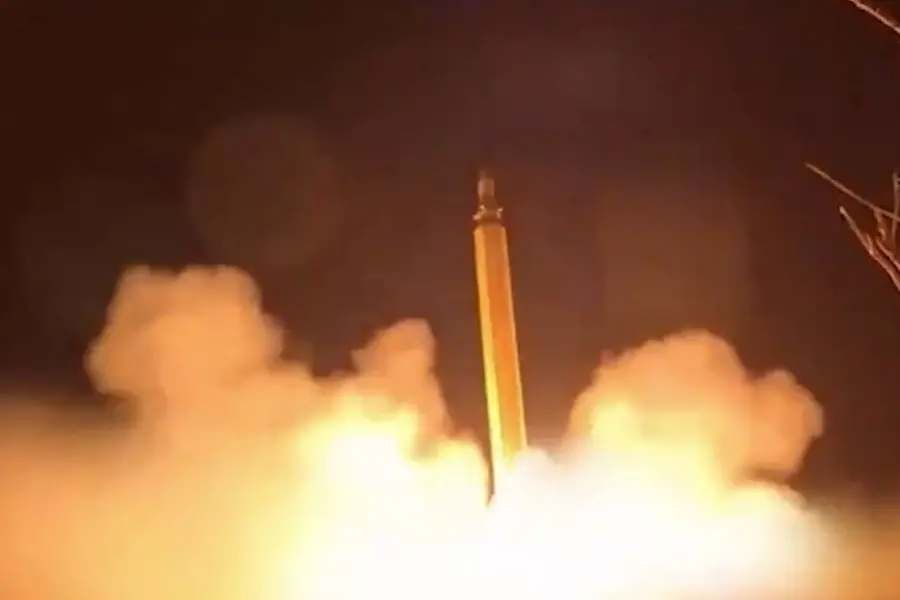
Iran issued a series of "crushing" threats against the United States and Israel on Thursday, punctuated by a missile barrage launched at Tel Aviv, following a vow by U.S. President Donald Trump to bomb the Islamic Republic "back to the Stone Ages."
The conflict, which began more than a month ago with U.S. and Israeli strikes on Iranian territory, has now engulfed the broader Middle East and severely disrupted the global economy. In a 19-minute prime-time address delivered from the White House, Trump asserted that the U.S. was "very close" to its strategic goals but warned of a massive escalation if Tehran refused a negotiated settlement.
"Over the next two to three weeks, we are going to bring them back to the Stone Ages, where they belong," Trump stated.
Tehran: The Iranian response followed almost immediately. Israeli air defences were activated over Tel Aviv, where police reported "several" impact sites and at least four minor injuries. Iran’s Khatam Al-Anbiya military command centre released a statement via state television warning of "more crushing, broader, and more destructive actions."
"With trust in Almighty God, this war will continue until your humiliation, disgrace, permanent and certain regret, and surrender," the military command stated.
Passover Under Fire
The escalation coincided with the Jewish holiday of Passover, forcing many Israelis to celebrate in reinforced bunkers.
"This is not my first choice," said a writer identified as Jeffrey, who attended a Seder in a Tel Aviv shelter. "But at least in the shelter, we can sit here and just ride it out."
While Trump has recently suggested a willingness to negotiate with what he described as Iran's "less radical" new leadership, Tehran has rebuffed these overtures. Iranian Foreign Ministry spokesman Esmaeil Baqaei characterised U.S. ceasefire conditions as "maximalist and irrational," noting that while messages have been relayed through intermediaries like Pakistan, "there is no direct negotiation with the US."
Trump countered that if an agreement is not reached, the U.S. will pivot to "key targets, including the country's electric generating plants."
Regional Contagion
The war continues to extract a heavy toll across the region:
- Iran: Pro-government marches were held in Tehran during the funeral of a Revolutionary Guard naval commander. Meanwhile, the Health Ministry reported extensive damage to the century-old Pasteur Institute following an airstrike.
- Lebanon: Hezbollah launched a wave of drones and rockets into northern Israel on Thursday. This followed an Israeli strike in Beirut on Wednesday that killed a high-ranking Hezbollah commander and six others. Lebanese authorities report more than 1,300 deaths since the front opened on March 2.
- The Gulf: Even previously stable nations are being drawn in, with the United Arab Emirates activating air defences against missile and drone threats on Thursday. Trump reiterated that the U.S. would not allow regional allies, including Saudi Arabia and Qatar, to "get hurt or fail in any way, shape or form."
Economic Aftershocks
The ongoing closure of the Strait of Hormuz remains a primary driver of global volatility. While the Revolutionary Guard vowed to keep the passage shut to "enemies," Britain is set to lead a 35-nation summit later Thursday to discuss restoring freedom of navigation.
China’s Foreign Ministry blamed the U.S. and Israel as the "root cause" of the maritime disruption. The conflict’s ripple effects have reached as far as Bhutan, where fuel shortages have led to massive queues at filling stations.
World Bank Managing Director Paschal Donohoe expressed "extreme concern" regarding the war's impact on global inflation and food security. In response to rising costs, Chinese airlines have hiked fuel surcharges, and Malaysia has instructed civil servants to work from home to mitigate the economic strain.
With inputs from PTI
Published: 02 Apr 2026, 04:46 pm IST
Disclaimer: Kindly avoid objectionable, derogatory, unlawful and lewd comments, while responding to reports. Such comments are punishable under cyber laws. Please keep away from personal attacks. The opinions expressed here are the personal opinions of readers and not that of Mathrubhumi.
