
Middle East war intensifies with Iran missile attacks; Pakistan offers to host peace talks to end conflict.
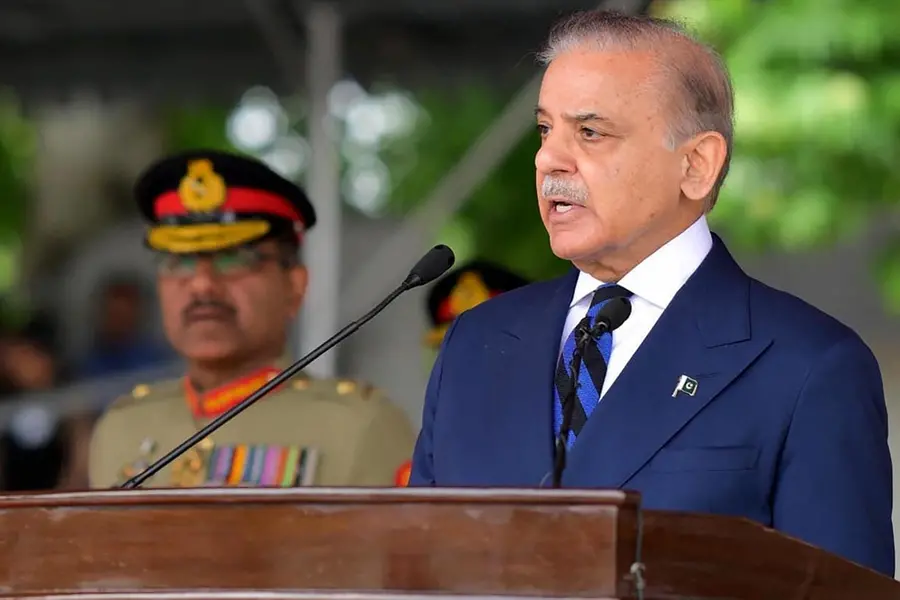
Islamabad: Pakistan’s Prime Minister Shehbaz Sharif has offered to facilitate talks between Iran and the United States to end the ongoing Middle East conflict, as airstrikes, missiles, and drone attacks continue to batter the region. Sharif confirmed on X that Islamabad is ready to host “meaningful and conclusive talks” for a comprehensive settlement, subject to agreement from both Washington and Tehran.
The offer comes after U.S. President Donald Trump extended a deadline for Iran to reopen the Strait of Hormuz, postponing strikes on Iranian power plants to allow diplomatic negotiations. Iran, however, has denied that any formal talks are underway.
Escalating attacks and casualties
On Tuesday, airstrikes targeted locations across Iran, while Iranian missiles and drones struck Israel’s Tel Aviv and sites throughout the Middle East. Lebanese authorities reported explosions in Keserwan, Faitroun, and Baskinta, with minor property damage but no casualties. In Tel Aviv, a missile hit a residential street, leaving one man in moderate condition and a woman and infant with minor injuries.
Meanwhile, Narendra Modi urged de-escalation, highlighting the importance of the Strait of Hormuz remaining open and secure. Indian authorities reported that LPG carriers have safely crossed the strait, delivering essential cooking gas despite the conflict.
The war has disrupted infrastructure, including Amazon Web Services data centres in Bahrain and the UAE, forcing customers to migrate workloads to other regions. Asian and U.S. stock markets reacted to the instability, with Brent crude rising 2.9% to $102.84 a barrel, and the S&P 500 retreating 0.4%.
Regional responses and casualties
Iran’s top military warned it will fight “until complete victory,” while Israel conducted extensive strikes on Iranian production sites and launched waves of missile attacks into southern Lebanon. The Israeli military announced plans to control a security zone up to the Litani River, warning that hundreds of thousands of residents who fled would not return until security is assured.
The conflict has claimed multiple lives across the region. Bahrain and the UAE reported casualties among military personnel and civilian contractors. Iraqi Popular Mobilisation Forces blamed a U.S. airstrike for killing 15 militiamen in Anbar, while Lebanon confirmed three deaths, including a 3-year-old, from Israeli airstrikes.
Diplomatic efforts intensify
Omani Foreign Minister Badr al-Busaidi has conducted extensive diplomatic outreach, speaking with 18 foreign counterparts, including Iran, Saudi Arabia, Egypt, Iraq, and France, to support a return to dialogue. Egyptian and Jordanian ministers stressed that the conflict should not overshadow Israel’s actions in the occupied West Bank.
As global attention focuses on the crisis, nations including the Philippines have declared emergency measures to safeguard energy supplies and citizens abroad, reflecting the far-reaching economic and humanitarian impact of the Iran war.
Key markets and logistics
Global energy routes, particularly the Strait of Hormuz, remain under strain. Oil shipments and essential commodities continue to navigate heightened risks, while global markets remain volatile amid rising geopolitical uncertainty.
The escalating conflict underscores urgent calls for diplomacy, with Pakistan positioning itself as a potential mediator and international stakeholders, including the G7, monitoring the situation closely for regional stability and energy security.
AFP
Published: 24 Mar 2026, 09:50 pm IST
Disclaimer: Kindly avoid objectionable, derogatory, unlawful and lewd comments, while responding to reports. Such comments are punishable under cyber laws. Please keep away from personal attacks. The opinions expressed here are the personal opinions of readers and not that of Mathrubhumi.
