
Donald Trump escalates rhetoric ahead of US–Iran talks in Pakistan, warning of military readiness as tensions rise over Iran’s nuclear stance and the strategic Strait of Hormuz
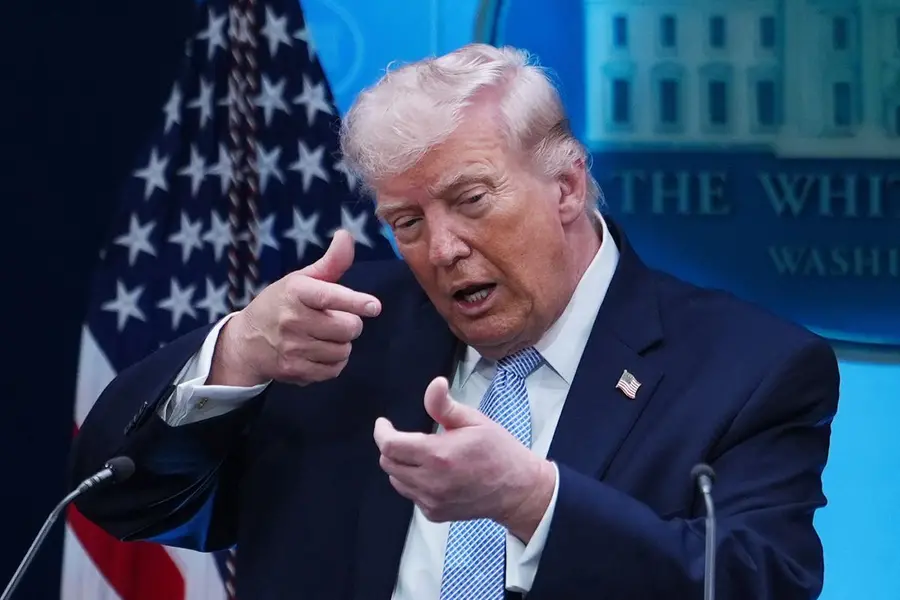
Washington: United States President Donald Trump has adopted a sharply aggressive tone ahead of upcoming negotiations with Iran scheduled to take place in Pakistan, just hours after Vice President JD Vance departed for Islamabad to engage with Iranian representatives.
In a post on Truth Social, Trump claimed that Iran holds limited leverage in the current geopolitical situation, referencing international waterways in his remarks.
“The Iranians don’t seem to realize they have no cards, other than a short term extortion of the World by using International Waterways,” he wrote.
He further added: “The only reason they are alive today is to negotiate!”
US warships reportedly being rearmed
Trump’s remarks followed his earlier statement that US naval vessels were being re-equipped with advanced weaponry, which he suggested could be used against Iran if negotiations fail.
“We have a reset going. We’re loading up the ships with the best ammunition, the best weapons ever made — even better than what we did previously, and we blew them apart,” Trump said in a telephonic interview with the New York Post.
Claims over Iran’s nuclear position
The US President also alleged that Iran had stepped back from pursuing nuclear weapons ambitions, stating that “everything’s gone”. However, Iran has denied agreeing to any such pre-condition as part of ongoing talks.
Trump further said that Iranian officials had allegedly told US representatives “to our face” that they were abandoning nuclear weapons plans, while later indicating to media that uranium enrichment would continue. Uranium enrichment remains a central point of contention in nuclear discussions, with Iran maintaining that its programme is intended for civilian energy purposes rather than weapons development.
Strait of Hormuz at centre of tensions
Trump’s latest remarks also highlighted the strategic importance of the Strait of Hormuz, a vital global shipping route.
He referred to Iran’s leverage over the waterway, stating it remains a key pressure point in ongoing negotiations. The Strait of Hormuz is a narrow maritime passage between Iran and Oman, linking the Persian Gulf with the Arabian Sea, and is considered one of the world’s most important oil transit chokepoints, carrying a significant share of global crude supplies.
Reports have suggested that Iran has increased control over the route following the recent conflict involving US and Israeli airstrikes on Tehran on February 28. Despite a temporary truce reached this week, the waterway has not fully reopened, with allegations that passage fees may have been introduced, including claims of charges reaching $2 million per vessel.
Iran’s position on shipping route
Iran has reportedly put forward proposals regarding the management of the strait, including formalising its control over the waterway as part of wider regional discussions. Trump had earlier floated the idea of a potential US-Iran “joint venture” to oversee operations, although Iran has not confirmed any such arrangement.
He also stated in an interview with ABC News that such an arrangement could help secure the route and ensure stability in maritime operations.
Following the truce reached on Wednesday, Trump indicated that Iran must ensure the “complete, immediate, and safe opening” of the Strait of Hormuz.
Iran disputes conditions and continues talks
Iran’s Foreign Minister Abbas Araghchi responded that safe passage through the strait could be maintained for a limited period through coordination with Iran’s armed forces, taking into account technical constraints.
This has led to continued uncertainty, with reports suggesting possible shipping charges being implemented. The European Union has maintained that freedom of navigation in the strait must remain unaffected, with “no payment or toll whatsoever”.
Despite diplomatic efforts, broader instability in the region persists. Israel continues its military operations in Lebanon, running parallel to its conflict with Iran-aligned Hezbollah forces.
Pakistani Prime Minister Shehbaz Sharif, who has been involved in mediation efforts, initially stated that the truce also covered Lebanon. However, US and Israeli officials later clarified that this was not included in the agreement.
Iran leadership comments on future control
Iran’s newly appointed supreme leader, Mojtaba Khamenei, whose father was killed in the early stages of the conflict, stated on Telegram that Iran intends to take the management of the Strait of Hormuz “to a new stage”.
With negotiations approaching, tensions remain elevated as both sides continue to assert firm positions on security, nuclear issues and control of critical maritime routes.
With agency inputs
Published: 10 Apr 2026, 11:02 pm IST
Related Topics
Disclaimer: Kindly avoid objectionable, derogatory, unlawful and lewd comments, while responding to reports. Such comments are punishable under cyber laws. Please keep away from personal attacks. The opinions expressed here are the personal opinions of readers and not that of Mathrubhumi.
