
Analysts warn of a critical shortage, as Iran's arsenal of roughly 2,500 ballistic missiles may outnumber the combined U.S.-Israeli supply.
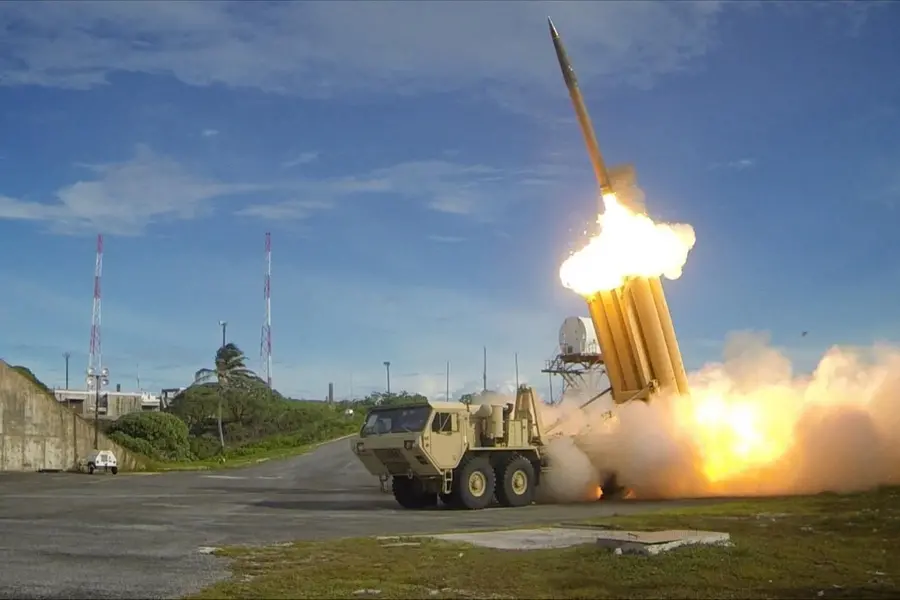
Washington: The U.S. military has neutralised hundreds of Iranian ballistic missiles since the start of "Operation Epic Fury," fueling concerns that the American stockpile of sophisticated air defence interceptors could be depleted if the conflict persists for several weeks.
Following a massive joint U.S.-Israeli aerial offensive launched over the weekend, Tehran retaliated with a series of massive strikes, deploying hundreds of drones and missiles against regional partners and nations hosting American military installations.
General Dan Caine, the highest-ranking U.S. military officer, confirmed on Monday that American forces have "intercepted hundreds of ballistic missiles targeting US forces, our partners and regional stability" since the outbreak of hostilities.
The Interceptor Deficit
While the high success rate of these interceptions has protected key targets, the operations have consumed a significant portion of the Pentagon's limited inventory of high-cost, high-tech interceptors.
"There is a risk the United States and its partners could run out of interceptors before Iran runs out of missiles, though it is far from certain," said Kelly Grieco, a senior fellow at the Stimson Centre.
Military analysts noted a stark numerical disparity at the conflict's onset:
- Iranian Arsenals: Israel estimated Iran possessed roughly 2,500 ballistic missiles.
- Combined Stocks: This total "almost certainly" exceeds the total number of interceptors available to the U.S. and Israel combined, according to Grieco.
- Strategic Race: Grieco described the situation as a race between Iranian mobile launchers and U.S.-Israeli strikes intended to destroy those "sources of those launches" before they can be fired.
A Multilateral Strain
The demand for these weapons systems is currently outpacing global production capacities. Joe Costa, director of the Atlantic Council's defence program, warned that a "sustained conflict with Iran could severely strain US stocks of critical air defence interceptors for China and other global priorities."
Grieco added that every major theatre, including Europe and the Indo-Pacific, faces a shortage. "The United States is simply consuming them faster than it can replace them," she said.
Timelines and Targets
President Donald Trump and Defence Secretary Pete Hegseth have offered varying projections for the war's duration. On Monday, Trump stated that while the initial projection was "four to five weeks," the U.S. has the "capability to go far longer than that."
Hegseth noted the timeline remains fluid: "Four weeks, two weeks, six weeks, it could move up. It could move back."
While General Caine reported that U.S. systems have been "effective" in countering Iranian drones, experts say the most critical shortage remains centred on the specialised interceptors required to stop ballistic missiles. The final outcome, according to Costa, hinges on how efficiently the U.S. and Israel can "neutralise" Iran's ability to launch these platforms.
With inputs from AFP
Published: 03 Mar 2026, 08:15 am IST
Related Topics
Disclaimer: Kindly avoid objectionable, derogatory, unlawful and lewd comments, while responding to reports. Such comments are punishable under cyber laws. Please keep away from personal attacks. The opinions expressed here are the personal opinions of readers and not that of Mathrubhumi.
