
Iran claims it deployed a new “anti-destroyer” missile against a US warship as tensions escalate. Here's what is known about the missile, Qassem Bassir and the Strait of Hormuz.
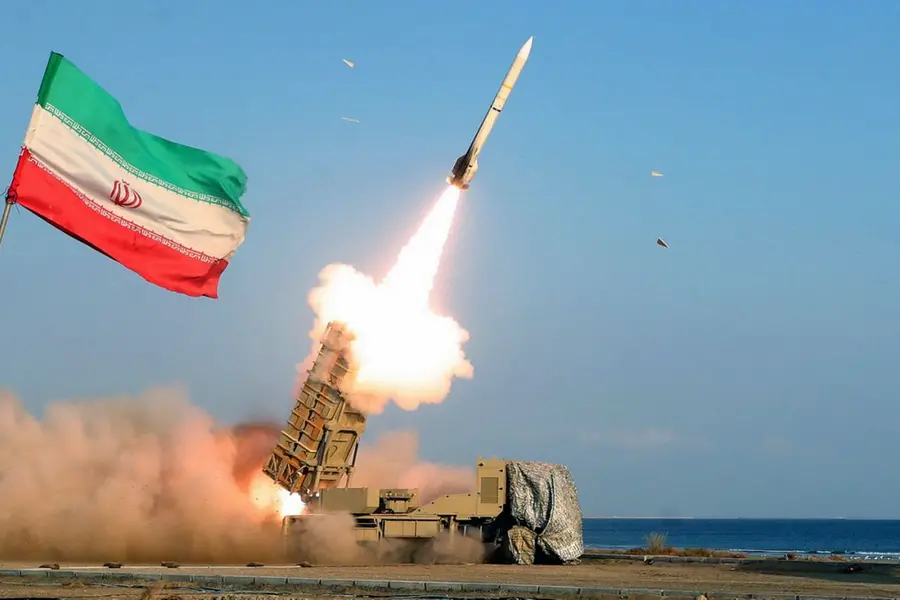
Tehran: Iran has claimed it deployed a new “special anti-destroyer” missile against a US warship as Tehran stepped up attacks on American assets in the region, raising fresh concerns over the security of the Strait of Hormuz.
Iranian officials said the Islamic Revolutionary Guard Corps (IRGC) used a new missile against a US warship on Wednesday.
Also Read

Mohsen Rezaei, Iran's newly appointed secretary of the Supreme National Security Council, described it as a “special anti-destroyer” missile and said the deployment marked a shift from Iran's “reactive deterrence” strategy towards “active deterrence”.
Rezaei claimed the missile had “created a hell for the Americans, and they fled”. These claims have not been independently verified.
Electro-optical technology in focus
The reported attack involved missiles fitted with electro-optical seekers, according to reporting cited by The Telegraph.
Such systems use cameras and light sensors to help identify and track targets. Unlike satellite-navigation-dependent systems, electro-optical guidance can potentially provide terminal targeting capabilities without relying solely on GPS.
US Central Command confirmed that Iranian attacks had taken place but said attempts to strike US naval assets had failed. Iranian missiles aimed at a US base in Jordan were also reportedly intercepted.
Is the Qassem Bassir the missile used?
Iran unveiled its Qassem Bassir medium-range ballistic missile in 2025 and claimed that it could conduct precision strikes without GPS.
However, it has not been established that the Qassem Bassir was the missile used against the US warship.
Analysts cited in reports have suggested that Iran's latest systems could combine technology from existing missile families with newer solid-fuel technology rather than representing an entirely new missile developed from scratch.
Why the Strait of Hormuz matters
The escalation is particularly significant because of the Strait of Hormuz, one of the world's most important energy corridors.
Around one-fifth of global oil transported by sea passes through the waterway. Any disruption involving Iranian forces, US military assets or commercial shipping could therefore have consequences for global energy markets.
The latest confrontation has already contributed to oil prices rising above $100 a barrel, according to the report.
US strikes Iranian oil tankers
The latest Iranian attacks followed US strikes that destroyed five Iranian oil tankers near Kharg Island, a major Iranian oil hub.
Iran's Foreign Ministry described its military response as an act of “legitimate defence”.
US Central Command said the tanker strikes were carried out in response to Iran's attempted attacks and claimed that crews had been directed to abandon the vessels before they were struck.
The IRGC has warned of additional attacks involving oil tankers and US-linked bases in Bahrain and Kuwait, while calling on crews to evacuate vessels.
The threats have added to concerns about commercial shipping and military activity across the Gulf region.
US Secretary of State Marco Rubio had also warned that Washington would respond to further Iranian attacks on American naval forces.
Could Russia or China be helping Iran?
The reported development has also raised questions about how Iran is improving its ability to locate and target US military assets.
Analysts cited by The Telegraph have questioned whether Iran could be receiving assistance from Russia or China in tracking US warships.
Earlier intelligence reporting alleged that Chinese and Russian satellites had supplied Iran with imagery that could assist in targeting US military bases. Washington subsequently sanctioned China-based entities over alleged satellite-imagery support for Iran.
However, the extent of any current foreign assistance remains unclear.
The significance of Iran's latest claim extends beyond the reported missile strike itself.
Iran's ability to accurately identify and engage moving naval targets would be important because US carrier groups and warships have traditionally relied on layered defences, electronic warfare and air and missile interception systems.
The reported use of electro-optical guidance is particularly notable because it could provide an alternative or additional method of terminal targeting. However, the available information does not establish that Iran successfully struck a US warship, and US Central Command said the attacks failed.
The episode also reflects a wider escalation in the confrontation. US strikes on Iranian oil tankers have been followed by Iranian attacks on American military assets, while threats against shipping raise the possibility of further disruption around the Strait of Hormuz.
For now, the most important questions are whether Iran actually deployed the newly described missile operationally, what missile system was used, whether any US vessel sustained damage and whether the confrontation expands to commercial shipping.
Published: 10 Sept 2026, 08:30 am IST
ABOUT THE AUTHOR
Disclaimer: Kindly avoid objectionable, derogatory, unlawful and lewd comments, while responding to reports. Such comments are punishable under cyber laws. Please keep away from personal attacks. The opinions expressed here are the personal opinions of readers and not that of Mathrubhumi.