
Iran has announced funeral ceremonies for late Supreme Leader Ali Khamenei, beginning July 4 in Tehran and ending with his burial in Mashhad on July 9, months after his death in a US-Israeli air strike.
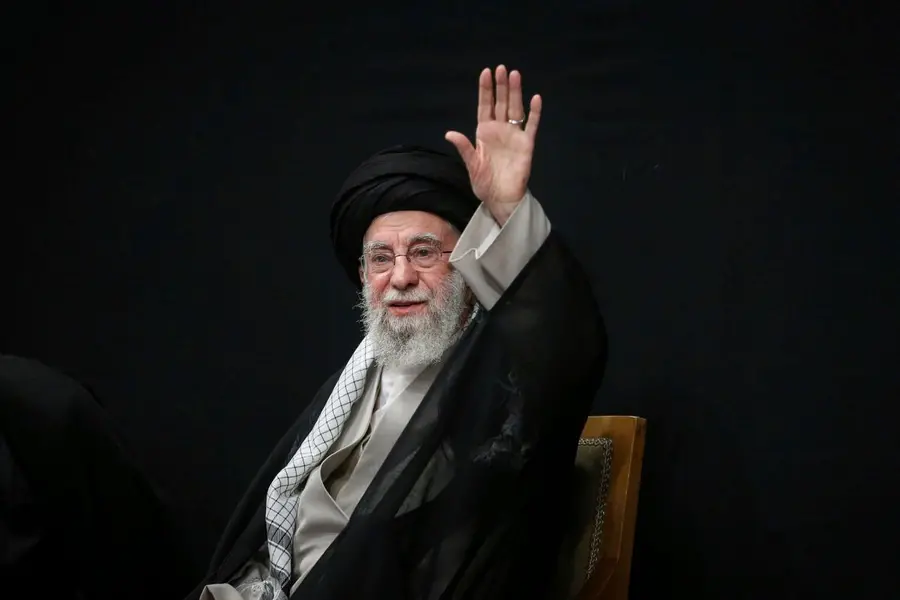
Tehran: Iranian authorities have announced plans for a five-day funeral programme for the country's late Supreme Leader Ayatollah Ali Khamenei, nearly four months after he was killed in a joint US-Israeli air strike that marked a major escalation in the conflict between Tehran and its adversaries.
State media reported on Saturday that funeral ceremonies will begin in Tehran on July 4 and conclude with Khamenei's burial in the northeastern holy city of Mashhad on July 9. The 86-year-old cleric, who led the Islamic Republic for more than three decades, was killed on February 28 when air strikes struck his heavily fortified compound in central Tehran.
Funeral plans finalised after months-long delay
The burial had originally been expected to take place shortly after Khamenei's death but was postponed as fighting between Iran, Israel and the United States continued for months.
According to Iranian media, memorial ceremonies will be held in Tehran from July 4 to July 6, followed by a religious observance in the holy city of Qom on July 7. Khamenei's body will then be transported to Mashhad, his birthplace, where he will be laid to rest on July 9.
Under Islamic tradition, burials are generally conducted within 24 hours of death. However, exceptions can be made during extraordinary circumstances, including times of war.
A leader who shaped modern Iran
Khamenei became Iran's Supreme Leader in 1989 following the death of Ayatollah Ruhollah Khomeini, the architect of the 1979 Islamic Revolution that overthrew the Pahlavi monarchy.
While Khomeini provided the ideological foundation of the Islamic Republic, Khamenei spent 36 years consolidating its political, military and security structures. During his tenure, Iran expanded its influence across the Middle East through allied armed groups, including Hezbollah in Lebanon, while maintaining a confrontational stance towards both the United States and Israel.
His government also faced repeated waves of domestic unrest, which authorities suppressed through extensive security measures.
Throughout his leadership, Khamenei remained deeply sceptical of Washington, even as successive US administrations attempted to negotiate limits on Iran's nuclear programme.
Mojtaba Khamenei takes over leadership
Following Khamenei's death, his son, Mojtaba Khamenei, succeeded him as Supreme Leader. The 56-year-old cleric was reportedly injured in the same strike that killed his father and also lost his wife during the attack.
Since assuming the role, Mojtaba has largely stayed out of public view. However, US Secretary of State Marco Rubio said earlier this month that he appeared to be playing a more active role as diplomatic contacts between Tehran and Washington continued after an April 8 ceasefire.
Peace deal discussions continue
The funeral announcement comes as diplomatic efforts to formally end the conflict between Iran and the United States appear to be advancing.
Pakistan's Prime Minister Shehbaz Sharif said on Saturday that Tehran and Washington had agreed on a framework for a peace agreement after more than three months of war. He said the two sides were expected to sign an initial accord within the next 24 hours.
Iran has not publicly confirmed a timetable for any agreement, but negotiations have continued since the truce reached in April.
(With inputs from agencies)
Published: 14 Jun 2026, 09:16 am IST
Related Topics
Disclaimer: Kindly avoid objectionable, derogatory, unlawful and lewd comments, while responding to reports. Such comments are punishable under cyber laws. Please keep away from personal attacks. The opinions expressed here are the personal opinions of readers and not that of Mathrubhumi.
