
Iranian and US officials have exchanged warnings as military escalation fears grow, with disputes also intensifying over the Strait of Hormuz and stalled nuclear talks
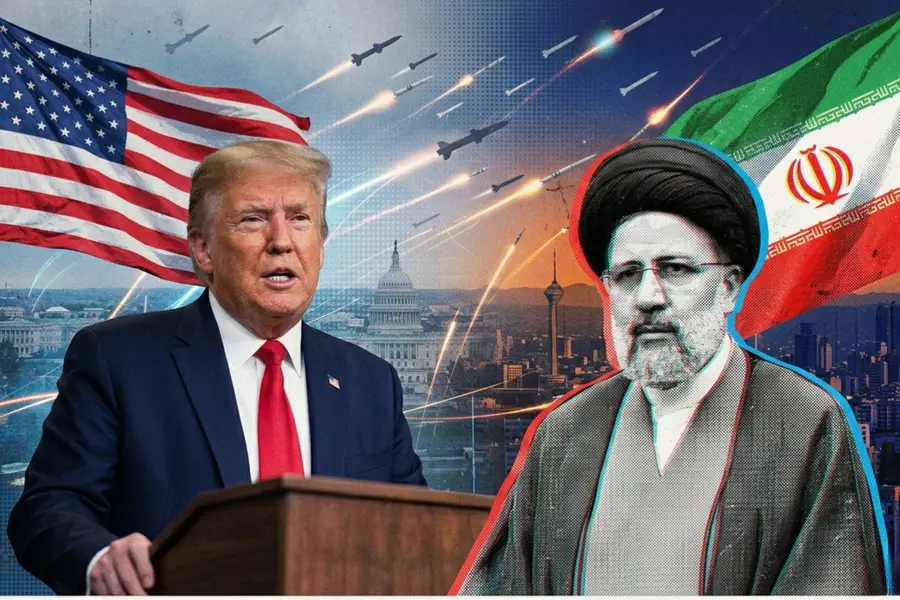
West Palm Beach: United States President Donald Trump said on Saturday that he would soon examine a newly submitted Iranian peace proposal, while simultaneously expressing scepticism about its acceptability.
Speaking on his Truth Social platform, Trump referred to the initiative as a 14-point plan reportedly sent by Tehran through mediator Pakistan. According to Iranian news agencies Tasnim and Fars, the proposal includes provisions to end hostilities across all fronts and establish a revised framework governing the strategically vital Strait of Hormuz.
Trump, however, cast doubt on the offer.
“I will soon be reviewing the plan that Iran has just sent to us, but can’t imagine that it would be acceptable in that they have not yet paid a big enough price for what they have done to Humanity, and the World, over the last 47 years,” he said.
Remarks in Florida and warning of possible escalation
In a brief interaction with journalists in West Palm Beach, Florida, Trump did not elaborate on conditions that could trigger renewed military action against Iran.
“If they misbehave, if they do something bad, but right now, we’ll see,” he said. “But it’s a possibility that could happen, certainly.”
Ongoing conflict timeline and stalled diplomacy
The conflict, initiated by the United States and Israel in late February, has reportedly been on pause since April 8. One round of peace negotiations has already failed, with discussions previously held in Pakistan.
Despite the pause in active large-scale fighting, diplomatic efforts appear fragile and uncertain.
Iranian military warns of renewed confrontation
On Saturday, Mohammad Jafar Asadi, a senior official within Iran’s central military command, suggested that a renewed clash between Iran and the United States was “likely”.
“Evidence has shown that the United States is not committed to any promises or agreements,” he said, according to the Fars news agency.
Separately, Deputy Foreign Minister Kazem Gharibabadi told diplomats in Tehran that responsibility now lies with Washington.
“The ball is in the United States’ court to choose the path of diplomacy or the continuation of a confrontational approach,” he said, adding that Iran remains “prepared for both paths”.
Nuclear negotiations and accusations exchanged
US news outlet Axios reported earlier in the week that US envoy Steve Witkoff had urged Iran to bring its nuclear programme back into negotiations.
Iran’s mission to the United Nations responded by accusing Washington of hypocrisy, citing the United States’ own nuclear arsenal and rejecting criticism of Tehran’s atomic activities.
It stated there is no legal restriction on uranium enrichment, provided it remains under supervision of the International Atomic Energy Agency (IAEA), the UN nuclear watchdog.
Strait of Hormuz tensions and economic pressure
Iran has maintained control over the Strait of Hormuz since the conflict began, affecting global supplies of oil, gas and fertiliser. In response, the United States has imposed what has been described as a counter-blockade on Iranian ports.
Oil prices are currently around 50 per cent higher than levels recorded before the war.
Iranian Vice Speaker of Parliament Ali Nikzad said draft legislation under consideration would allocate revenues from managing the waterway, with 30 per cent of tolls directed towards military infrastructure and the remainder towards “economic development”.
“Managing the Strait of Hormuz is more important than acquiring nuclear weapons,” he said.
Continued violence in Lebanon
Meanwhile, hostilities continued in Lebanon despite a separate truce involving Israel and the Iran-backed group Hezbollah.
The Israeli military said it struck dozens of Hezbollah targets across southern Lebanon following evacuation warnings issued for nine villages.
Lebanon’s state-run National News Agency (NNA) reported that three people were killed in the strikes.
Hezbollah, in turn, claimed it had carried out multiple attacks targeting Israeli troops.
One Israeli strike hit the village of Yaroun, damaging what the military described as a “religious building”. The French Catholic charity L’Oeuvre d’Orient stated that a convent belonging to the Salvatorian Sisters, a Greek-Catholic order, was destroyed in the attack.
Legal debate in Washington over war powers
In Washington, lawmakers are debating whether the Trump administration has exceeded a deadline requiring congressional approval for continued military engagement.
Administration officials argue that a ceasefire effectively paused a 60-day countdown requiring authorisation. However, this interpretation is being disputed by opposition Democrats.
Economic strain deepens inside Iran
Within Iran, the economic impact of the conflict is becoming more severe, with oil exports restricted and inflation exceeding 50 per cent.
A Tehran resident, Amir, 40, told that the situation remains difficult but not yet fully visible in everyday life.
“Everyone is trying to endure it, but… they are falling apart,” he said.
“We still have not seen much of the economic effects because everyone had a bit of savings. They had some gold and dollars for a rainy day. When they run out, things will change.”
With agency inputs
Published: 03 May 2026, 06:45 am IST
Disclaimer: Kindly avoid objectionable, derogatory, unlawful and lewd comments, while responding to reports. Such comments are punishable under cyber laws. Please keep away from personal attacks. The opinions expressed here are the personal opinions of readers and not that of Mathrubhumi.
