
Emphasizing that India's choice is between "servitude" to Beijing and "sovereignty," he urged confidence in the long-term US-India partnership without forced alignment.
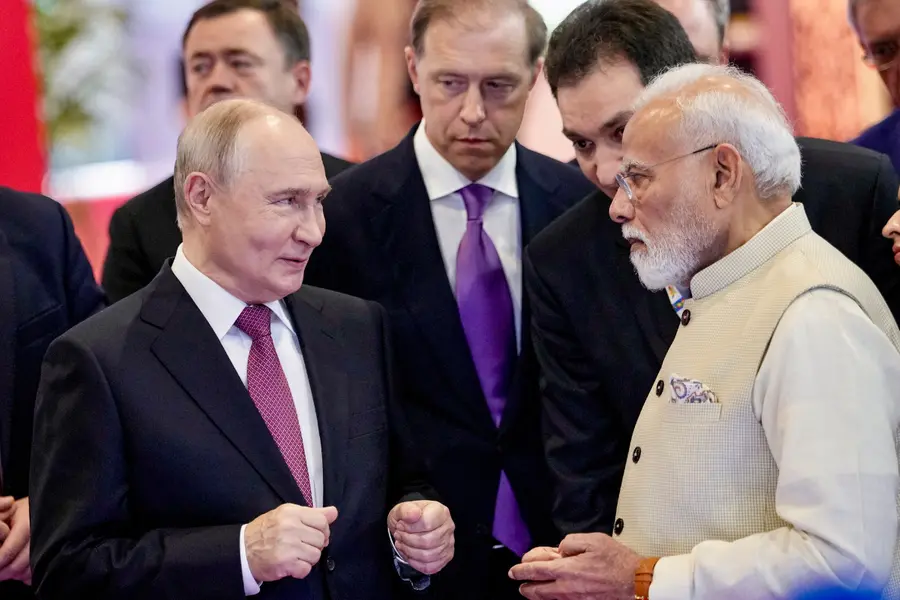
New Delhi: Former US National Security Advisor Lt Gen HR McMaster (Retd) on Friday urged Washington to deploy legislative "tariff guns" against major purchasers of Russian energy, while simultaneously acknowledging stark Western inconsistencies and describing continued US imports of Russian nuclear fuel as "nuts."
Speaking to ANI after the US House of Representatives passed the bipartisan Lindsey O. Graham Sanctioning Russia and Iran Act of 2026 by a 262–159 vote, McMaster advocated for aggressive economic measures to rebuild international deterrence. However, he cautioned that Washington must temper enforcement with strategic understanding toward India, citing New Delhi's precarious position between hostile neighbours.
McMaster firmly supported the congressional bill, which grants President Donald Trump discretionary authority to levy tariffs of up to 100 per cent on nations that continue purchasing Russian crude oil and natural gas, framing it as an essential mechanism to curb Moscow's hybrid aggression across Europe.
"Hey, I think we should fire that gun. I mean, I really, I think that the only way that peace is restored... is to convince Vladimir Putin that he can no longer continue these wars at an acceptable cost," McMaster stated, pointing to recent drone incursions in Bulgaria and Denmark, infrastructure sabotage, and attacks near Leipzig airport.
When questioned about Western policy contradictions, including ongoing US imports of Russian uranium hexafluoride and Europe's continuing energy vulnerabilities, McMaster admitted to structural flaws across Western supply chains.
"It turns out it's a really bad idea to give a hostile authoritarian regime coercive power over your economy... It is crazy that we're buying uranium from Russia. I think it's nuts, you know," McMaster said.
He noted that practical supply chain bottlenecks mean "there'll probably be waivers" for specific critical dependencies, even as broader sanctions intensify.
Despite endorsing stringent global trade measures, McMaster advised against penalising India without evaluating its immediate strategic context. Regarding India's geopolitical surroundings, flanked by two nuclear-armed rivals in Pakistan and China, he noted, "Do you really want to alienate Russia? Probably not at the moment."
Reflecting on India's historical reliance on Russian military hardware and energy supplies, McMaster added, "I've got sympathy for my Indian friends... you have to look at these sort of complex challenges from India's perspective."
Addressing cross-border terrorism and enduring security concerns regarding regional duplicity, he observed, "One of my biggest frustrations has been our reluctance to recognise the degree to which the Pakistanis double-deal... that should push India and the US closer together."
On India’s diplomatic balancing between a "fear of abandonment" and a "fear of entanglement," McMaster voiced long-term confidence in the bilateral alliance, identifying Beijing's assertive regional ambitions as the primary catalyst binding the two democracies.
"China wants a servile relationship with India, and I think all countries in the Indo-Pacific. And so the choice isn't between Beijing and Washington, it's between servitude and sovereignty. And the US is on the side of sovereignty," he asserted, urging Indian policymakers to trust in the partnership.
"Yeah. I would say have faith in America, you know... have faith in the long-term model of representative government, free market economics... And that doesn't mean that, you know, the U.S. should pressure, you know, India to take sides. Hey, I want you to take sides against Russia right now, right? Don't go to BRICS. Don't meet with, I mean, I think we should not worry about that as much and have faith that really the long-term future is in favour of the India-US relationship," the former national security advisor said.
The comments come at a delicate moment, with India's Ministry of External Affairs monitoring the US tariff bill while reiterating its intention to safeguard national energy security through varied supply channels. High-level trade discussions between Washington and New Delhi are scheduled to proceed during the G20 Trade Ministers' meeting in Wisconsin on 30 September–1 October.
ANI
Published: 18 Sept 2026, 09:29 pm IST
ABOUT THE AUTHOR

Related Topics
Disclaimer: Kindly avoid objectionable, derogatory, unlawful and lewd comments, while responding to reports. Such comments are punishable under cyber laws. Please keep away from personal attacks. The opinions expressed here are the personal opinions of readers and not that of Mathrubhumi.