
India was the first non-socialist country to recognise the People’s Republic of China in 1950, but ties were ruptured by the 1962 war.
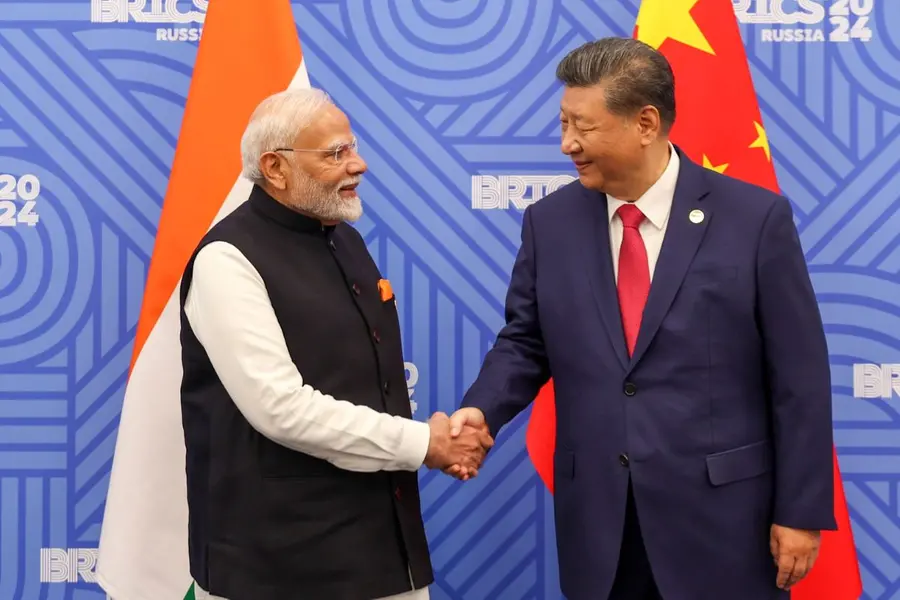
Tianjin, China: Prime Minister Narendra Modi’s arrival in Tianjin on Saturday for the Shanghai Cooperation Organisation (SCO) Summit marks his first visit to China since 2018, a trip widely viewed as a chance to recalibrate relations with Beijing after years of strain.
Modi, received warmly by the Indian diaspora, will meet Chinese President Xi Jinping on Sunday on the sidelines of the Aug. 30–Sept. 1 summit. The bilateral engagement is being closely watched amid efforts by both sides to stabilise ties that frayed during the eastern Ladakh border tensions in 2020.
India was the first non-socialist country to recognise the People’s Republic of China in 1950, but ties were ruptured by the 1962 war. Relations saw a thaw with Rajiv Gandhi’s 1988 visit, followed by milestones such as the 2003 Vajpayee visit, which created the Special Representatives mechanism on the boundary question; the 2005 Strategic and Cooperative Partnership; Xi’s 2014 visit; and informal summits at Wuhan (2018) and Chennai (2019).
The Galwan Valley clashes in 2020 plunged relations into crisis, but leaders have since cautiously reopened channels. Modi and Xi met at the 2024 BRICS Summit in Kazan, setting the tone for renewed dialogue. External Affairs Minister S. Jaishankar and Chinese Foreign Minister Wang Yi have also met several times this year, including during the 24th round of Special Representatives talks in New Delhi.
Dialogue mechanisms remain active: 24 rounds of Special Representatives meetings, 27 Working Mechanism for Consultation and Coordination (WMCC) rounds, 19 Senior Commanders’ meetings, and 14 water-sharing talks through the Expert-Level Mechanism. These tracks have helped contain tensions and avoid escalation along the Line of Actual Control.
A major breakthrough came earlier this year when China lifted restrictions on the export of fertilisers, rare earths, and tunnel boring machines to India. The analysts say the step could aid Indian infrastructure, clean energy, and fertiliser sectors. Another confidence-building measure was the resumption of the Kailash Mansarovar Yatra in 2025, alongside moves to restore visa issuance and direct flights.
Bilateral trade has remained robust despite border tensions, and the recent relaxations are being seen as signs of cautious pragmatism.
Apart from Xi, Modi is also expected to meet Russian President Vladimir Putin during the summit to discuss Ukraine, Gaza and global economic volatility.
“Given the current volatility in the world economy, it is important for India and China, as two major economies, to work together to bring stability to the world economic order,” Modi told Japan’s The Yomiuri Shimbun in a pre-visit interview.
As shifting global alliances redefine the balance of power, Modi’s first China visit in seven years is being seen as more than just a diplomatic return. It signals a possible strategic reset — to manage differences while advancing cooperation where interests align. IANS
Published: 30 Aug 2025, 08:00 pm IST
Related Topics
Disclaimer: Kindly avoid objectionable, derogatory, unlawful and lewd comments, while responding to reports. Such comments are punishable under cyber laws. Please keep away from personal attacks. The opinions expressed here are the personal opinions of readers and not that of Mathrubhumi.
