
After the bombings, tens of thousands of Korean survivors returned home. But many still face health issues and stigma today.
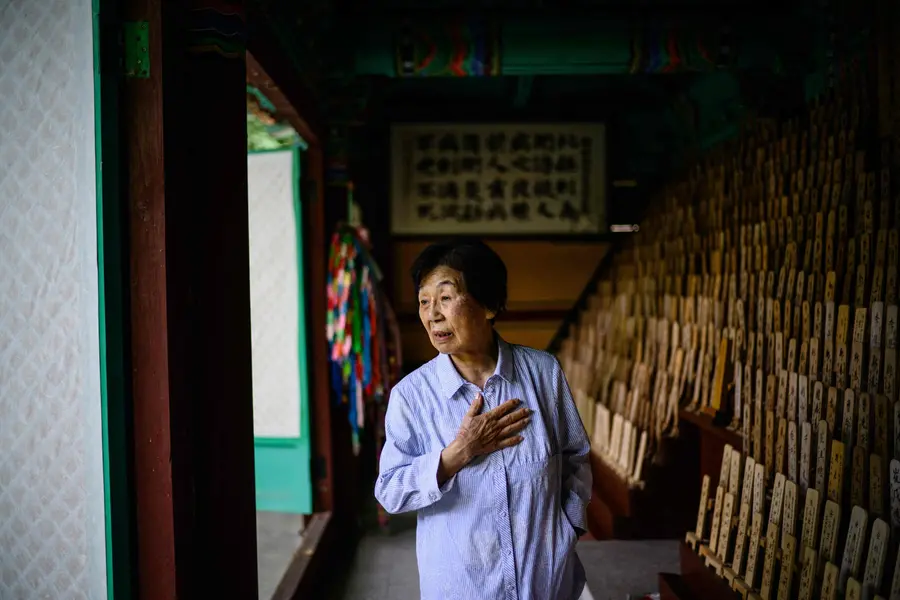
Hapcheon, South Korea: As the world marks 80 years since the atomic bombing of Hiroshima, many Korean survivors continue to live with physical and emotional scars, often in silence.
Bae Kyung-mi was just five years old when the United States dropped the atomic bomb "Little Boy" on Hiroshima on 6 August 1945. Her family, like thousands of ethnic Koreans working in the city under Japanese rule, kept their experience hidden.
Many feared social rejection for working in Japan during its colonial occupation of Korea, as well as false rumours that radiation sickness could be passed on to others.
“I told my mom in Japanese, ‘Mom! There are airplanes!’” said Bae, now 85. She passed out shortly after as her home collapsed, burying her under rubble. The debris saved her from the burns that killed tens of thousands, including her aunt and uncle.
After returning to Korea, her family never spoke of what happened.
“I never told my husband that I was in Hiroshima and a victim of the bombing,” she said. “Back then, people often said you had married the wrong person if he or she was an atomic bombing survivor.”
Her sons only found out the truth decades later, when she registered at the Hapcheon Atomic Bomb Victim Center, opened in 1996.
Bae says she suffered from radiation-linked illnesses and underwent surgeries to remove her ovaries and a breast. But she never shared the cause with her family. “We all hushed it up,” she said.
Korean victims: Forgotten and overlooked
Around 740,000 people were killed or injured in the Hiroshima and Nagasaki bombings. Over 10 percent were Korean, many of whom were forced labourers brought to Japan during its colonial rule.
Survivors who stayed in Japan faced further discrimination — not only as hibakusha (bombing survivors), but also as ethnic Koreans. Many were forced to choose between pro-Pyongyang and pro-Seoul groups in Japan after the peninsula’s division following the 1950–53 Korean War.
Kwon Joon-oh, 76, said both his parents survived the Hiroshima bombing but had to take on “filthy and dangerous jobs” deemed undesirable by the Japanese. It wasn’t until the late 1990s that a memorial to Korean victims was added to Hiroshima’s Peace Park.
Kim Hwa-ja was just four years old when the bomb dropped. She remembers being put on a makeshift horse-drawn cart as her family tried to escape the burning city.
Smoke filled the air and the city was burning, she said, recalling how she peeped out from under a blanket covering her, and her mother screaming at her not to look.
Some Korean organisations estimate that up to 50,000 Koreans were in Hiroshima on 6 August 1945, including thousands working at military sites. But clear records are hard to find.
“The city office was devastated so completely that it wasn’t possible to track down clear records,” said a Hiroshima official. Japan’s colonial ban on Korean names made documentation even harder.
Living with illness and shame
After the bombings, tens of thousands of Korean survivors returned home. But many still face health issues and stigma today.
“In those days, there were unfounded rumours that radiation exposure could be contagious,” said Jeong Soo-won, director of the Hapcheon Atomic Bomb Victim Center.
About 1,600 Korean survivors are still believed to be alive, with 82 of them in residence at the center.
In 2016, South Korea passed a law offering survivors a monthly stipend of around USD 72. But it does not cover descendants, even those suffering from related health conditions.
“There are many second- and third-generation descendants affected by the bombings and suffering from congenital illnesses,” said Jeong. A new law to support these families “must be included” in the future, he added.
Global recognition, local neglect
A Japanese hibakusha group won the Nobel Peace Prize last year for their efforts to raise awareness of nuclear war’s horrors. But many Korean survivors feel ignored.
“Would he understand the tragedy of what the Hiroshima bombing has caused? Would he understand that of Nagasaki?” survivor Kim Gin-ho asked, reacting to former US President Donald Trump’s comparison of airstrikes on Iran’s nuclear sites to the Hiroshima attack.
On 6 August, the Hapcheon centre will hold a ceremony to remember the bombing. Survivors hope this year’s event will finally bring more public and political attention.
From politicians, “there has been only talk… but no interest,” said one survivor.
AFP
Published: 04 Aug 2025, 09:48 am IST
Related Topics
Disclaimer: Kindly avoid objectionable, derogatory, unlawful and lewd comments, while responding to reports. Such comments are punishable under cyber laws. Please keep away from personal attacks. The opinions expressed here are the personal opinions of readers and not that of Mathrubhumi.
