
On National Pearl Harbor Remembrance Day, the United States pauses to honour the 2,403 lives lost in the 1941 attack — a moment that reshaped the nation’s destiny and pulled America into World War II. Ceremonies across the country pay tribute to courage, sacrifice, and the enduring lessons of a day that changed history forever.
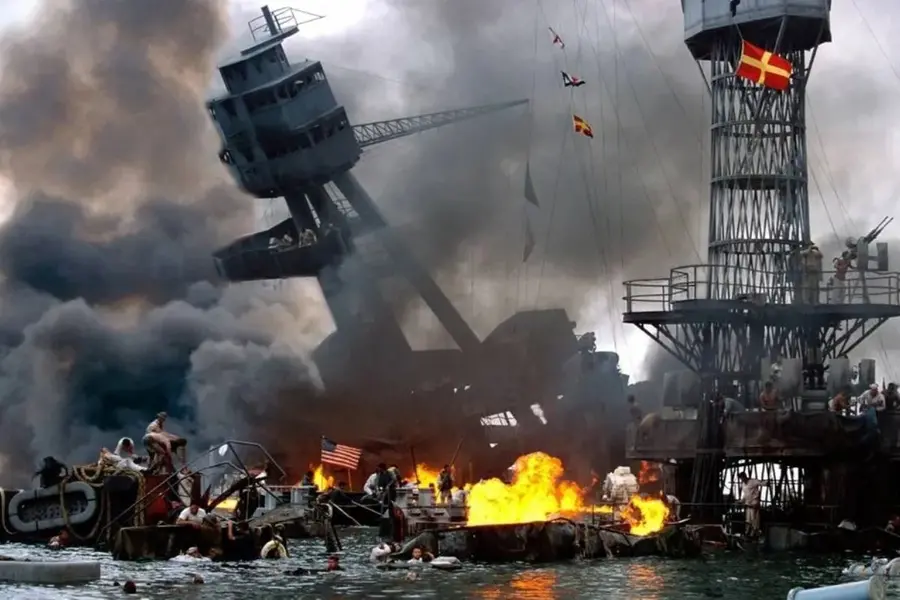
Today, Americans observe National Pearl Harbor Remembrance Day, a solemn occasion to honour and remember the lives lost in the surprise attack on Pearl Harbor, Hawaii — a strike that forever altered the course of world history.
On the morning of December 7, 1941, a wave of Japanese warplanes launched an unexpected assault on the US Pacific Fleet anchored at Pearl Harbor. What began as a seemingly peaceful Sunday turned into a tragedy: 2,403 Americans were killed and around 1,178 wounded, while dozens of ships and hundreds of aircraft were destroyed or damaged.
The attack damaged or sank multiple warships — including battleships and destroyers — and crippled the Pacific Fleet. Eight of the nine US battleships present were damaged or destroyed.
More than just a military disaster, the attack marked a turning point: the next day, the United States formally entered the global conflict of World War II.
In recognition of the sacrifice of those who perished, the US Congress formally designated December 7 as National Pearl Harbor Remembrance Day in 1994 — ensuring that each year, citizens pay tribute to the fallen.
Across the country — and especially in Hawaii — memorial ceremonies are held, flags are flown at half-staff until sunset, and survivors, veterans, families, and citizens pause to reflect on a day called by then-President Franklin D Roosevelt “a date which will live in infamy.”
As we mark the 84th anniversary of that fateful day, Pearl Harbor Remembrance Day remains a powerful reminder — not only of loss and grief, but also of resilience, sacrifice, and the enduring importance of peace.
Across the United States, educators, historians, and community leaders also use this day to remind younger generations of the human stories behind the statistics.
In classrooms and public forums, the memories of sailors trapped below deck, nurses rushing to save the wounded, and civilians witnessing the sky fill with smoke are preserved through documentaries, survivor accounts, and archival material.
Many of the few remaining survivors — now over a century old — have said their greatest hope is that the nation never forgets the cost of war and the price paid for peace.
Internationally, the observance of Pearl Harbor Day continues to serve as an emblem of reconciliation. In recent decades, Japanese and American officials, veterans, and families have stood together at remembrance ceremonies, offering acknowledgments of shared loss and commitments to peace.
These gestures underscore how nations once in conflict can forge partnerships based on mutual respect and understanding — transforming a day of devastation into a symbol of resilience and unity.
Historical Facts About Pearl Harbor
1. The attack occurred on December 7, 1941, at 7.55 am (Hawaii time)
Japanese aircraft launched the first wave just before 8 am, catching U.S. forces completely off-guard on a peaceful Sunday morning.
2. The assault lasted roughly 90 minutes
Two attack waves hit the harbor and surrounding airfields between 7.55 am and 9.30 am.
3. A total of 2,403 Americans were killed
This includes military personnel and civilians; another 1,178 were wounded.
4. Eight US battleships were damaged or destroyed
The USS Arizona and USS Oklahoma suffered the most catastrophic losses; the Arizona still rests beneath the memorial today.
5. Nearly 200 US aircraft were destroyed
Many planes were lined wing-to-wing on airfields to prevent sabotage, making them easy targets.
6. Japan deployed more than 350 aircraft in the attack.
The assault force included fighters, bombers, torpedo planes, and dive-bombers launched from six aircraft carriers.
7. President Franklin D Roosevelt called it “a date which will live in infamy.”
His speech to Congress on December 8, 1941, remains one of the most famous addresses in American history.
8. The attack led to the United States' entering World War II
The US declared war on Japan the very next day, shifting the balance of the global conflict.
9. The USS Arizona Memorial honours 1,177 crew members who died on the ship
It is one of the most visited sites in Hawaii and a central location for annual commemorations.
10. Japan intended the attack as a preemptive strike
Its goal was to cripple the U.S. Pacific Fleet to prevent American interference in Japanese expansion across the Pacific — but instead, it galvanized US determination and unity.
Published: 07 Dec 2025, 08:05 am IST
Related Topics
Disclaimer: Kindly avoid objectionable, derogatory, unlawful and lewd comments, while responding to reports. Such comments are punishable under cyber laws. Please keep away from personal attacks. The opinions expressed here are the personal opinions of readers and not that of Mathrubhumi.
