
The ancient Hindu temple of Preah Vihear, a thousand-year-old site dedicated to Lord Shiva, has returned to global headlines
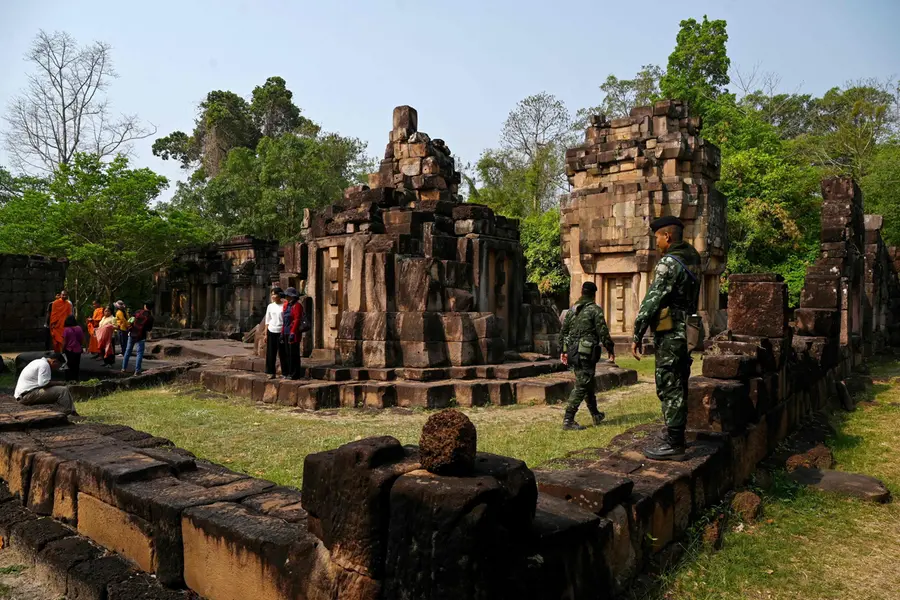
The ancient Hindu temple of Preah Vihear, a thousand-year-old site dedicated to Lord Shiva, has returned to global headlines as President Donald Trump prepares to oversee a “joint declaration” aimed at resolving the long-standing territorial dispute between Thailand and Cambodia.
Perched atop a 490-metre cliff in the Dângrêk mountain range, the UNESCO World Heritage site has recently witnessed deadly clashes, despite Trump’s claim that he ended the conflict “within less than a day.”
Why the border remains volatile
Preah Vihear—known as Phra Viharn in Thailand—has been a flashpoint for decades. Though the International Court of Justice (ICJ) ruled in Cambodia’s favour in 1962, resentment persists.
Tensions escalated in 2008 when UNESCO granted the site World Heritage status, provoking outrage among Thai nationalists who saw the government’s support as a betrayal of Thai claims.
Recent skirmishes in July were deadly, involving heavy artillery and F-16 bombings. At least 48 shells struck the temple, damaging pavements and staircases. Cambodia condemned the attacks as cultural vandalism, rejecting Thai claims that the temple was used militarily.
Observers note that the access road to the temple is lined with camouflaged posts manned by Cambodian soldiers, and a fortified trench exists within the temple complex. Satellite images also suggest Cambodia increased its military presence months before the fighting. Cluster bombs remain unexploded at the site. Thailand recorded 30 soldier and civilian deaths, while Cambodia reported 13.
Trump’s peace deal faces challenges
The summit in Kuala Lumpur will see the signing of a deal intended to remove landmines, withdraw heavy weapons from sensitive areas, and address cyber scam centres. Trump asserted the agreement could save “millions of people.”
Yet, the core issue—clarifying the exact demarcation of the 500-mile border—remains unresolved. The 1962 ICJ ruling only covered the area immediately surrounding the temple.
Historically, Preah Vihear has served as a fortress, remaining the last stronghold of forces loyal to the Lon Nol regime and later the Khmer Rouge until 1998.
India and Tamil Nadu: historical ties
Preah Vihear holds deep cultural and historical links to India’s Tamil Nadu. Commissioned in the 11th century by Khmer King Suryavarman I, the temple reflects an alliance with Chola ruler Rajendra Chola I. Around 1020 CE, Suryavarman gifted a chariot to Rajendra Chola I, seeking protection against rival kingdoms. This preceded Rajendra Chola’s naval expedition against the Srivijaya kingdom in 1025 CE, earning him the title ‘Kadaram Kondan’.
Iconographically, the temple features the dancing Shiva, Nataraja—a motif central to Tamil Saiva traditions and Chola art. A pediment above the sanctum depicts Nataraja with the skeletal Karaikkal Ammaiyar, mirroring reliefs in major Chola temples in Thanjavur and Gangaikonda Cholapuram. Themes from Vaishnavism, including the Paarkadal (churning of the ocean of milk) and Krishna dancing on Kaliya, also reflect South Indian Pallava influences.
Published: 25 Oct 2025, 10:35 am IST
Disclaimer: Kindly avoid objectionable, derogatory, unlawful and lewd comments, while responding to reports. Such comments are punishable under cyber laws. Please keep away from personal attacks. The opinions expressed here are the personal opinions of readers and not that of Mathrubhumi.
