
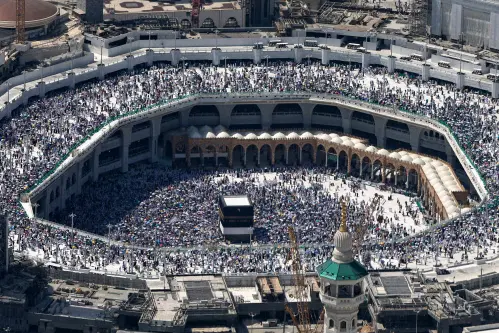
Riyadh: A diplomat in Saudi Arabia said on Wednesday that 68 Indian nationals died during the hajj pilgrimage this year marked by searing heat, bringing the overall tally to more than 600.
"We have confirmed around 68 dead... Some are because of natural causes and we had many old-age pilgrims. And some are due to the weather conditions, that's what we assume," the diplomat, who spoke on condition of anonymity, told AFP.
Meanwhile, friends and relatives undertook desperate searches on Wednesday for missing pilgrims following a surge in the death toll at the annual hajj rituals, conducted amid scorching temperatures exceeding 51.8 degrees Celsius (125 Fahrenheit) in Mecca, Islam's holiest city.
Approximately 1.8 million pilgrims from around the globe, many elderly and frail, participated in the days-long pilgrimage, predominantly held outdoors this year during Saudi Arabia's intense summer.
An Arab diplomat informed AFP that deaths among Egyptians had risen dramatically, surpassing 600, primarily due to the extreme heat.
According to various countries' reports compiled by AFP, the current death toll stands at 922. The diplomat added that Egyptian officials in Saudi Arabia had received reports of 1,400 missing pilgrims, including those confirmed deceased.
Mabrouka bint Salem Shushana of Tunisia, in her early 70s, has been missing since the culmination of the pilgrimage on Saturday at Mount Arafat, her husband Mohammed revealed to AFP.
Due to being unregistered and lacking an official hajj permit, she was unable to access air-conditioned facilities provided for pilgrims to cool down, Mohammed explained. Despite extensive searches in hospitals, her whereabouts remain unknown.
Social media platforms, particularly Facebook, have been flooded with appeals for information and photographs of the missing.
One family friend, who preferred anonymity, shared the plight of Ghada Mahmoud Ahmed Dawood from Egypt, missing since Saturday, whose daughter in Egypt urgently sought help via social media.
The hajj pilgrimage, one of Islam's five pillars, is obligatory for Muslims with the means to perform it at least once in their lives. Its timing shifts annually based on the Islamic lunar calendar, often placing the rituals during Saudi Arabia's blistering summer.
A Saudi study published recently noted a temperature increase of 0.4 degrees Celsius (0.72 Fahrenheit) per decade in the region.
In addition to Egypt, confirmed fatalities have been reported from Jordan, Indonesia, Iran, Senegal, Tunisia, and Iraq's Kurdistan region, although specific causes have not always been disclosed.
Saudi Arabia has reported over 2,700 cases of heat exhaustion on a single day, yet has not disclosed fatalities.
Many pilgrims attempt the hajj through unofficial channels due to the high cost of official permits, a trend facilitated by Saudi Arabia's introduction of a general tourism visa in 2019.
The difficulties faced by pilgrims, both registered and unregistered, underscore the challenges of performing the hajj amid extreme conditions, exemplified by the tragic losses and ongoing searches for missing loved ones. Agencies
Published: 20 Jun 2024, 07:57 am IST
Related Topics
Disclaimer: Kindly avoid objectionable, derogatory, unlawful and lewd comments, while responding to reports. Such comments are punishable under cyber laws. Please keep away from personal attacks. The opinions expressed here are the personal opinions of readers and not that of Mathrubhumi.
