
This latest coup adds to Guinea-Bissau's history of political turmoil and raises concerns about democratic governance in West Africa.
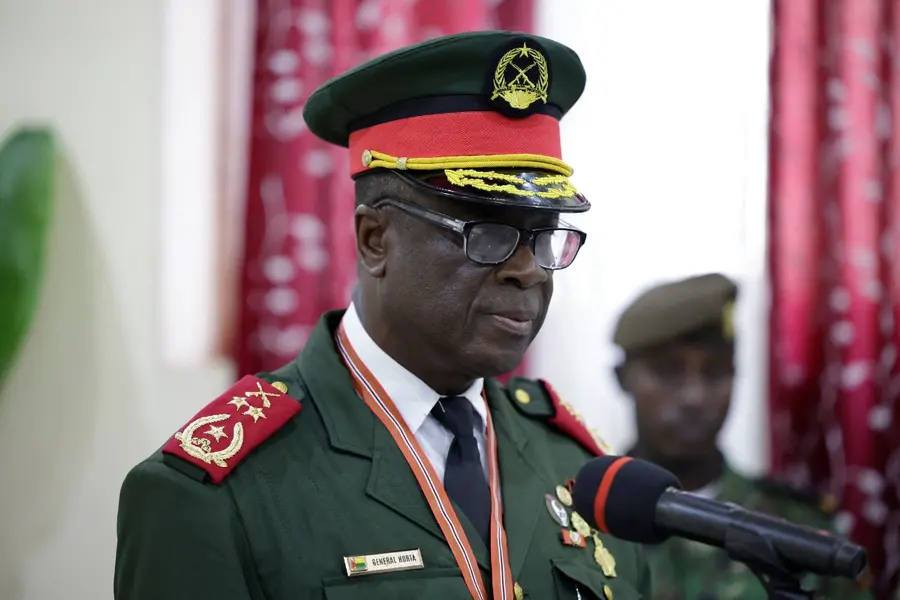
Bissau: Soldiers in Guinea-Bissau on Thursday announced the appointment of General Horta Inta-A as the leader of the new military junta, formalising their takeover of power that followed a disputed presidential election, which the main opposition candidate described as a scheme to block him from assuming office.
The military high command declared Inta-A, the former army chief of staff and ally of ousted President Umaro Sissoco Embaló, as head of the military government, overseeing a transition period of one year, according to a statement broadcast on state TV.
Guinea-Bissau, one of the world's poorest nations, has experienced frequent coups since gaining independence from Portugal over 50 years ago, including a recent attempt in October. The 2.2 million-population country is recognised as a primary drug trafficking route between Latin America and Europe, a factor analysts say has exacerbated its political instability.
Inta-A justified the military intervention by citing the political actors' failure to halt the deteriorating political situation. Embaló's whereabouts remained unknown Thursday, with reports suggesting he was arrested by soldiers amid gunfire near the presidential palace.
The African Union Commission chairperson, Mahmoud Ali Youssouf, condemned the coup, calling for respect of electoral processes and the unconditional release of Embaló and other detained officials. The AU expressed readiness to work with partners to restore stability and uphold democracy. South Africa and France also condemned the coup, urging an immediate return to democratic governance and respect for constitutional order.
Meanwhile, the opposition accused Embaló of staging the coup to evade a likely election defeat in the closely contested presidential vote held Sunday. Opposition candidate Fernando Dias claimed the military takeover and arrest of Embaló were fabricated efforts to sabotage the election results expected on Thursday.
Independent verification of these claims by Dias, a Social Renewal Party member, was not possible. The African Party for the Independence of Guinea and Cape Verde and Dias called for protests demanding the release of election results, though by Thursday morning, life in the capital, Bissau, appeared normal.
This coup adds to a rise in military takeovers in West Africa amid disputed elections, which analysts say could embolden armed forces. The crisis escalates amid Embaló's legitimacy challenges, with critics refusing to acknowledge his presidency after his term reportedly expired.
Political analyst Beverly Ochieng linked the repeated coups to weakened state institutions under Embaló, noting dissolved legislature, reduced judiciary capacity, and prevalent political influence concerns.
Gunfire erupted in Bissau on Wednesday, days after the presidential election. Military officers appeared on state TV announcing control of the country and closure of the electoral commission offices. Dias stated he escaped arrest and vowed to continue fighting, asserting Embaló lost the election and fabricated the coup.
Brigadier General Dinis N’Tchama, the military spokesman, accused some national politicians, foreign nationals, and a notorious drug lord of plotting electoral manipulation to destabilise the country, justifying the coup.
This marks the ninth coup or attempted coup since independence, with four involving Embaló directly since 2022. The military has suspended political institutions, media, and electoral processes indefinitely, implemented curfews, and closed borders to maintain order during a one-year transitional period.
With inputs from AP
Published: 27 Nov 2025, 09:53 pm IST
Related Topics
Disclaimer: Kindly avoid objectionable, derogatory, unlawful and lewd comments, while responding to reports. Such comments are punishable under cyber laws. Please keep away from personal attacks. The opinions expressed here are the personal opinions of readers and not that of Mathrubhumi.
