
Diplomatic efforts, including recent Istanbul talks, have collapsed amid recurring border skirmishes.
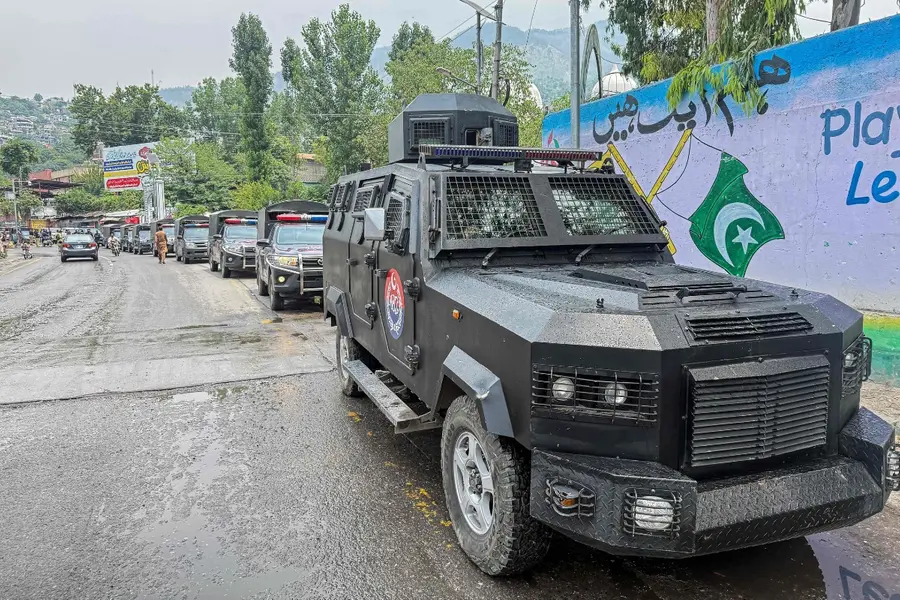
New Delhi: Pakistan finds itself increasingly consumed by the internal conflicts it previously helped cultivate, facing military opposition from the rugged peaks of Khyber Pakhtunkhwa to the deserts of Balochistan, alongside civil unrest in Pakistan-Occupied Jammu and Kashmir and a volatile frontier with Afghanistan.
Compounding these domestic struggles, spillover instability from neighbouring Iran has further threatened to push the South Asian nation into a deeper geopolitical crisis.
Efforts by regional powers to broker peace agreements have repeatedly faltered since October 2025, when a major border firefight between Pakistani and Afghan forces led to the shutdown of critical commercial transit routes.
Most recently, an informal session of negotiations concluded in Istanbul on Tuesday, following a similar unsuccessful diplomatic effort in Urumqi, China, and multiple previously stalled discussions between officials from Islamabad and Kabul.
However, before the Istanbul talks could even wrap up on Tuesday, the Pakistani military executed airstrikes inside Afghanistan, triggering immediate retaliatory artillery fire from Taliban forces stationed along the Durand Line. Each successive diplomatic attempt has been derailed by a resurgence of violence, casting serious doubt on the viability of dialogue to de-escalate the border friction.
The current conflict reverses decades of historical alignment; during the 1980s, the Pakistani establishment birthed and nurtured the Afghan Mujahideen and subsequently supported the rise of the Taliban. Following their recapture of Kabul in 2021, the Taliban have refused to defer to either Pakistan's civilian leadership in Islamabad or its military headquarters in Rawalpindi.
As a result, border skirmishes have transformed into conventional military engagements, characterised by Pakistani aerial campaigns on Afghan territory and counter-offensives by Taliban troops. The Pakistani armed forces, having once acted as the chief patrons of the Taliban, are now locked in a direct war against them.
Concurrently, the security situation in Balochistan has worsened as the Baloch Liberation Army and its insurgent allies step up strikes against military units, energy pipelines, and infrastructure projects. While Beijing views Balochistan as the geographic anchor of its Belt and Road Initiative, the region has become a severe security drain for Islamabad.
The Baloch rebellion also carries serious transnational consequences. Iran's neighbouring Sistan-Baluchestan province experiences parallel insurgent activity, prompting Tehran to allege that Islamabad is harbouring militant safe havens. Consequently, Pakistan's internal security failures have turned into a regional liability, fracturing relations with an unstable neighbour.
In Khyber Pakhtunkhwa, the Tehreek-e-Taliban Pakistan militia has established itself as a competing governing body, progressively eroding the administrative control of the central government. The insurgents have maintained their operations despite successive military crackdowns, illustrating how federal neglect and historic militant alignment can hollow out state sovereignty.
To the northeast, Pakistan-Occupied Jammu and Kashmir has long functioned as the primary staging ground for cross-border militancy directed at India by Islamabad and Rawalpindi.
However, that geopolitical calculus has boomeranged. Indian counterterrorism campaigns have grown more aggressive, while widespread local demonstrations against economic deprivation and political marginalisation have exposed Islamabad's loosening control over the territory. A region originally designated to apply pressure on India has evolved into a domestic flashpoint.
Pakistan's diplomatic relationship with Iran remains similarly strained, as Tehran views Islamabad with deep scepticism regarding armed groups operating across the shared Baloch border. Furthermore, Pakistan's aspirations to act as a diplomatic mediator between Iran and the United States have been compromised by its own internal volatility.
The overarching catalyst for these simultaneous security challenges remains Pakistan's historic reliance on armed proxies. For generations, the state supported militant groups to project geopolitical influence in both Afghanistan and Kashmir—a framework that has ultimately collapsed inward. The chief sponsor of these proxy forces has become their primary target, turning Pakistan's envisioned strategic depth into a strategic failure.
As it prosecutes these multi-front conflicts, Pakistan's economy continues to deteriorate under the combined weight of systemic debt, depleted foreign reserves, and political polarisation. Facing the perpetual threat of sovereign default, Islamabad has been forced to carefully balance its relations with China and the United States.
Through the China-Pakistan Economic Corridor, Beijing delivers extensive infrastructure loans and capital investments, which simultaneously increase Islamabad's national debt and tie its policies to China's broader regional ambitions. Meanwhile, Washington retains critical leverage as Pakistan's primary conduit to International Monetary Fund relief packages and international financial standing.
Ultimately, Islamabad remains caught between two global superpowers, neither of whom provides strings-free assistance, demonstrating how the country's economic fragility has transformed into its greatest geopolitical weakness.
With inputs from IANS
Published: 12 Jun 2026, 10:27 pm IST
Related Topics
Disclaimer: Kindly avoid objectionable, derogatory, unlawful and lewd comments, while responding to reports. Such comments are punishable under cyber laws. Please keep away from personal attacks. The opinions expressed here are the personal opinions of readers and not that of Mathrubhumi.
