
Some men, allegedly linked to aid efforts, are offering food, work, or supplies in exchange for sexual favors
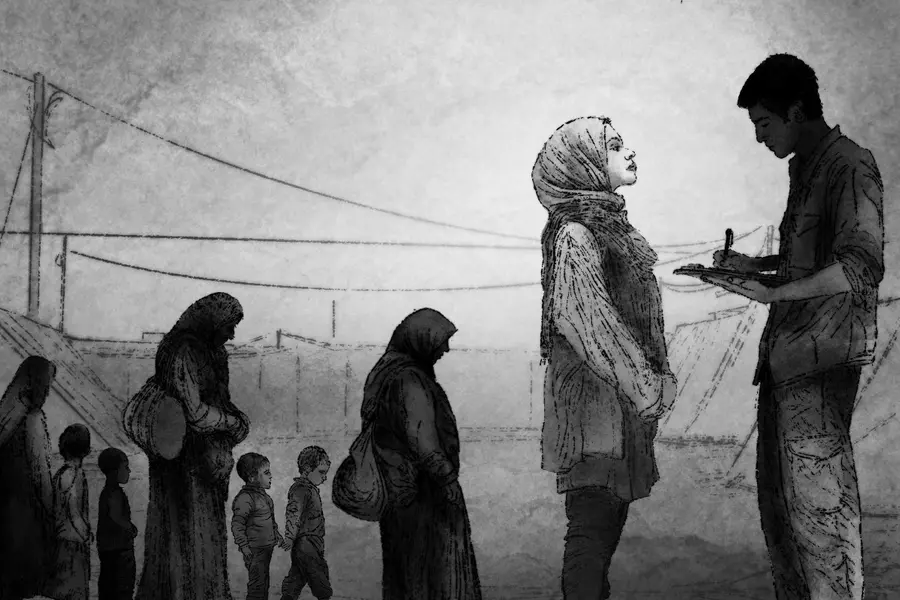
As Gaza’s humanitarian crisis deepens, some women say they are being exploited by men linked to aid distribution. Promises of food, medicine, supplies or even jobs have, in some cases, been tied to sexual demands. Women shared their experiences to media, speaking anonymously because of cultural sensitivities and fear of retribution.
A 38-year-old mother, separated from her husband and left without the business that once sustained her family, thought she had found help when a friend introduced her to a man. He promised her a six-month contract with an aid agency. On the day she believed she would sign papers, he instead drove her to an empty flat.
“He told me he loved me and would not force me, but he also would not let me leave,” she said. Out of fear, she went along. Before leaving, he gave her 100 shekels, about $30, and later handed her a box of medicine and food. For weeks, the promised job did not appear.
“I had to play along because I was scared, I wanted out of this place,” she explained.
She later received a six-month UNRWA (United Nations Relief and Works Agency) job from the same man but never reported him.
“I told myself that no one would believe it. Maybe they would say I am only saying this so that they would give me a job.”
Are other women facing similar situations?
Six women described how men, sometimes in aid uniforms or sometimes community leaders, tried to exchange food, water, or work for sexual favours. Some were direct, saying “Let me touch you.” Others used coded language, such as “I want to marry you” or “Let’s go somewhere.”
A 35-year-old widow recalled how an aid worker wearing a UNRWA uniform started phoning her late at night. At first he asked about her family, then moved on to explicit questions: what underwear she was wearing and how her husband had pleased her. She said he eventually asked her for sex. She refused and blocked his calls after nearly a dozen attempts.
She said she reported him verbally to UNRWA but was told she needed recordings as proof. “I had an old phone that couldn’t record calls,” she explained.
How have aid groups responded?
UNRWA’s communications director, Juliette Touma, said the organisation has a “zero-tolerance policy” for sexual exploitation. She stressed that survivors are not required to provide proof, although she declined to confirm details of individual cases.
The Protection from Sexual Exploitation and Abuse (PSEA) network, which includes UNRWA, also said survivors can report anonymously or without naming the perpetrator, and proof is not demanded.
Coordinator Sarah Achiro noted that sexual violence is heavily underreported in conflict settings, often reflecting “just the tip of the iceberg.”
What do psychologists in Gaza say?
Four Palestinian psychologists told that they have treated dozens of women describing sexual exploitation, sometimes resulting in pregnancy. Because of stigma, none of the women wanted to speak directly. The psychologists said some women agreed to the men’s demands, while others refused.
One mother said an aid worker phoned for weeks offering marriage in exchange for nutritional supplements. “I felt completely humiliated,” she said.
“I had to go and ask for help for my children. If I didn’t do it, who would?”
How widespread are these reports?
The PSEA network said that in 2024 it received 18 allegations of sexual abuse or exploitation linked to aid distribution in Gaza, involving either aid workers or those associated with them, such as contractors. Allegations are investigated by the organisations concerned, but details are not disclosed until cases are closed.
Local women’s groups say cases have increased since the war displaced over 90 percent of the population. Amal Syam of the Women’s Affairs Center said: “Israel’s siege on the Gaza Strip and the restrictions on humanitarian aid are what’s forcing women to resort to this.”
She also noted that many groups avoid publicising the scale of the issue: “Most of us prefer to keep the focus on the violence and violations committed by the Israeli occupation.”
What does Israel say?
Israel denies restricting aid and accuses Hamas of diverting supplies, though no evidence of widespread diversion has been provided. Israeli officials argue that UN agencies are not delivering aid properly.
At the same time, Israel says its military campaign is aimed at dismantling Hamas and freeing hostages, while trying to reduce civilian harm.
Why is the issue so difficult to tackle?
The combination of long displacement, hunger, and overcrowded shelters has left women vulnerable. Limited internet and phone services make it harder to report abuse. Survivors often fear shame or rejection from their families, especially in Gaza’s conservative society.
Psychologists and aid workers agree that many cases remain hidden. One described how some women were thrown out of their homes once husbands discovered what had happened.
Published: 30 Sept 2025, 12:54 pm IST
Disclaimer: Kindly avoid objectionable, derogatory, unlawful and lewd comments, while responding to reports. Such comments are punishable under cyber laws. Please keep away from personal attacks. The opinions expressed here are the personal opinions of readers and not that of Mathrubhumi.
