
Decades after the brutal slaying of four teenage girls who were gagged and shot in the head at an Austin yogurt shop, police have identified a dead suspect.
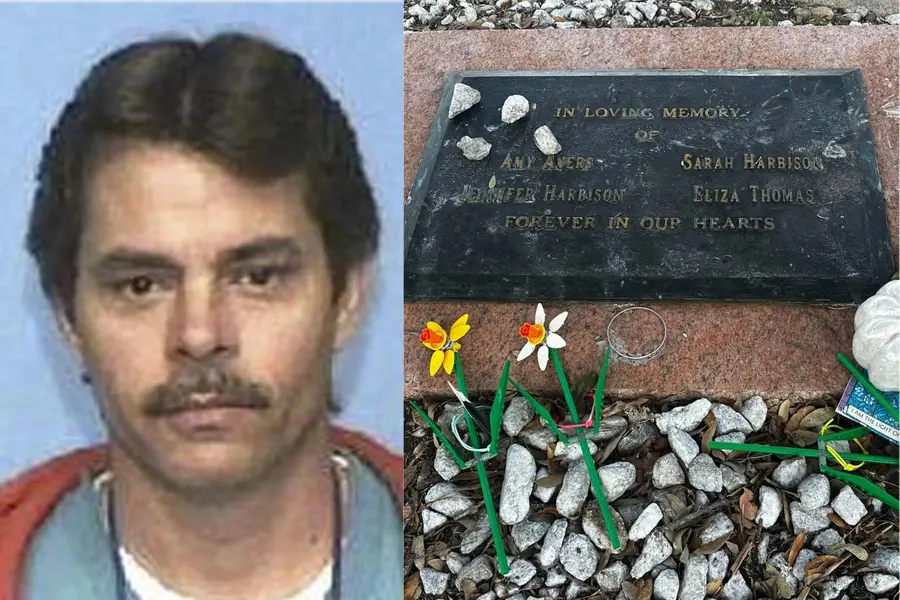
Austin police have announced a significant breakthrough in the decades-old unsolved killing of four teenage girls inside a North Austin yogurt shop, identifying a suspect more than three decades after the crime. Authorities named Robert Eugene Brashers, who died by suicide in 1999, as the man linked to the brutal murders that shocked Texas in December 1991.
The tragedy at the yogurt shop
On the evening of December 6, 1991, a fire broke out at the ‘I Can’t Believe It’s Yogurt’ shop in Austin. Firefighters responding to the blaze discovered the bodies of four girls – 13-year-old Amy Ayers, 15-year-old Sarah Harbison, and 17-year-olds Eliza Thomas and Jennifer Harbison. All had been gagged and shot in the head. Eliza and Jennifer were employees preparing to close for the night when Sarah and Amy joined them, intending to head home together.
The murders stunned the community. In the wake of the killings, the Austin Police Department established a dedicated task force, and federal agencies, including the FBI, were called in to assist. Despite extensive investigation, the case went cold for years.
Early suspects and trials
Shortly after the crime, police arrested Maurice Pierce, a teenager found with a pistol matching the weapon type used in the killings. His arrest led to the questioning of three others: Robert Springsteen, Michael Scott, and Forrest Welborn. Over the next eight years, all four confessed at different times, though some later recanted, saying the confessions were coerced.
Maurice Pierce and Forrest Welborn were eventually released due to insufficient evidence. Robert Springsteen and Michael Scott were convicted in 2001 and 2002, respectively, based largely on their own statements. Their convictions were overturned years later due to constitutional concerns under the Sixth Amendment, as the defendants were unable to cross-examine each other. Prosecutors sought to retry the case, but before doing so, DNA testing, then a new technique called Y-STR testing, was conducted on samples taken from the victims.
The testing produced a partial male DNA profile that did not match any of the arrested men. Without a match, charges against Springsteen and Scott were dropped in 2009, and they were released after nearly a decade in prison. The case remained unsolved.
Breakthrough after decades
This month, Austin police announced that advances in forensic genealogy and DNA analysis had finally identified Robert Eugene Brashers as the likely killer. “Our team never gave up working this case,” Austin police said in a statement. Authorities have scheduled a press conference for September 29 to present their findings.
The breakthrough came more than 30 years after the murders. Brashers, who died by suicide in January 1999 following a standoff with police in Kennett, Missouri, was linked through DNA evidence to multiple crimes. Retired Austin detective John Jones told CBS News’ 48 Hours that the gun Brashers used to kill himself matched a bullet casing found in a drain inside the yogurt shop.
Who was Robert Eugene Brashers?
Born on March 13, 1958, in Newport News, Virginia, Brashers had a violent criminal history dating back to 1985. That year, he lured a woman into his car in Florida and shot her, resulting in convictions for attempted first-degree murder and other charges. He served three years of a 12-year sentence and was released on parole in 1989.
After his release, Brashers committed a string of violent crimes confirmed by DNA, including the 1990 rape and murder of Genevieve Zitricki in South Carolina, the 1997 rape of a 14-year-old girl in Tennessee, and the 1998 rape and murder of Sherri Scherer, 38, and her daughter Megan, 12, in Missouri.
At the time of his death, Brashers lived with his wife, stepdaughters, and biological son. On January 13, 1999, police located him at a Missouri motel. During a tense standoff, he released his family before fatally shooting himself.
Renewed public attention
The case gained renewed attention earlier this year when HBO Max released the first part of a four-part docuseries, The Yogurt Shop Murders, featuring interviews with investigators and victims’ families. The series revisited the case and brought public focus to the decades-old investigation.
(With inputs from AP)
Published: 27 Sept 2025, 10:35 am IST
Related Topics
Disclaimer: Kindly avoid objectionable, derogatory, unlawful and lewd comments, while responding to reports. Such comments are punishable under cyber laws. Please keep away from personal attacks. The opinions expressed here are the personal opinions of readers and not that of Mathrubhumi.
