
Iran’s government and military comprise multiple overlapping institutions, making it difficult to cripple the state by striking leaders alone.
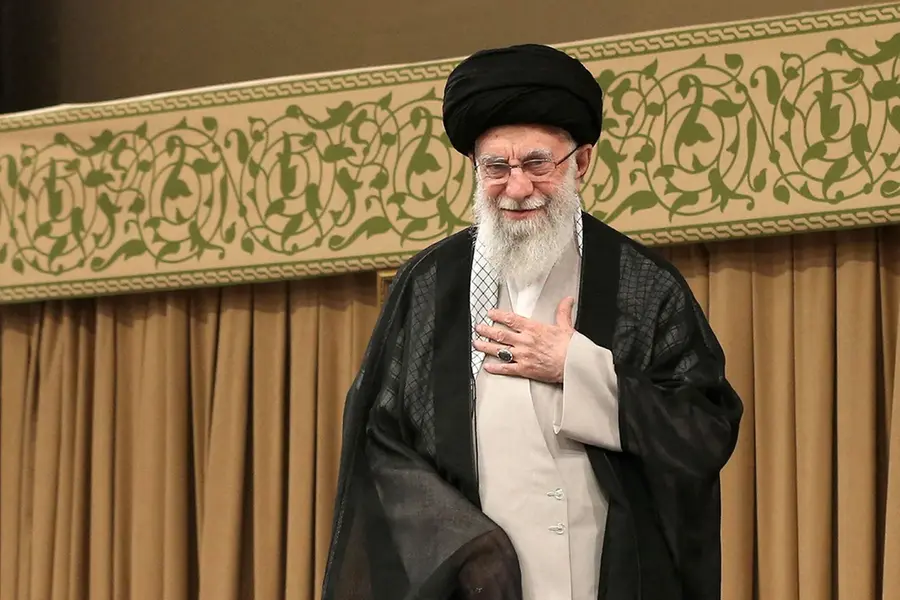
Israel’s recent airstrikes on Iran’s top leadership have drawn global attention as the country seeks to weaken the Islamic Republic. But experts warn that the strategy of killing top leaders, while tactically significant, often fails to achieve lasting political outcomes and can even backfire.
Israel has a long history of targeted killings. Groups like Hezbollah and Hamas have seen repeated losses of their top brass, yet continue to operate and often grow stronger.
Hezbollah leader Abbas Musawi was killed by Israel in 1992, only for Hassan Nasrallah to rise as a charismatic leader and expand the group’s influence, ultimately confronting Israel in the 2006 war. Similarly, Israel killed Hamas’ founder, Sheikh Ahmed Yassin, in 2004, but the group continues to control half of Gaza and has not disarmed.
Jon Alterman, chair of Global Security and Geostrategy at the Centre for Strategic and International Studies, said, "Even dictators need to rely on entire networks that support them." He added that the impact of targeted killings often fades over time.
Iran’s resilience amid decapitation strikes
Iran’s government and military comprise multiple overlapping institutions, making it difficult to cripple the state by striking leaders alone.
Iran’s Supreme Leader Ayatollah Ali Khamenei was reportedly killed in the opening salvo of the war and replaced by his son Mojtaba, seen as even less compromising. Yet the Revolutionary Guard has continued missile strikes against Israel and neighbouring Gulf states, while effectively choking off the Strait of Hormuz.
Yossi Kuperwasser, former head of Israel’s military intelligence research division, noted, "Maybe there's not 'regime change' yet, but there is 'change in regime.' The people are not the same people."
A senior Israeli intelligence official told The Associated Press that decapitation strikes have degraded leaders’ ability to issue orders, form policy, and make decisions.
The risks: Radicalisation and martyrdom
While Israel’s airstrikes may temporarily disrupt leadership, experts warn they can radicalise followers, elevate more extreme successors, or turn slain leaders into enduring martyrs.
Max Abrahms, a political scientist at Northeastern University, said, "Leadership decapitation is risky. When you take out a leader that prefers some degree of restraint and had influence over subordinates, then there's a very good chance that, upon that person's death, you're going to see even more extreme tactics."
Mohanad Hage Ali, deputy director at the Carnegie Middle East Centre, added, "You can decapitate an organisation or defeat it militarily, but if you don't follow through politically, it doesn't work. And it's hard to see how this goes much further."
Targeted killings against states
Unlike militant groups, targeted killings against sovereign states are rare. Historical examples, from the CIA-backed assassination of Congo’s Patrice Lumumba in 1961 to NATO’s removal of Moammar Gadhafi in 2011, show that the aftermath often leads to instability and prolonged conflict.
Israeli Prime Minister Benjamin Netanyahu frames the current strikes as a means to provoke a change in Iran’s leadership, hoping for a friendly government. U.S. President Donald Trump has echoed similar hopes, suggesting more moderate leaders could emerge. Yet past experience indicates such outcomes are far from guaranteed.
Targeted killings may yield tactical gains and demonstrate military prowess. But experts emphasise they rarely resolve underlying political grievances, which continue to fuel conflicts.
Jon Alterman summed it up: "Even dictators need to rely on entire networks that support them." The lesson is clear: decapitation can disrupt, but without a broader political strategy, it rarely produces lasting solutions.
Published: 19 Mar 2026, 12:43 pm IST
Related Topics
Disclaimer: Kindly avoid objectionable, derogatory, unlawful and lewd comments, while responding to reports. Such comments are punishable under cyber laws. Please keep away from personal attacks. The opinions expressed here are the personal opinions of readers and not that of Mathrubhumi.
