
Tiny submarines, powerful weapons and a narrow waterway that controls global oil flow. As Trump issues strong warnings, Iran’s underwater strategy in the Strait of Hormuz is drawing global attention
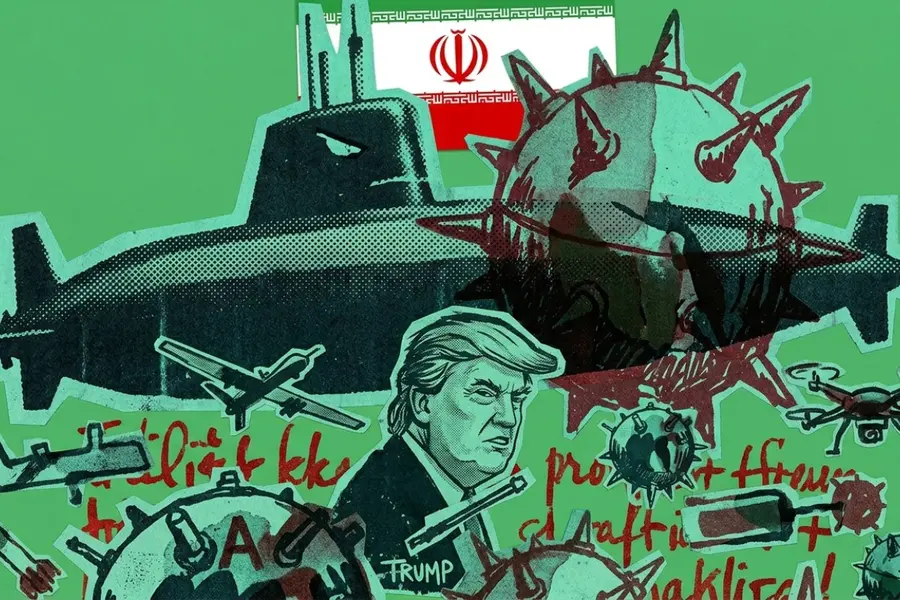
The escalating US-Iran tensions have put the Strait of Hormuz, one of the world’s most critical oil transit routes, under sharp focus. With threats of military action and Iran’s deployment of small submarines in the region, fears of disruption to global energy supplies are increasing.
Trump’s warning and uncertainty around US action
The possibility of a large-scale US strike on Iran has been widely discussed, especially following strong remarks by President Donald Trump. He warned of devastating consequences, suggesting that thousands of lives could be at risk if tensions escalate further.
Also Read

In a post on Truth Social, Trump claimed that an entire civilisation could face destruction if the Strait of Hormuz is not reopened. He also referred to what he described as a potential “complete and total regime change”, adding that a new phase with “smarter and less radicalised minds” might emerge. At the same time, he acknowledged uncertainty about how events would unfold, describing the situation as one of the most significant moments in global history.
Despite such statements, there remains scepticism over the consistency of US policy on Iran, given previous shifts in approach.
Iran’s response and military positioning
While the US has issued warnings, Iran has also taken an assertive stance. Reports indicate that Iranian forces are targeting US bases in Gulf countries. The Strait of Hormuz has become central to this standoff, as it is one of the most important routes for global oil and gas shipments.
For Iran, control over this narrow passage offers a significant strategic advantage.
The strategic importance of the Strait of Hormuz
The Strait of Hormuz is a relatively narrow and shallow waterway that connects the Persian Gulf to the open ocean. It is a vital route for energy supplies, making it crucial not only for the region but also for global markets.
The average depth of the strait is around 36 metres. In some areas, it becomes as shallow as 20 metres, while coastal sections can range between 50 and 110 metres. These conditions make it particularly suitable for smaller, more agile submarines to operate effectively.
Iran’s fleet of mini submarines
Iran has deployed more than 20 small submarines in the Strait of Hormuz. These vessels, often referred to as “baby submarines”, may be compact in size but are designed to be highly effective in combat situations.
Known as Ghadir-class submarines, they are diesel-electric vessels measuring approximately 29 metres in length and 9 metres in width. One of their key advantages is their ability to operate in very shallow waters, even as little as 8.2 metres deep.
Because of their size and design, these submarines are particularly suited for stealth operations in confined waterways like the Strait of Hormuz.
Why these submarines are hard to detect
Detecting these submarines presents a major challenge. Their small size allows them to move quietly through shallow waters, often evading traditional sonar systems used by naval forces.
They can also remain stationary on the seabed. When their engines are switched off, they blend into the surroundings and appear similar to rocks or natural formations, making detection even more difficult.
The shallow and uneven nature of the strait further complicates sonar performance, reducing the effectiveness of detection systems.
Speed, crew and operational role
Each Ghadir-class submarine is operated by a small crew of around seven members. These vessels are not built for long-distance missions but are instead designed for short, rapid operations.
They can travel at speeds of about 19 kilometres per hour on the surface and approximately 14 kilometres per hour underwater. Their design prioritises quick strikes rather than endurance.
Weapons and combat capabilities
Despite their compact size, these submarines are equipped with powerful weaponry. They feature 533-millimetre torpedo tubes capable of launching serious attacks.
One of their most notable weapons is the Hoot supercavitating torpedo. This torpedo can travel underwater at speeds of up to 360 kilometres per hour, making it extremely difficult to intercept. It has the potential to damage or destroy large naval vessels, including aircraft carriers.
Published: 07 Apr 2026, 10:27 pm IST
Related Topics
Disclaimer: Kindly avoid objectionable, derogatory, unlawful and lewd comments, while responding to reports. Such comments are punishable under cyber laws. Please keep away from personal attacks. The opinions expressed here are the personal opinions of readers and not that of Mathrubhumi.