
He received numerous prestigious awards, including the Pritzker Prize, and influenced generations of architects through his teaching.
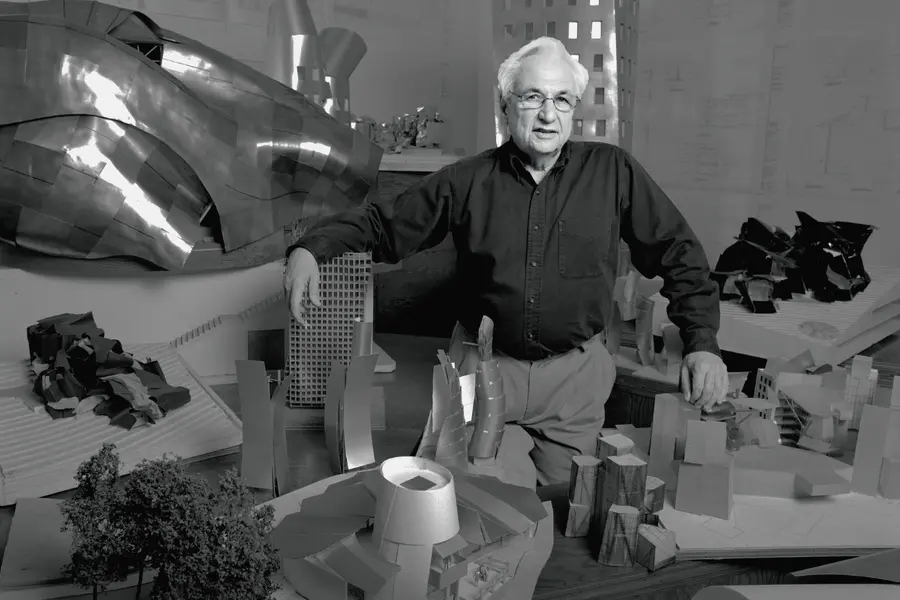
Los Angeles: Frank Gehry, the globally acclaimed architect known for his imaginative and iconic buildings, has passed away at the age of 96.
Gehry died Friday at his Santa Monica home following a brief respiratory illness, Meaghan Lloyd, chief of staff at Gehry Partners LLP, confirmed.
His fascination with modern pop art inspired some of the most striking architectural designs, including the Guggenheim Museum in Bilbao, Spain; The Walt Disney Concert Hall in Los Angeles; and Berlin's DZ Bank Building. Gehry also designed the expansion of Facebook's Northern California headquarters at CEO Mark Zuckerberg’s request.
He received every major architectural honour, including the Pritzker Prize, described as “refreshingly original and totally American” work, the Royal Institute of British Architects gold medal, the Americans for the Arts lifetime achievement award, and the Companion of the Order of Canada.
Despite ceasing traditional building design years ago, Gehry remained active into his 80s, delivering structures that transformed skylines worldwide. Notable projects include the honeycomb-like IAC Building in New York’s Chelsea district (2007) and the 76-story New York By Gehry (2011).
He joined the University of Southern California faculty as an architecture professor in 2011 and also taught at Yale and Columbia University.
Gehry’s work was sometimes polarising. Critics called his buildings “oppressive” or mere tourist attractions, and his bold memorial design for President Dwight D. Eisenhower faced family opposition. Yet Gehry embraced criticism with humour, famously appearing as himself on “The Simpsons” in 2005.
Born Ephraim Owen Goldberg in Toronto on February 28, 1929, he moved to Los Angeles in 1947 and became a US citizen, adopting the name Frank Gehry on the suggestion of his first wife to avoid antisemitism affecting his career.
Gehry’s architectural career was sparked by a ceramics teacher who recognised his talent at age 20. He earned his architecture degree from the University of Southern California in 1954 and later studied urban planning at Harvard University.
He is survived by his wife Berta, daughter Brina, sons Alejandro and Samuel, and the legacy of his groundbreaking buildings. His daughter Leslie Gehry Brenner died of cancer in 2008.
With inputs from AP
Published: 06 Dec 2025, 07:11 am IST
Related Topics
Disclaimer: Kindly avoid objectionable, derogatory, unlawful and lewd comments, while responding to reports. Such comments are punishable under cyber laws. Please keep away from personal attacks. The opinions expressed here are the personal opinions of readers and not that of Mathrubhumi.
