
The demonstrations marked the first major test for Lecornu, who replaced François Bayrou just one day earlier following Bayrou's ousting in a parliamentary confidence vote.
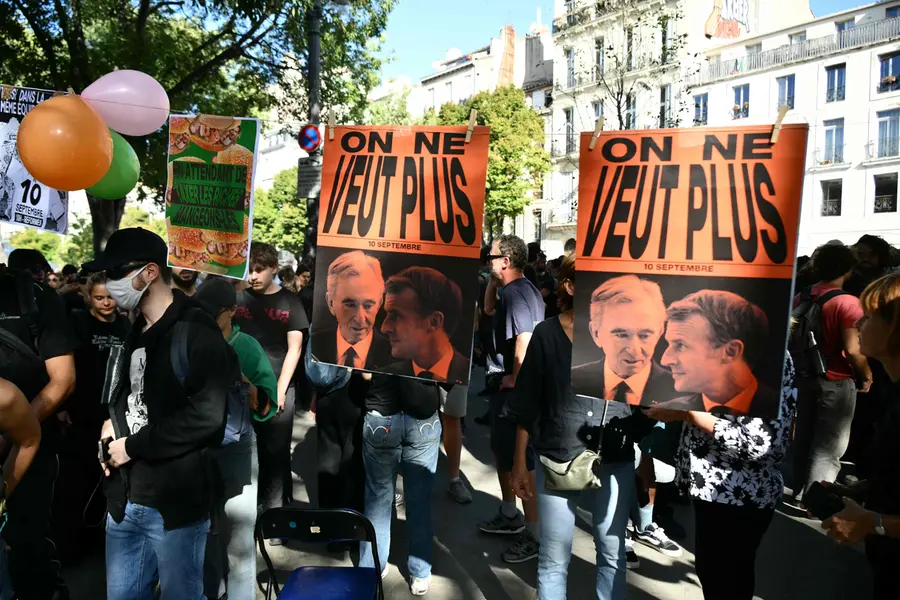
Paris: Protesters blocked roads, set fires, and clashed with police in Paris and other French cities on Wednesday, as part of a coordinated nationwide campaign aimed at pressuring President Emmanuel Macron and challenging his newly appointed prime minister, Sébastien Lecornu. The demonstrations marked the first major test for Lecornu, who replaced François Bayrou just one day earlier following Bayrou's ousting in a parliamentary confidence vote.
Organised under the slogan “Bloquons Tout” (“Block Everything”), the protest movement originated online and gained momentum over the summer through social media and encrypted messaging platforms. Although the day of action fell short of its declared goal to paralyse the country, it triggered significant disruption and violence in numerous areas.
In the capital, clashes erupted early in the morning, with protesters setting fire to rubbish bins and erecting makeshift barricades. The Paris police prefecture reported that 75 people had already been detained by 9 am, with the number of arrests nationwide reaching nearly 200 by mid-day, according to Interior Minister Bruno Retailleau.
Retailleau said a bus was set ablaze in the western city of Rennes, and that sabotage of a power line had disrupted train services in the southwest. He accused demonstrators of attempting to create “a climate of insurrection.”
An exceptional 80,000 police officers were deployed across the country to break up blockades and maintain order — a scale of mobilisation not seen since the height of the Yellow Vest protests. Despite this, the decentralised nature of the movement, which lacks a clear leadership structure, has made it difficult for authorities to predict or contain protest actions.
Though appeals were circulated online urging demonstrators to avoid violence, the protests reflected widespread frustration with the Macron government’s leadership and austerity policies. Many of the demonstrators expressed anger over economic inequality and cuts to public spending, particularly policies championed by former Prime Minister Bayrou.
The movement’s spontaneity and rapid online growth have drawn comparisons to the Yellow Vest protests that shook France during Macron’s first term — a movement that also began with grassroots outrage over fuel tax increases but quickly evolved into a broader expression of discontent across political and social lines.
As protests and blockades continued throughout the day, the Lecornu government faced immediate and intense pressure to restore calm and respond to the grievances fuelling the unrest.
AP
Published: 10 Sept 2025, 02:39 pm IST
Related Topics
Disclaimer: Kindly avoid objectionable, derogatory, unlawful and lewd comments, while responding to reports. Such comments are punishable under cyber laws. Please keep away from personal attacks. The opinions expressed here are the personal opinions of readers and not that of Mathrubhumi.
