
His vice presidency from 2001 to 2009 redefined the office, transforming what had been a largely ceremonial role into one of unparalleled authority.
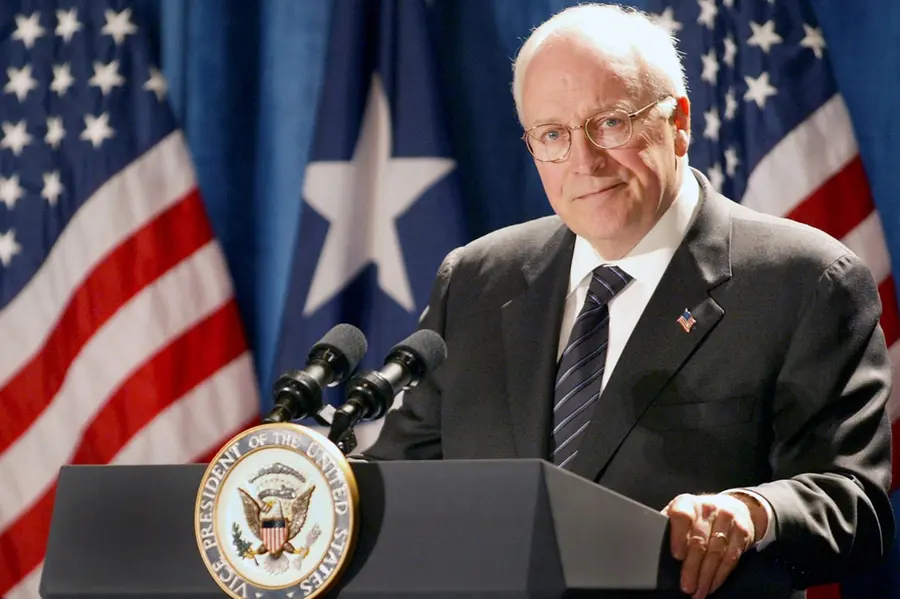
Washington: Dick Cheney, the formidable conservative who became one of the most influential and divisive vice presidents in United States history and a driving force behind the US invasion of Iraq, died on Monday. He was 84.
Cheney passed away from complications of pneumonia, as well as cardiac and vascular disease, his family said in a statement.
“For decades, Dick Cheney served our nation, including as White House Chief of Staff, Wyoming's Congressman, Secretary of Defence, and Vice President of the United States," the statement read.
"Dick Cheney was a great and good man who taught his children and grandchildren to love our country, and to live lives of courage, honour, love, kindness, and fly fishing. We are grateful beyond measure for all Dick Cheney did for our country. And we are blessed beyond measure to have loved and been loved by this noble giant of a man,” it said.
What was his legacy in American politics?
Cheney’s career spanned more than four decades in Washington. Known for his quiet but formidable influence, he served under both President George H. W. Bush and his son, President George W. Bush. As Secretary of Defence during the 1991 Gulf War, he oversaw the US-led coalition that drove Iraq’s forces from Kuwait. Later, as vice president from 2001 to 2009, he was regarded as the driving force behind many of the younger Bush’s most consequential decisions, particularly on national security.
Operating often behind the scenes, Cheney wielded extraordinary influence over US policy in the wake of the September 11, 2001 attacks, vigorously defending controversial surveillance, detention and interrogation practices. He once described having the wireless function of his heart defibrillator disabled, fearing terrorists might hack it to deliver a fatal shock.
A survivor of five heart attacks, Cheney underwent a heart transplant after leaving office. In 2013, he remarked that he woke up each morning “with a smile on my face, thankful for the gift of another day”, an uncharacteristically gentle sentiment from a man known for his unyielding resolve.
His vice presidency redefined the office, transforming what had been a largely ceremonial role into one of unparalleled authority. Cheney often acted as a power broker between departments and as a central figure in shaping policy on Iraq, energy and executive power. “Am I the evil genius in the corner that nobody ever sees come out of his hole?” he once joked. “It’s a nice way to operate, actually.”
Cheney’s unwavering belief in the Iraq War, even as many of his assertions proved wrong, became emblematic of his tenure. He alleged links between Saddam Hussein’s regime and the 2001 terror attacks that were later discredited, and famously declared the Iraqi insurgency was in its “last throes” in 2005, when the conflict was far from over.
Over time, his influence within the Bush administration waned as political realities shifted and courts pushed back against his efforts to expand presidential powers. Nonetheless, supporters viewed him as a man of principle, steadfast in his convictions even as public opinion turned against him.
How did his political career begin?
Cheney’s political journey began in 1968 as a congressional fellow. Mentored by Donald Rumsfeld, he rose swiftly through the ranks, becoming the youngest-ever White House Chief of Staff at age 34 under President Gerald Ford. He went on to represent Wyoming in Congress for a decade before joining the first Bush administration as Defence Secretary. Between his two stints in public service, he served as chief executive of Halliburton, a major oilfield services company.
How did Cheney’s views clash with Donald Trump?
His later years were marked by a public break with former President Donald Trump. After his daughter, Liz Cheney, emerged as one of Trump’s fiercest Republican critics following the January 6, 2021 Capitol attack, the former vice president accused Trump of being “a greater threat to our republic than any individual in our nation’s history.” In an extraordinary political turn, Cheney said in 2024 that he would vote for Democrat Kamala Harris over Trump.
Cheney’s reputation for secrecy and control came at a political cost. He was lampooned as a Machiavellian figure, and his accidental shooting of a friend, Harry Whittington, during a 2006 hunting trip became the subject of relentless satire.
Following his retirement, Cheney settled in Jackson Hole, Wyoming, where his daughter Liz would later win his former congressional seat. Their shared opposition to Trump’s brand of politics cemented their family’s position as targets of the former president’s attacks.
Dick Cheney was born in Lincoln, Nebraska, in 1941 and raised in Casper, Wyoming. A former football co-captain and senior class president, he studied at the University of Wyoming after leaving Yale. He married his high-school sweetheart, Lynne Vincent, in 1964.
He is survived by his wife, Lynne, and their two daughters, Liz and Mary.
AP
Published: 04 Nov 2025, 06:54 pm IST
Related Topics
Disclaimer: Kindly avoid objectionable, derogatory, unlawful and lewd comments, while responding to reports. Such comments are punishable under cyber laws. Please keep away from personal attacks. The opinions expressed here are the personal opinions of readers and not that of Mathrubhumi.
