
Paris: European leaders have insisted that their governments must have a say in negotiations to end Russia's war in Ukraine, following a diplomatic push by the US. However, both Moscow and Washington have made it clear that Europe will not be involved in discussions which could shape the continent's future.
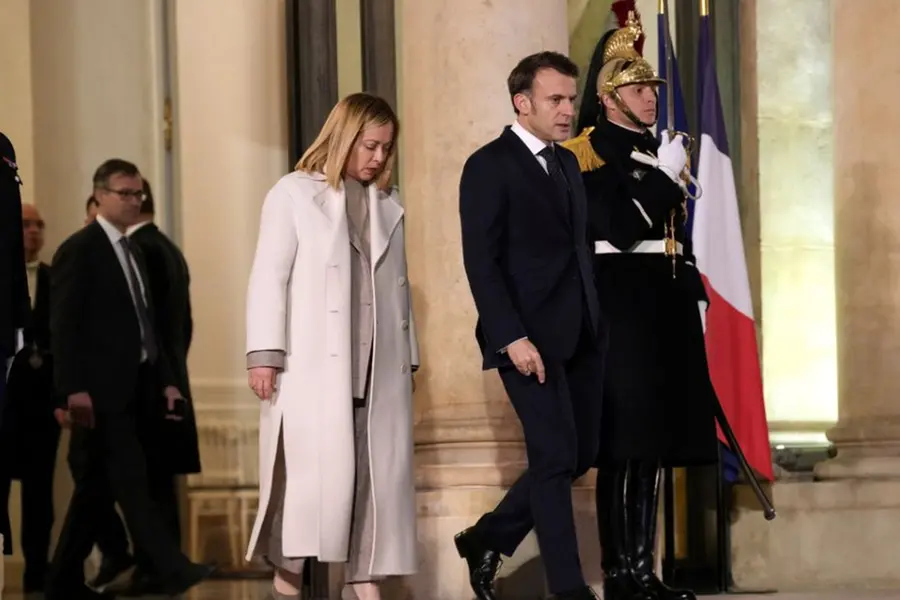
Leaders from Germany, the UK, Italy, Poland, Spain, the Netherlands, Denmark, NATO, and the EU gathered at the Elysee Palace in Paris for urgent discussions on Europe's security, sparked by growing concerns over US actions regarding Ukraine. The meeting lasted over three hours, as both the US and Russia signalled that Europe had no role in the ongoing talks.
Also Read

UK Prime Minister Keir Starmer emphasised the need for a US security guarantee to deter further Russian aggression. Starmer also suggested that British forces could be deployed in Ukraine if a lasting peace agreement is reached. "There must be a US backstop, because a US security guarantee is the only way to effectively deter Russia from attacking Ukraine again," he stated.
US pushes for quick resolution
During a visit to Europe, US officials under the Trump administration appeared to downplay Europe's role, with Gen Keith Kellogg stating that not everyone should sit at the negotiating table. "We know how that can turn out and that has been our point, is keeping it clean and fast as we can," he remarked. Russian Foreign Minister Sergei Lavrov also dismissed Europe's involvement in the peace process.
French President Emmanuel Macron expressed surprise at the harsh criticism from US officials about Europe's security and democratic principles. Macron, who has long advocated for a stronger European defence, said that these remarks felt like a "shock to the system."
Starmer, who is set to visit Washington next week, is attempting to navigate a "third way" in Europe’s shifting political landscape. While aligning with the US administration, he is keen to maintain strong ties with the EU.
Concerns over peace deal with Russia
German Chancellor Olaf Scholz, who left the meeting early, asserted that any peace deal with Russia must involve Ukraine and not be imposed from the outside. Spanish Prime Minister Pedro Sanchez added that any agreement must involve active participation from both Ukraine and the EU to avoid a false resolution to the war.
Ukrainian President Volodymyr Zelenskyy, speaking from Kyiv, said that talks with Europe were progressing quickly, with recent US moves accelerating the process. Zelenskyy also stated that Macron had agreed to brief him on the outcomes of the Paris meeting.
Danish Prime Minister Mette Frederiksen warned against a ceasefire leading to Russian rearmament, stressing the need to prevent further Russian attacks. However, Scholz dismissed the idea of sending ground troops to Ukraine as "premature" and inappropriate given the uncertainty of the war's outcome.
Concerns over selective EU representation
The meeting at the Elysee Palace has raised concerns about the selective inclusion of EU leaders. Some members questioned the exclusion of certain countries, highlighting that the EU requires consensus from all 27 nations. Hungarian Prime Minister Viktor Orban, a supporter of Putin, has previously threatened to veto decisions on foreign troop deployments, causing discomfort among some EU nations.
Following the discussions, Poland’s Prime Minister Donald Tusk stressed the importance of Europe being able to defend itself more effectively, with many EU nations increasing their defence spending. However, the path to greater defence capabilities remains uncertain, with some nations reluctant to commit.
Agency
Published: 18 Feb 2025, 08:31 am IST
Related Topics
Disclaimer: Kindly avoid objectionable, derogatory, unlawful and lewd comments, while responding to reports. Such comments are punishable under cyber laws. Please keep away from personal attacks. The opinions expressed here are the personal opinions of readers and not that of Mathrubhumi.