
Despite the competition from companies like Google, Musk retains a crucial advantage in the space race: rockets.
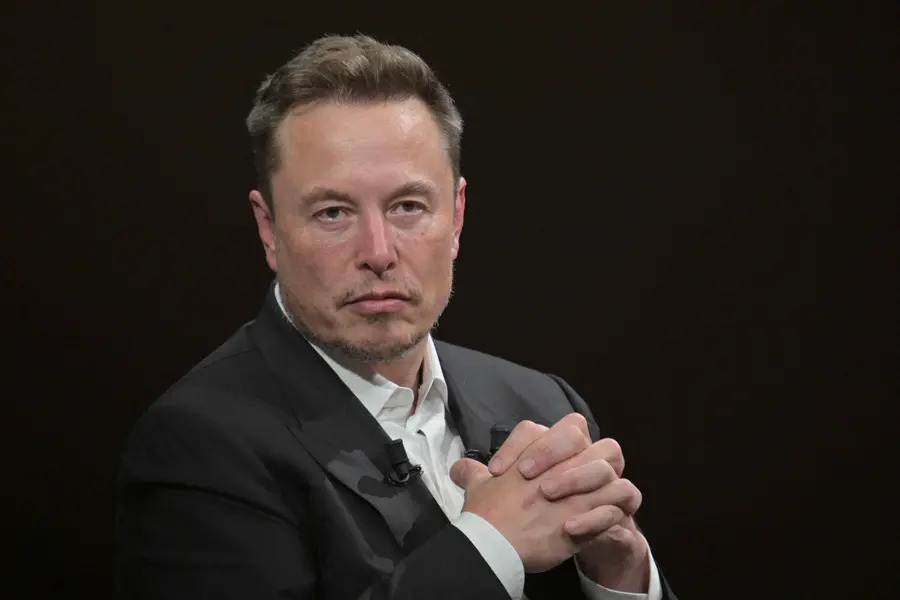
New York: Elon Musk has announced plans to launch up to a million satellites into orbit to create vast solar-powered data centres in space, a move he claims will revolutionise artificial intelligence and ease pressure on Earth’s power grids.
The world’s richest man revealed the project this week, saying space offers the cheapest and most efficient location for AI infrastructure. “Space-based AI is obviously the only way to scale,” Musk wrote on SpaceX’s website, adding, “It’s always sunny in space!” Speaking on a podcast recently, he further predicted orbital data centres could become viable within 30 to 36 months.
Also Read

To finance the venture, Musk has merged SpaceX with his AI business and intends to pursue a major initial public offering of the combined company. He argued that solar panels in orbit can generate up to five times more energy than those on Earth, without the need for batteries, since space has no day-night cycle, clouds or atmosphere.
Also Read | ‘Who wouldn’t want a robot to watch over your kids?’: Elon Musk on humanoids and AI | WATCH
Musk has previously used artificial intelligence to mock political figures, but his latest proposal is aimed at reshaping the future of computing. Speaking on the podcast, he said scaling power on Earth was harder than in space, and insisted that GPU reliability would not be a major obstacle once chips passed their initial debugging phase.
Technical and environmental challenges
Experts caution that Musk faces formidable hurdles. Data centres generate enormous heat, and while space is cold, its vacuum traps heat inside objects. Josep Jornet, professor of computer and electrical engineering at Northeastern University, warned that “an uncooled computer chip in space would overheat and melt much faster than one on Earth.” He said Musk’s plan would require giant radiator panels to dissipate heat — fragile structures that have never been built at scale.
Space debris is another concern. A malfunctioning satellite could trigger a cascade of collisions, disrupting communications and weather forecasting. John Crassidis, a former NASA engineer, warned: “We could reach a tipping point where the chance of collision is going to be too great. These objects are going fast — 17,500 miles per hour. There could be very violent collisions.”
Also Read | ‘Superhuman’ promise: Neuralink says it's ready to implant vision device in first human | VIDEO
Rivals enter the race
Musk is not alone in pursuing orbital data centres. Google is developing Project Suncatcher, while Jeff Bezos’ Blue Origin has announced plans for a constellation of more than 5,000 satellites focused on communications. Starcloud, a company based in Redmond, Washington, launched a satellite last year carrying a single Nvidia AI chip to test its performance in orbit.
Despite the competition, Musk retains a crucial advantage: rockets. SpaceX’s Falcon launchers are already being used by rivals, including Starcloud and Aetherflux, which plans to send its “Galactic Brain” chips into orbit later this year.
Pierre Lionnet, research director at Eurospace, said Musk’s control of launch costs gives him a powerful edge. “When he says we are going to put these data centres in space, it’s a way of telling the others we will keep these low launch costs for myself. It’s a kind of powerplay,” he said.
(With AP inputs)
Published: 06 Feb 2026, 10:01 pm IST
Related Topics
Disclaimer: Kindly avoid objectionable, derogatory, unlawful and lewd comments, while responding to reports. Such comments are punishable under cyber laws. Please keep away from personal attacks. The opinions expressed here are the personal opinions of readers and not that of Mathrubhumi.