
The relevance of El Mencho to Indian national security became starkly apparent on November 25, 2024
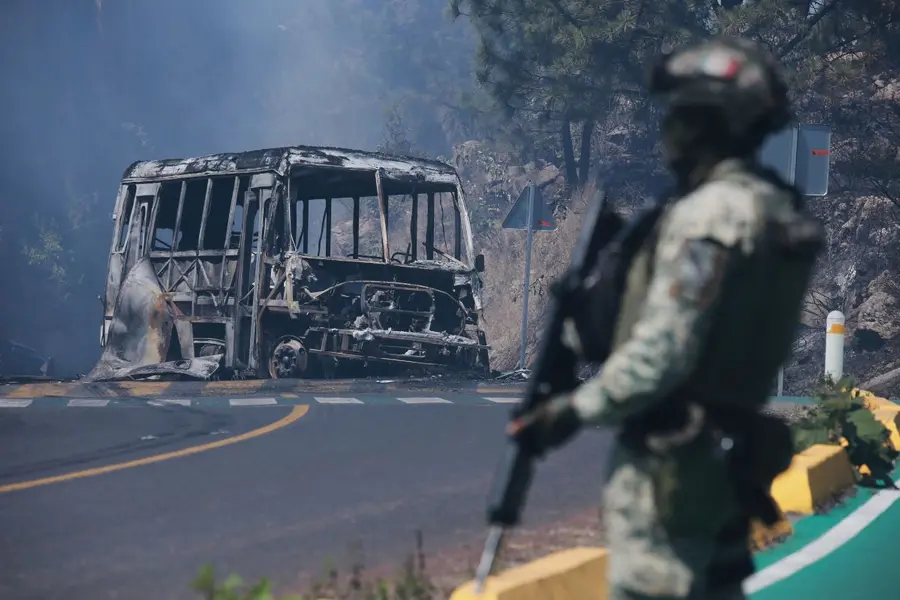
The elimination of Nemesio Ruben Oseguera Cervantes, the notorious Mexican drug lord known as "El Mencho", in a high-stakes military operation has sent shockwaves through the global narcotics trade. While the death of Mexico's most wanted fugitive has triggered retaliatory violence across several Mexican states, Indian security agencies are viewing the development as a significant strategic breakthrough in the war against high-value drug trafficking in the Asia-Pacific region.
The India Connection: The Andaman Seizure
The relevance of El Mencho to Indian national security became starkly apparent on November 25, 2024. In one of the largest maritime interceptions in history, the Indian Coast Guard (ICG) seized a massive consignment of 6,000 kg of high-grade Methamphetamine from a fishing trawler in the Andaman and Nicobar Islands.
ALSO READ | Who was El Mencho? From farm boy to Mexico’s most wanted drug lord
Valued at an estimated ₹6,000 crore, the seizure provided the first concrete evidence that El Mencho's Jalisco New Generation Cartel (CJNG) had expanded its footprint into Indian waters. Intelligence officials noted that the sheer scale and purity of the narcotics indicated the involvement of a "super-cartel" capable of bypassing traditional syndicates.
Transnational Nexus: Mexico, China, and Myanmar
Investigations into the Andaman seizure revealed a sophisticated, multi-layered alliance between Mexican and Chinese cartels. El Mencho had reportedly forged a powerful partnership with Tse Chi Lop, the infamous "Chinese El Chapo", who leads a syndicate known as 'The Company.'
ALSO READ | Mexico’s most wanted drug lord El Mencho dead, violence erupts across six states
This Mexico-China nexus utilized a complex logistics chain to dominate the regional trade:
The Product: High-quality Methamphetamine produced by the CJNG in Mexico.
The Logistics: Orchestrated by the Chinese syndicate, which employed Myanmarese nationals to navigate the treacherous waters of the Andaman Sea.
The Reach: Together, these cartels reportedly controlled 70 percent of the narcotics trade in the Asia-Pacific sector.
Relief for Indian Agencies
For years, Indian agencies like the Narcotics Control Bureau (NCB) and the Intelligence Bureau (IB) have been locked in a persistent battle with the Dawood Ibrahim syndicate and the ISI-backed Haji Salim network. The entry of the CJNG added an aggressive new front to this maritime struggle.
"The agencies are already on their toes handling the D-Syndicate. The involvement of international players like El Mencho added a layer of complexity we haven't seen before," a senior official stated.
ALSO READ | What to know about the killing of Mexico’s most powerful cartel leader, El Mencho
Unlike the traditional routes, the CJNG used the Andaman Sea as a transit corridor not just for India, but as a gateway to lucrative markets in Thailand and Southeast Asia.
While the death of El Mencho is expected to cause an immediate leadership vacuum and slow down the operations of the 'The Company,' officials warn that the victory may be temporary. The high demand for "Mexican-grade" narcotics in the region ensures that the vacuum will likely be contested.
However, for the time being, the elimination of the CJNG's founding father has provided Indian maritime forces with a critical window to consolidate their presence in the Andaman and Nicobar regions and further disrupt the transnational supply lines that have increasingly sought to turn Indian waters into a global drug highway.
(IANS)
Published: 23 Feb 2026, 01:22 pm IST
Related Topics
Disclaimer: Kindly avoid objectionable, derogatory, unlawful and lewd comments, while responding to reports. Such comments are punishable under cyber laws. Please keep away from personal attacks. The opinions expressed here are the personal opinions of readers and not that of Mathrubhumi.
