
A composer, pianist and bandleader, Palmieri was the first Latino artist to win a Grammy Award. As a cultural ambassador, he took salsa and Latin jazz to audiences in Africa, Europe, Asia and Australia, widening the reach of Afro-Caribbean music.
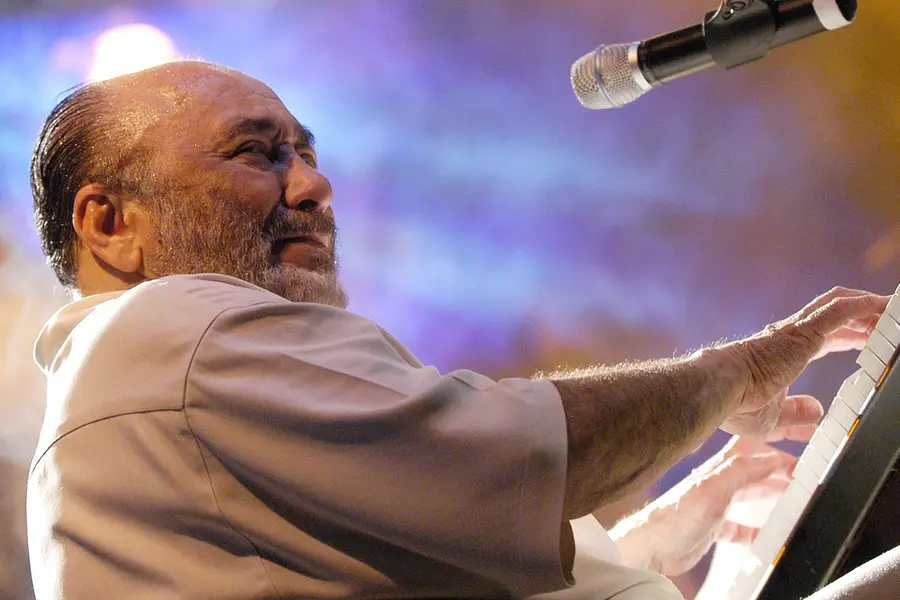
Los Angeles: Eddie Palmieri, the pioneering force behind the evolution of rumba and Latin jazz, has passed away at the age of 88. The announcement was made on August 7 by Fania Records. His daughter, Gabriela Palmieri, confirmed to The New York Times that he died earlier the same day at his home in New Jersey after “an extended illness.”
A composer, pianist and bandleader, Palmieri was the first Latino artist to win a Grammy Award. Over his distinguished career, he would go on to win seven more, making his mark with close to 40 albums that redefined Latin music.
From Spanish Harlem to salsa stardom
Born on December 15, 1936, in New York’s Spanish Harlem to Puerto Rican parents, Palmieri grew up in a time when music was seen as a path out of poverty. Inspired by his older brother Charlie Palmieri, he began piano lessons at a young age but was initially drawn to the drums. At 13, he started playing timbales in his uncle’s orchestra before returning to his true passion — the piano.
“I’m a frustrated percussionist, so I take it out on the piano,” he once joked on his official website.
Breaking conventions and making history
Palmieri’s early career saw him perform tropical dance music in the 1950s with the Eddie Forrester Orchestra. He later played with Johnny Seguí and salsa legend Tito Rodríguez before founding his own band, La Perfecta, in 1961.
La Perfecta was known for its innovative use of trombones instead of the more traditional trumpet section, a bold departure from Latin music norms. With trombonist Barry Rogers and singer Ismael Quintana, Palmieri developed a distinctive sound that positioned the band alongside heavyweights like Machito and Tito Puente.
In 1971, Palmieri collaborated with his brother Charlie on the track Vámonos pa’l monte, released under Alegre and Tico Records. That same year, he released Harlem River Drive, a groundbreaking fusion of Black and Latin styles with elements of salsa, jazz, funk and soul — a blend that was far ahead of its time.
Grammy milestones and musical recognition
Palmieri's first Grammy came in 1975 for The Sun of Latin Music, featuring then-emerging vocalist Lalo Rodríguez. It was the first Latin album ever to win the award. He followed it up with the widely admired Eddie Palmieri & Friends in Concert, Live at the University of Puerto Rico in 1976.
Throughout the 1980s, he added more Grammys to his name with Palo pa’ rumba (1984) and Solito (1985). He later introduced vocalist La India to the salsa world through the acclaimed album Llegó La India vía Eddie Palmieri.
In 2000, Palmieri released Masterpiece alongside the iconic Tito Puente — a collaboration that would win two Grammys and be hailed as the standout Latin album of the year by Puerto Rico’s National Foundation for Popular Culture.
A life in music, a legacy across continents
Palmieri remained musically active well into his eighties. During the COVID-19 pandemic, he even performed via livestreams, showcasing his undiminished passion for performance. In a 2011 interview, when asked whether he had any ambitions left, he replied with humility, “Learning to play the piano well... Being a piano player is one thing. Being a pianist is another.”
His contributions were not limited to albums alone. He featured in recordings and performances with the Fania All-Stars and Tico All-Stars, and worked alongside renowned artists such as Nicky Marrero, Israel “Cachao” López, Alfredo “Chocolate” Armenteros, Lewis Khan, and Bobby Valentín.
In 1988, the Smithsonian Institution archived two of his concerts for the National Museum of American History. Yale University honoured him with the prestigious Chubb Fellowship in 2002 — an award typically reserved for global statesmen — for his contributions to community building through music.
In 2005, Palmieri made his radio debut as host of NPR’s Caliente, broadcast across over 160 US stations.
Global influence and final years
Palmieri’s musical influence extended far beyond American shores. As a cultural ambassador, he took salsa and Latin jazz to audiences in Africa, Europe, Asia and Australia, widening the reach of Afro-Caribbean music.
In his later years, Palmieri expressed a sense of loss due to the passing of fellow rumberos he had played with over decades. Yet his music endured, earning admiration from new generations and fellow musicians alike.
A final farewell
Eddie Palmieri’s passing marks the end of an era in Latin and jazz music. But his legacy — bold, boundary-breaking, and deeply rhythmic — lives on, not only in his recordings but in the very DNA of modern Latin music. For fans in India and around the world who have come to love salsa and Latin jazz, his influence is unmistakable — whether on a dance floor, in a concert hall, or through a streaming playlist.
(with AP inputs)
Published: 07 Aug 2025, 12:27 pm IST
Related Topics
Disclaimer: Kindly avoid objectionable, derogatory, unlawful and lewd comments, while responding to reports. Such comments are punishable under cyber laws. Please keep away from personal attacks. The opinions expressed here are the personal opinions of readers and not that of Mathrubhumi.
