
A powerful 8.8 earthquake near Kamchatka triggered a tsunami impacting Japan. The event fuels discussion around a 1999 manga prediction.
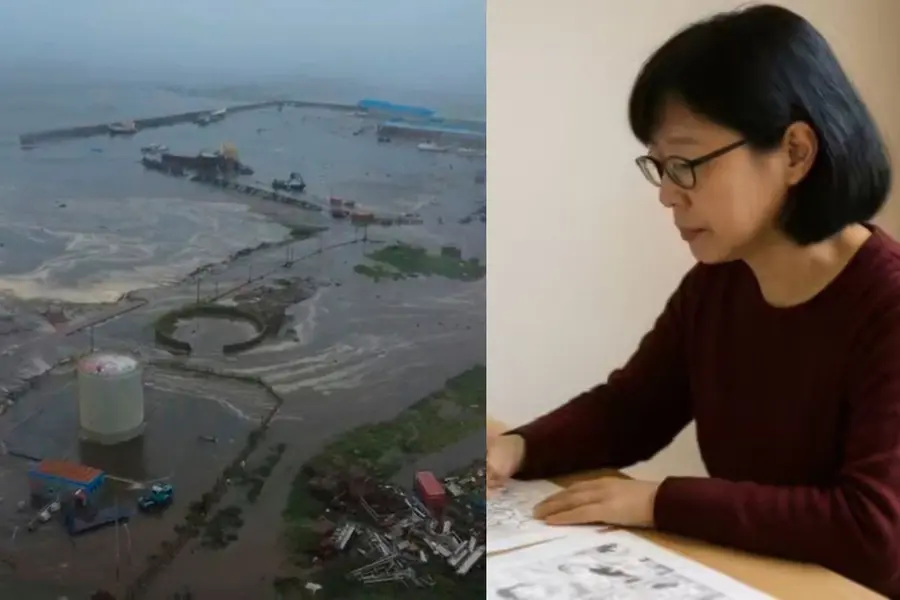
A powerful magnitude-8.8 earthquake struck off Russia’s Kamchatka Peninsula on July 30 2025, generating tsunami waves that reached Japan’s northern island of Hokkaido and parts of Russia’s Kuril Islands. The tremors and subsequent sea surges have revived intense interest in a 1999 manga prediction by Japanese artist Ryo Tatsuki—now being likened to a prophecy come true, albeit weeks late.
The earthquake, revised to 8.8 by the US Geological Survey, is the strongest to hit the region since 1952. It occurred at a shallow depth of 19.3 kilometres, approximately 125 kilometres southeast of Petropavlovsk-Kamchatsky, a city of 180,000 in Russia’s Far East. Following the quake, tsunami warnings rippled across the Pacific, with alerts issued for Japan, Hawaii, the United States, New Zealand, and South America.
High waves measuring 3 to 4 metres were observed along parts of Russia’s Kamchatka coastline. Japan’s Meteorological Agency issued urgent warnings, predicting waves of up to 3 metres. Sirens blared across Japanese towns, and precautionary evacuations were carried out, including at the Fukushima nuclear plant.So far, the largest wave reported in Japan was approximately 50 centimetres, observed at Ishinomaki Port in northern Japan, according to the Japan Meteorological Agency, with no significant damage reported.
Manga prediction sparks debate
This seismic activity arrived just weeks after a resurfaced prediction from Ryo Tatsuki began circulating on social media. Tatsuki, often referred to as the “New Baba Vanga of Japan,” published a manga titled The Future I Saw in 1999, which has become famous for its eerily accurate depictions of real-world tragedies. These include the deaths of Princess Diana and Freddie Mercury, the COVID-19 outbreak, and most notably, the March 2011 earthquake and tsunami that devastated Japan.
In the manga, Tatsuki wrote that the seas around southern Japan would “boil” on July 5 2025. While that date passed without incident, the timing of the Kamchatka quake and its far-reaching tsunami has led many to question whether the prediction was referring to the broader time frame of the month, rather than a specific day.
Online buzz around Tatsuki's forecast had already led to a spike in concern across Japanese forums and X, with the hashtag #July5Disaster trending widely. Reports also suggested a noticeable drop in July travel plans to Japan, driven by fears linked to her manga’s content.
Now, with an actual natural disaster unfolding just 25 days after the forecasted date, conversations have reignited around the credibility of the manga artist's so-called visions.
Natural disaster or coincidence?
Experts, however, are urging caution. Seismologists reiterate that earthquakes cannot be predicted with any real accuracy. While risk areas like the Pacific “Ring of Fire” are well documented, pinpointing exact dates or locations remains outside the scope of current scientific capability.
Tsunamis, typically triggered by undersea earthquakes, can travel across entire oceans at jetliner speeds. Other causes include volcanic eruptions, underwater landslides, and even meteorite impacts. The 2004 Indian Ocean tsunami, one of the deadliest on record, was caused by a 9.1-magnitude quake and killed over 220,000 people.
Though Tatsuki’s manga has earned her a cult following, scientists say any perceived accuracy is likely coincidental.
In Japan, officials said a task force had been activated to monitor any further developments and coordinate emergency responses. The Japan Meteorological Agency continues to monitor aftershocks and potential wave activity, though the immediate threat appears to have passed.
Published: 30 Jul 2025, 11:27 am IST
Related Topics
Disclaimer: Kindly avoid objectionable, derogatory, unlawful and lewd comments, while responding to reports. Such comments are punishable under cyber laws. Please keep away from personal attacks. The opinions expressed here are the personal opinions of readers and not that of Mathrubhumi.
