
Manga artist Ryo Tatsuki`s 2025 tsunami prediction sparks tourism cancellations to Japan.
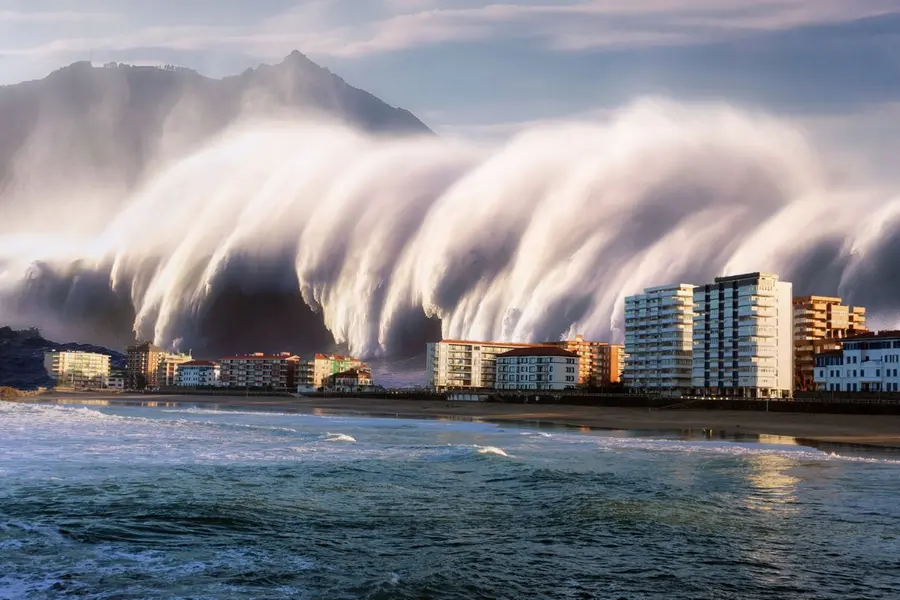
A Japanese manga artist’s ominous forecast has sent ripples through the global tourism industry, prompting a wave of cancellations from travellers who had planned to visit Japan in the coming months. Ryo Tatsuki, now widely dubbed Japan’s ‘New Baba Vanga’, has once again captured global attention—this time with a chilling prophecy for July 2025 that is already having real-world consequences.
Tatsuki’s disturbing vision of an impending natural catastrophe has led to a marked decline in tourist bookings, particularly from East and Southeast Asia, and triggered fresh discussions about disaster preparedness and the psychological impact of predictions that blur the line between art and alarm.
Who is Ryo Tatsuki?
Ryo Tatsuki is not your typical manga artist. First emerging into public discourse in 1999 with her book ‘The Future I Saw,’ Tatsuki compiled years of visions she claimed to have experienced. Though initially overlooked, the book gained notoriety after several of its predictions reportedly came true.
Among them were major tragedies like the 1995 Kobe earthquake and the devastating March 2011 Tohoku earthquake and tsunami, which led to the Fukushima nuclear crisis and claimed over 18,000 lives. What stunned many was that these disasters occurred in the exact month and year mentioned in her book.
Tatsuki’s reputation as a modern-day prophet was further cemented by her purported foresight into the death of Queen frontman Freddie Mercury. Such predictions have earned her a devoted following both in Japan and abroad, and her unsettling accuracy has invited comparisons to Bulgarian mystic Baba Vanga.
A dire vision for July 2025
In a revised edition of her book, published in 2021, Tatsuki issued a dramatic warning: a major underwater disaster is expected to unfold in July 2025. “The sea boils south of Japan in July 2025 and it will cause a mega tsunami,” she wrote. According to her description, the event would involve a powerful undersea rupture forming between Japan and the Philippines, potentially triggering waves three times larger than those seen in the 2011 tsunami.
She described the ocean as “boiling,” a phrase that many believe suggests an underwater volcanic eruption or major seismic event. The predicted epicentre forms a diamond-shaped region linking Japan, Indonesia, Taiwan, and the Northern Mariana Islands—a highly active geological zone in the Pacific.
Tourists reconsider travel plans
According to reports, Tatsuki’s forecast has already begun affecting tourism figures. Hong Kong-based travel agency WWPKG reported a 50 percent drop in Japan-bound bookings during the Easter holiday season. “People are becoming cautious,” noted CN Yuen, managing director of the agency, in a statement to CNN.
The trend is expected to continue as the anticipated date approaches. The situation escalated after the Chinese embassy in Tokyo issued an advisory in April 2025, urging its nationals to stay alert in light of “potential natural disasters.” The embassy did not reference Tatsuki directly, but the timing of the warning aligned closely with rising public anxiety.
Chinese government advisory raises alarm
The advisory by the Chinese embassy was prompted by a series of recent earthquakes and volcanic activity off the coast of Japan. According to the South China Morning Post, the warning called on Chinese residents and tourists to “take extra precautions against natural disasters,” a message widely interpreted as lending credibility to the growing fears surrounding Tatsuki’s predictions.
Japan, meanwhile, has taken a more cautious stance. The Japan Meteorological Agency (JMA) has not released any alerts specifically tied to July 2025. Officials continue to emphasise the country’s robust disaster monitoring and response systems, assuring the public that there is no verified scientific basis for panic.
Internet frenzy and public debate
Online platforms have become fertile ground for speculation and debate. The hashtag #July2025Prediction has gained traction across several countries, with users expressing everything from fear to scepticism.
While some social media users have dismissed the warnings as sensationalised fiction, others have been preparing for worst-case scenarios. Earthquake and disaster preparedness forums have seen a notable rise in activity, with users swapping tips, checklists, and emergency plans.
Published: 21 May 2025, 09:32 am IST
Related Topics
Disclaimer: Kindly avoid objectionable, derogatory, unlawful and lewd comments, while responding to reports. Such comments are punishable under cyber laws. Please keep away from personal attacks. The opinions expressed here are the personal opinions of readers and not that of Mathrubhumi.
